Work permits, visas, bureaucracy, money, and transport issues, labels, distribution, accessibility to foreign jazz magazines, streaming platforms, booking agencies, media pitches, getting coverage, reaching out to a vast audience — to youngsters — inclusion, collaboration, economic imbalance, gender balance, sustainability …
That’s a long list of challenges, but confronted with “an impulse to change,” as publicist-blogger Matt Merewitz put it, among those in today’s European and U.S. jazz industry. There’s said tor be a desire among musicians and audiences to get to know each other better. Artists and publicists attending jazzahead!, the annual international jazz trade fair in Bremen, Germany, called upon jazz journalists to help bridge the gap, spotlight the issues and mobilize public.
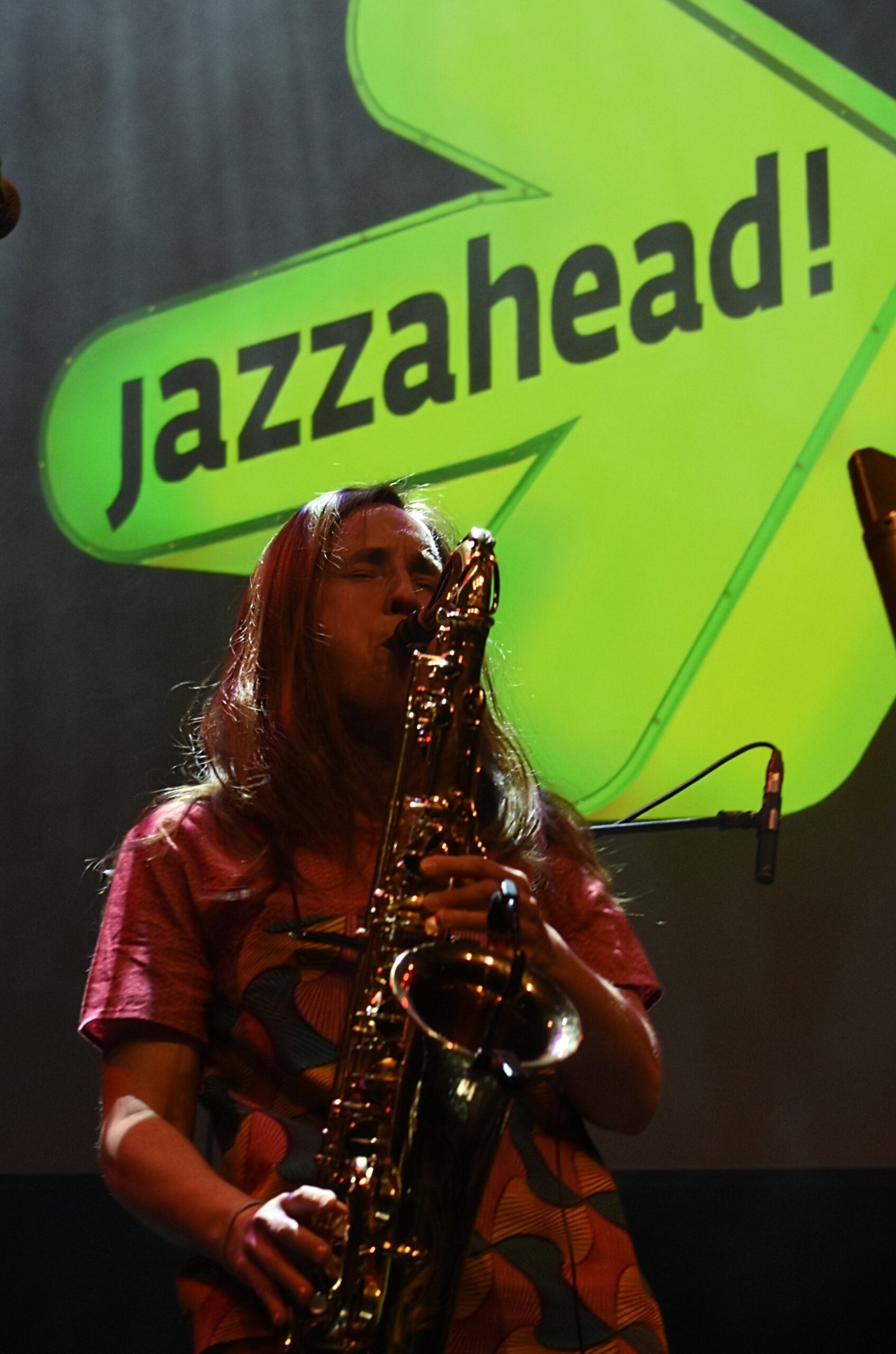
Jazzahead! with its full schedule took place for the 20th time from April 23-25, and seemed wholeheartedly welcomed by its attendees — reportedly 3 000 industry professionals, 2984 trade visitors from 62 countries at some 50 conference programs, including 38 showcases within the fair and approximately 120 concerts at 45 stages in city clubs, for an estimated total 20 000 visitors –simply for the opportunity to gather together.
It started with a grand opening concert of Noorbotten Big Band on Wednesday, and long nights followed, showcasing European, African, and overseas or, better, worldwide cooperation. Sweden this year partnered as host with Germany, and stylistic diversity abounded via the musicians in the venues all around the town, playing until early Sunday morning.
Bremen is a port city and university town, one of the oldest export centers (originating from the Hanseatic League) in Germany (currently the most powerful European economy) for goods’ transport and container shipments of coffee (Jacobs Krönung), cotton, Beck’s beer, robotics and cars – home to Mercedes Benz, and close to Hamburg, Denmark and the Baltic region.
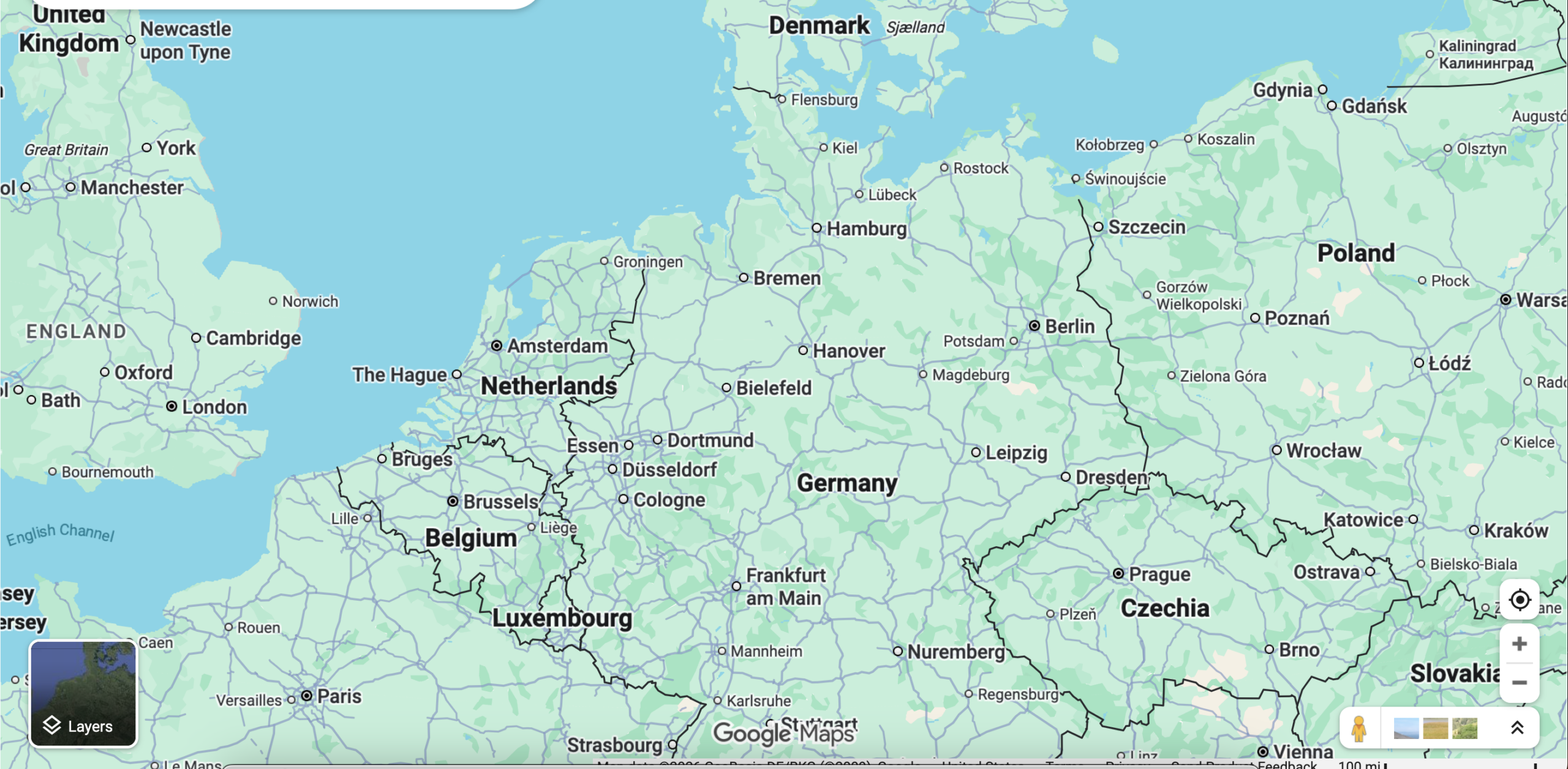
Not only jazzahead!’s attendance numbers but the status of many attendees — city and regional representatives, festivals managers, for instance — bespoke the importance of this event locally and to the greater jazz community. Conferences, panels, workshops (such as “Anyone Can Book a Gig“), and informal discussions brought into light various phenomena affecting jazz, including incursions of AI, biases of classism, the impact of jazz education, national scenes’ specific identities, and ups and downs of collaboration.
Program overlapping made it difficult to have a complete overview of the trade fair, so I followed a thread emphasizing U.S. jazz and European jazz crosscurrent.Though touching on many other themes and discussions the issue was addressed explicitly from two points of view: publicists’ and artists’.
The talk “Jazz From Europe, An American Perspective” – featured U.S. publicists Merewitz and Lydia Liebman, moderated by music journalist and jazzahead artistic advisor Gotz Bühler. Topics they covered — similar to those they discussed in this episode of the JJA Buzz podcast, and what Merewitz writes of in essays on Substack — emphasized the daily practical challenges facing the industry regarding basic communications between the U.S. and European entities, debates on what distinctions between European and U.S. jazz might be, analysis of the differences in streaming content and numbers between the two continents, and U.S. ignorance of the reality of European jazz, as a result of complicated procedures for hosting artists from Europe hoping to tour.
George Wein’s statement that jazz has been made by Americans but Europeans made the international jazz industry (apocryphal?) initiated a provocative dialogue involving highly experienced speakers and listeners in the packed-full lounge of Hall 7, Business lounge of the Bremen fair. A jazz musician from Kansas City emphasized that he never hears the terms “African/American/European” jazz spoken of in States, that music is either considered “jazz or not.” An American jazz educator teaching in Europe observed that most of his students name American musicians as role models. Some British attendees shared experiences claiming successful integration of different cultures into their scene.
In conclusion, one commenter drew a parallel. “The reason why those people [meaning U. S. jazz musicians] left America, those are the people [meaning the other ones that had provoked them to leave U. S..] that block [European] musicians from touring, today.” His statement, reminding us about the difficulties, determination and dedication jazz players have always had in promoting their music, was supported by applause.
Responding to such issues, European musicians in 2020 organized the Voice for Jazz Musicians in Europe, based in Paris, France, through the Grand Formats program of the New Deal hub. It “advocates for a more equitable representation of European . . . ensembles at European jazz festivals.” It recognizes Europe as a “unidirectional,” and “a major market for North American jazz artists” on an “export-only dynamic,” in terms of trade deficit and relations between E.U. and U. S. dating from the post-WWII. It means to open more work opportunities, too.
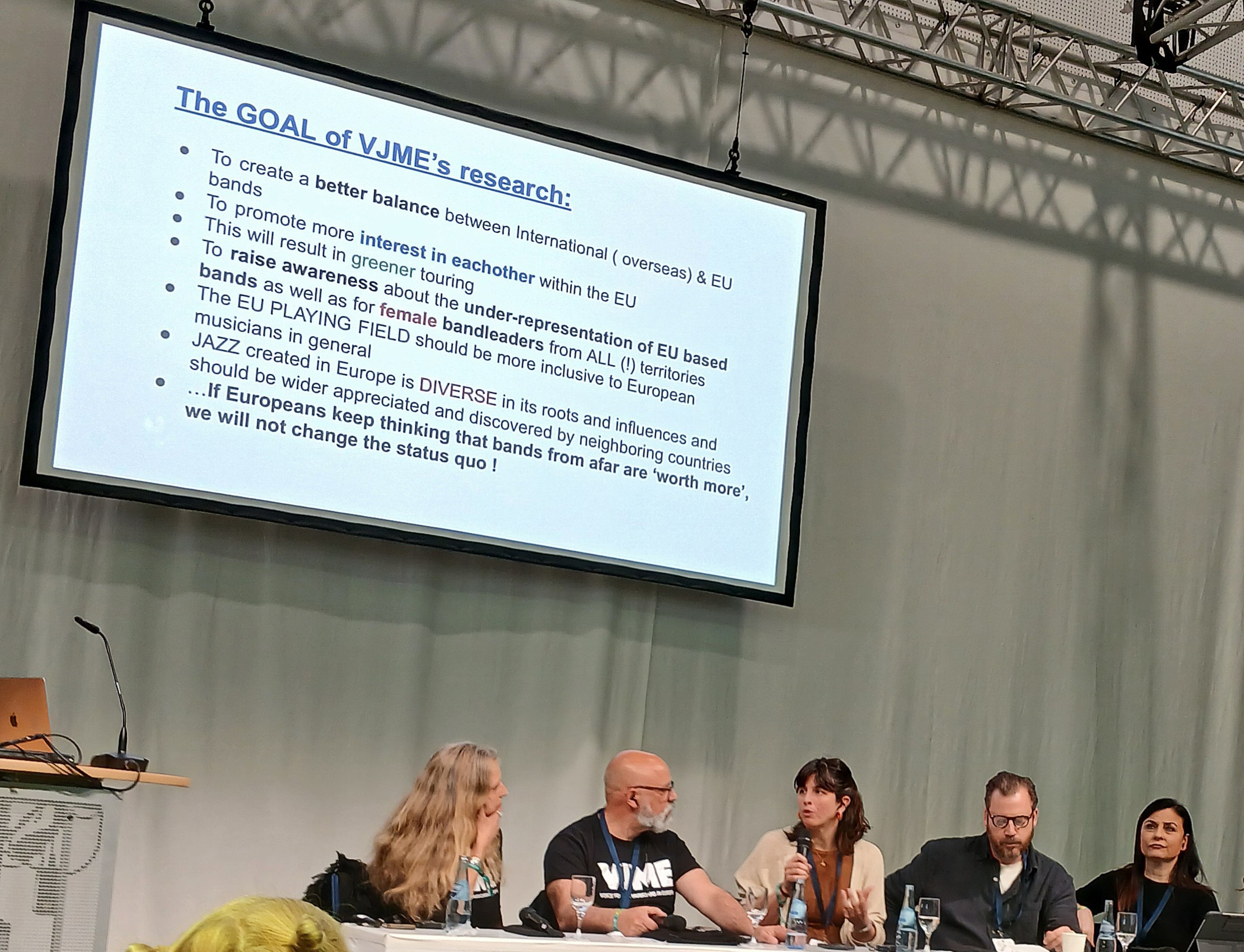
The panel “European Jazz Festivals: A Market for European Musicians?” led by Pedro Cravinho (Portuguese Jazz Network, VP VJME), comprised Fleurine Verloop Mehldau (President VJME-Chair BIMpro Netherlands, researcher), Eric Birath (Stockholm Jazz festival Sweden), Marina Fernández (Jazz Espana) and Silvia Alunni (Visioninmusica Italy). It opened up by presenting VJME goals, followed with quantitative research results (still not published) aimed to raise awareness for better balance between the scenes and to scan the percentages of performers booked at E.U. festivals in three categories: Locally based; from the U.S. and overseas including Canada and Japan; from the E.U. as well as comparisons of male/female band leaders. The research did not take nationalities of the musicians into account, instead using where people live and work.
Each panelist, after presenting general tendencies, spoke of their experiences organizing festivals in their own countries. The imbalances in the three categories vary from country to country, but the percentage of European musicians booked is generally low. As pointed by Verloop Mehldau, the E.U. scene, being diverse in its roots and differences, could be more inclusive for E.U. musicians in general. The interesting point was that we Europeans do not know each other well. When professionals were asked to name four well-known living jazz musicians from their neighboring countries, most seemed to have a hard time.
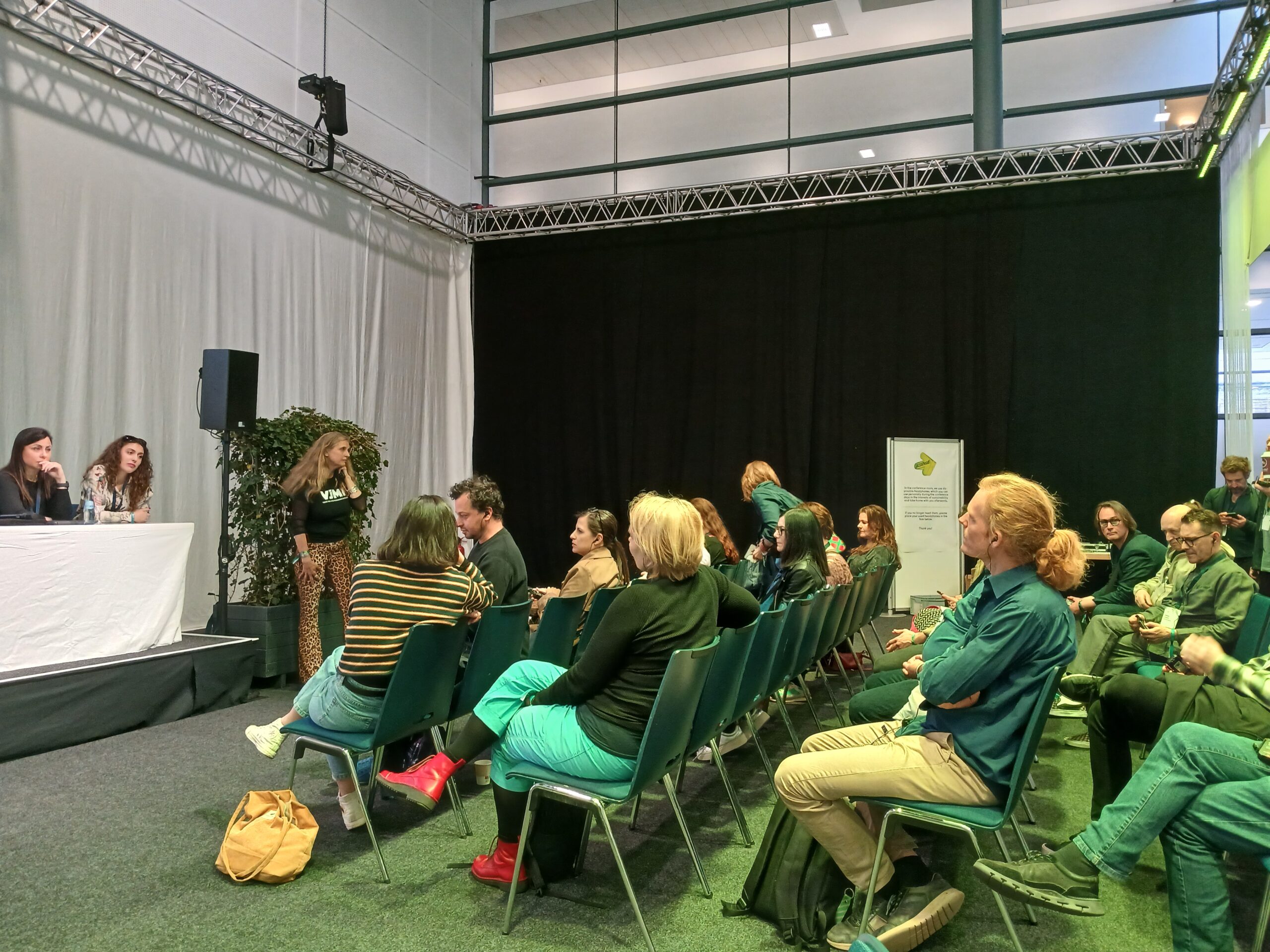
Audience members had creative responses. Mathias Heise, harmonica player and board member of Jazz Denmark, said that a broader cultural exchange, not only a musical one, would lead to trade shifts as well as raise the interest of European audiences. Monika Herzig, pianist, bandleader, educator (and JJA Jazz Hero), urged that the power of music school programs be considered. She and assistants had launched efforts supported by the Creative Europe program, compiling a songbook by European female jazz composers inspired by the work of Berklee Institute for Jazz and Justice artistic director Terri Lyne Carrington, aiming to underline Europe’s own jazz identity.
Swedish and Spanish representatives claimed that market value, as demonstrated by audience interest, is the only criteria for the fees for jazz musicians, not their geographical background. Swedish festivals and clubs have shown a balanced approach, according to the research. Birath proposed a model for promoting jazz that would initiate the funding of promoters who have demonstrated their capability of presenting various programs successfully.
Fernández, however, described her Spanish scene as balancing U.S. and local musicians, with scarcely participation of E.U. partners. She urged advancing cooperation between the countries, announcing a conference next month (June 2026) in Oviedo, Spain, titled “What Brought Jazz to The European Cultural Identity.”
Jamie Baum, New York City-based flutist (and JJA Awards nominee), remarked, “We have a lot of similar problems,” in States, and offered one solution from an experience she’d had in Valencia, Spain. She found that personal trust of a local audience in a promoter’s taste allowed for the presentation of lesser-known musicians. Pedro Zaragoza from Venezuela spoke of the same tendencies.
The VJME board members also talked of their outreaches toward overseas regions. Alexandre Herer, president of Grands Formats, the French Union of jazz artists/musicians, proposed setting up a bands’ support program that could bridge several European countries, and urged everyone to apply for Creative Europe funds. We were all encouraged to contact the VJME board and Cravinho with proposals and, especially, solutions.
The time seems right now for a new, creative, collaborative and flexible jazz industry business model involving innovations for club scenes and rethinking the concept of the jazz festival, to uphold creative exchange, foster unique collaborations of musicians and the spirit of jam sessions as spontaneous encounters of diverse sensibilities, spreading jazz worldwide as more performers get to know each other and find interlocutors to enhance musical dialogues. A growing number of young, educated musicians are naturally inclined toward broadening personal and collective horizons; doing so, they attract the younger audience, too.
At jazzahead! much was said about Spotify, created by Daniel Ek and Martin Lorentzon in Sweden, and the streaming numbers, playlists and content content let us recall the power its novel business model generated at its beginning. I/We are asking readers to recall their business model’s innovation. For a vision of how such profile could be stirred up now, take a peak at the UNIT Records‘ conference discussion about refocusing a label’s work towards promoting artistic independence, creativity and collaborative spirit; as well as developing initiatives in booking, marketing, and artist residencies.

“Take faith into your own hands, take risks and pursue common goals”, is the moral of the famous fairy-tale The Brementown Musicians by the Brothers Grimm, according to the locals. The story of the improvising animals who prevail over thieves underlines the importance of creative, collaborative, DIY initiatives in the development of innovative business models. What could be more appropriate and convenient for this international jazz occasion?