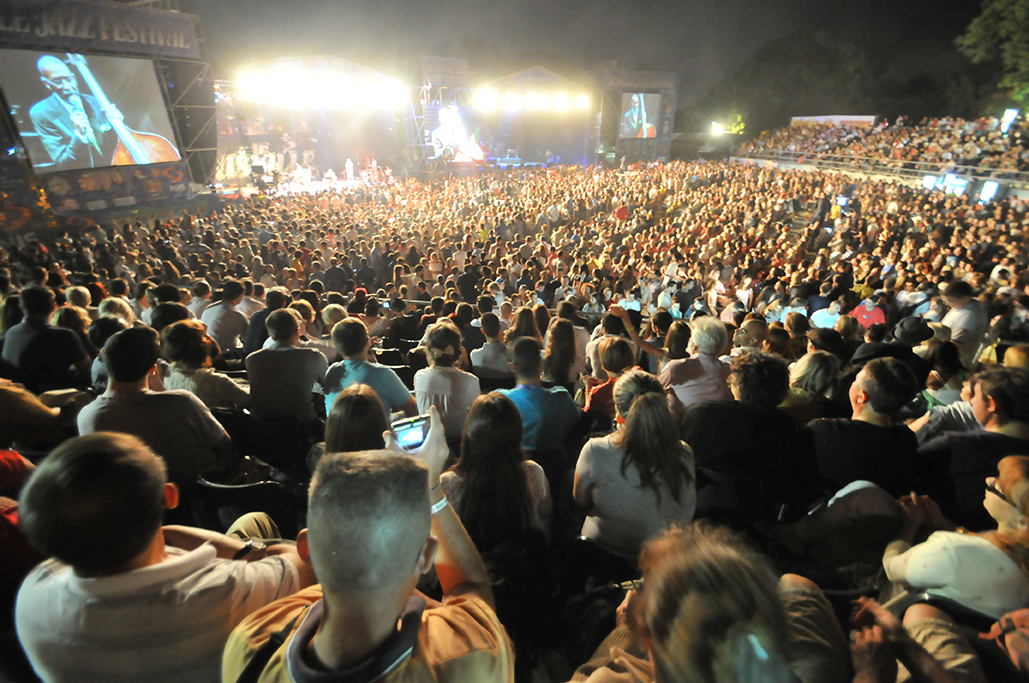
Niš is the third largest city in Serbia (after Belgrade and Novi Sad). At the end of the 3rd century AD, Constantine the Great, founder of the Byzantine metropolis Constantinople, was born here. Currently, one of the main cultural attractions of the city is the Nišville Jazz Festival (a name that alludes to USA’s Nashville). It boasts of having the largest attendance of any festival in Europe. In 2026 it claimed to have some 200,000 visitors.
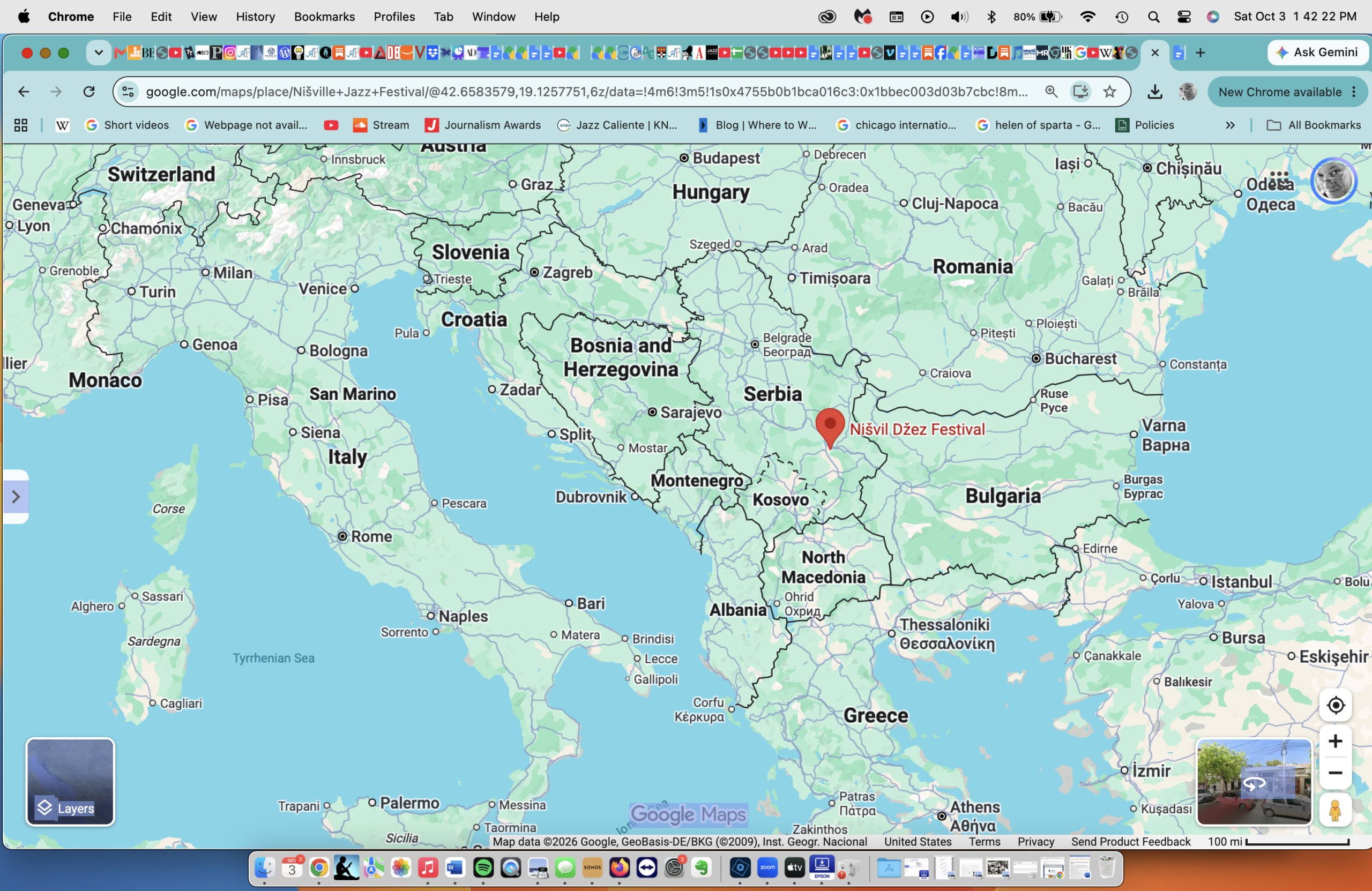
This mega-event reached now the 32nd edition. Its general director, Ivan Blagoevic, is committed to the feast’s declared eclectic character, somewhat in the wake of the model cultivated by Montreux Fest’s late leader Claude Nobs. In addition to the recitals on the main stage, spectators can choose from a wide range of musical styles – from traditional jazz or blues, to jazz-dance, hip-hop, Balkan-brass, and even more or less palatable versions of rock, heavy-metal, disco, etc. In addition, there are spaces dedicated to related events – exhibitions, a Jazz Museum, jazz and literature sessions, the Nišville Jazz Theatre, the Nišville Movie Summit, a children’s section, etc.
In May 2026, I had attended the Jazz-Word-Play conference at the University of Vienna (reported in JJA News). There I had met the dynamic intellectual Dušan Milenkovic, co-founder of the European Network for the Philosophy of Music (ENPM) and a lecturer with the Niš Faculty of Philosophy. After our lectures, my new friend did me the honou of inviting me to participate with a presentation at the fourth edition of the Conference on the Aesthetics of Music, which he coordinates under the dual aegis of the Nišville festival and the local University. It is an interdisciplinary meeting bringing together researchers with various professional credentials – from philosophers to professional musicians.
The initiative group, coordinated by Milenkovic, encourages dialogue between philosophical investigations, academic research and the various ways in which music is created, performed and communicated. Comparing both meetings held three months apart, I found that both managed to reach high intellectual levels, in an atmosphere of cordiality/conviviality and welcome solidarity, as a humanist response to the alienating confusion of current civilization.
Among the participants, I would first mention Alessandro Bertinetto, professor of aesthetics at the University of Turin, where he also teaches Philosophy of Music. He is also director of ART (Aesthetic Research Torino Centre), as well as author of valuable scholarly works. His presentation “The Role of Habits in Musical Improvisation,” was an excellent introduction of a predominantly theoretical nature, to the themes proposed and discussed during the conference.
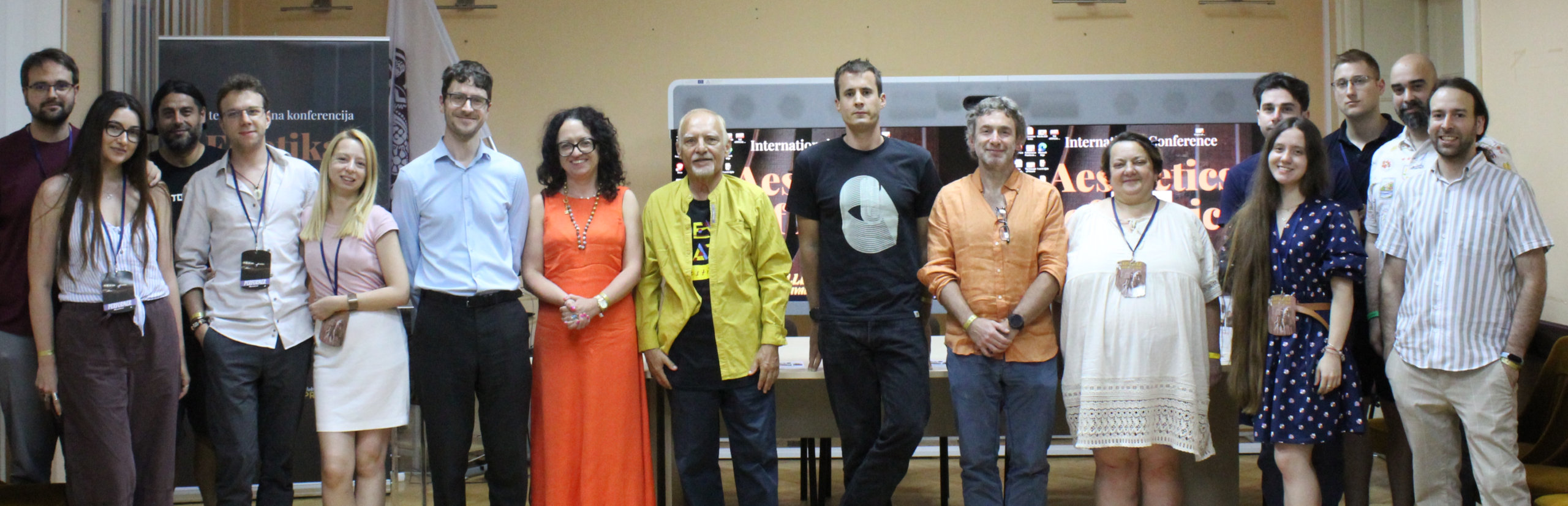
I had met the North Macedonian guitarist and composer Saso Popovski at the Transylvania Jazz Festival in my native city of Cluj. In the meantime, he has established himself in the cultural life of his homeland, both as a professor of the Jazz Department at the University of Stip, and as the leader of the (polycentric!) Jazz Festival based in the charming town of Bitola. His speech at the conference was worthy of the exciting title: “North Macedonian jazz export – dream or reality?” It is refreshing to learn that, despite the not-at-all encouraging global situation, dozens of students have graduated from higher jazz studies in this country, and a brilliant National Jazz Big Band operates in Skopje (I state this with knowledge, after seeing it perform in the Croatian capital, Zagreb). In fact, two other Macedonian guitarists of international stature were present in Nišville with recitals: Toni Kitanovski and Vlatko Stefanovski.
The young Croatian Ivar Roban Krizic is a double bassist, composer, researcher, curator and educator. He is currently based in Vienna, where he teaches at the University of Music and Performing Arts. He presented us with experimental recordings made in conditions of extreme isolation: the project consisted of simultaneous recordings of Krizic on double bass and three musical collaborators, completely acoustically and visually separated, in order to explore how bodily memory and shared musical history can generate an imagined presence and coherence in free improvisation. I was delighted to learn that among the ancestors of the dynamic I.R.K. was also the pioneering promoter of jazz in Croatia, Miroslav Krizic (1930-2013).
Ms. Anna Checka, a professor at the Institute of Philosophy in Gdansk, combines humanistic studies with an interdisciplinary approach inspired by neuro-aesthetics and neurobiology, also capitalising on her studies as a classical pianist, completed in Poland and France. Musicologist and pianist Jeremy Coleman – born in England and raised in the Celtic atmosphere of northern Scotland – has assumed, starting in 2020, the role of director of the music research sector at the University of Malta. An opportunity to remind us that the tiny Mediterranean island can boast, since 1990, one of Europe’s great jazz festivals. Both Coleman’s intervention and those of local researchers Mihailo Antovic and Nikola Acanski focused on the historical and philosophical aspects of music. As for me, I opted for an inviting theme – “The Fascinating Diversity of European Jazz” – in tune with the current situation of the host country, which is a candidate for accession to the European Union.
The extensive concert menu of the festival, held mainly outdoors at the impressive Niš Fortress, acted on me somewhat as an inhibiting factor. It reminded me both of the ambiance of the Ethnographic Museum of Transylvania, where recent editions of Cluj’s Jazz in the Park festival were held, and of the accounts from the 1980s of Pawel Brodowski (mastermind of the fabulous Jazz Forum magazine, edited in Warsaw by the International Jazz Federation). He had told me about the psychological pressure he felt whilst attending the enormous North Sea Jazz Festival in the Netherlands as a novice. The abundance of offers and the simultaneity of stage performances diminished the capacity for reception (not only critical, but also … purely hedonistic) of musical content.
That is why in Niš I had only a few revelations, quasi-accidental, watched on the two main stages (sometimes doubled by sound interference from the neighborhood): the band Deaf Platypus, confirming the reputation of Czech jazz through a balanced and attractive performance, under the tutelage of Prague’s Conservatory with a jazz profile; the young Bulgarian-Italian group Caroleo/Ghicev/Toshkov – Hammond Trio, inspired by the American model of the Peter Bernstein/Larry Goldings/Bill Stewart Trio; the Argentine ensemble La Orquesta de Antes, with a repertoire based on traditional music from various areas of that great Latin American country. I was pleased to see the versatile Macedonian guitarist Toni Kitanovski on stage again. This time he focused his Afrocentric explorations on collaborating with Malian vocalist and multi-instrumentalist Baba Sissoko, master of the tamani (talking drum) and instruments from the griot traditions of West Africa.
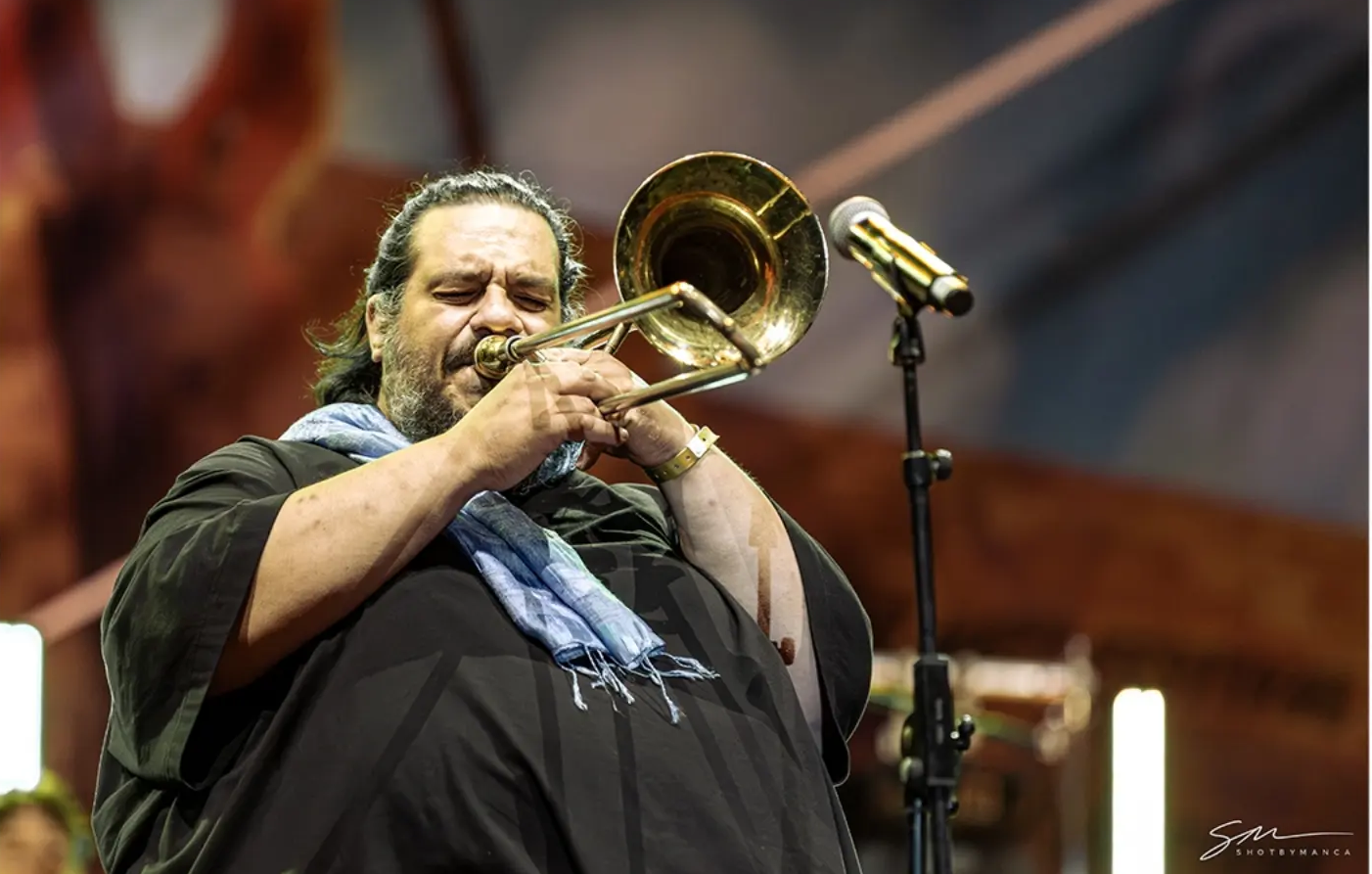
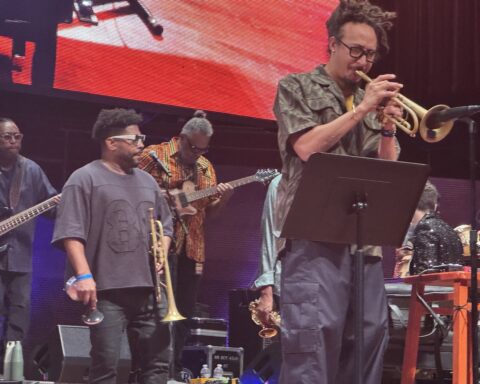
The great pleasant surprise was Bend-it! Orchestra, coming from the Adriatic coast of Slovenia. Made up mostly of young people full of talent and enthusiasm, the ensemble conquered the audience especially with Caribbean coloratura pieces, in an exhilarating atmosphere surveyed by conductor and trombonist Denis Beganovic, who himself performed with an ease often reminiscent of Trombone Shorty.
The culminating moment of the Nišville festival – and of my experience on site – was the recital of the Trio led by Paquito D’Rivera. The Cuban musician, who emigrated to the USA in the 1980s, is what is called a jazz giant in the jargon of American music critics. In general, D’Rivera’s music is imbued with timbral arrangements of baroque luxury. However, in Niš he appeared in a quasi-ascetic formula, alongside two other Latin musicians: the Cuban Pepe Rivero, capable of substituting/suggesting through efflorescent rhythmic-harmonic piano inventions an entire orchestral gear, and the Colombian Sebastián Laverde. The latter made up for the absence of his instrument of predilection – the vibraphone – through a (oxymoronically speaking) concentrated-expansive use of the so-called steel drum – a kind of cauldron, from which percussive-metallic sounds with ambiguous, sweet-sour effects can be extracted.
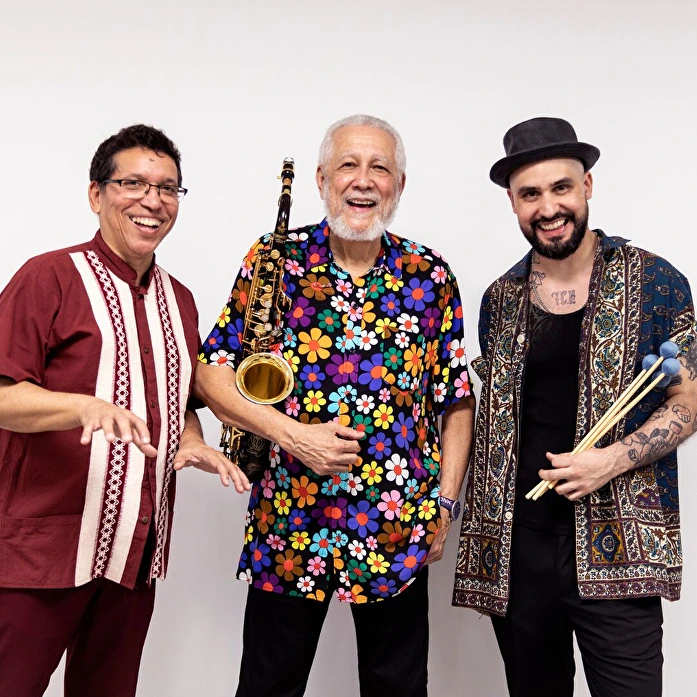
The much-applauded synthesis of classical, jazz, bonhomie and humor, bearing the Paquito D’Rivera brand, was a good opportunity for the organisers to award him (at the age of 78) the supreme prize of the Festival, bearing the name Emperor Constantine the Great. On a personal level, I reached another unforgettable moment, when – at the end of the recital – I was led backstage by the outstanding pianist Pepe Rivero, to meet the maestro. At the 3000-seats Palace Hall jazz fest in Bucharest in 1993, I had had the privilege of chatting at length with the legendary Paquito, whom – after my inclusion in the DownBeat Jazz Critics Poll over 30 years ago – I nominated annually as the most important representative of the alto saxophone (and sporadically of the clarinet) in the world of jazz. Animated by our subliminal belonging to the Latin sensibility, we had a lively dialogue, somewhat shorter than 33 years ago, but just as intense.
And another revealing episode for the universalist spirit of jazz: I had waited patiently for Saso Popovski to finish his dialogue with a gentleman to whom he had offered his recent album. In the semi-darkness behind the stage, I had not managed to figure out where that interlocutor, who was affirmatively the owner of a colossal collection of jazz records, came from. When he replied that he was from Israel, I told him that I had been a long-time pen pal with Adam Baruch, the leader of the first independent Israeli record label, JazzIs (since 1987), and my fellow on the editorial board of the aforementioned Jazz Forum magazine. To which, the pseudo-unknown said: “Okay, but I am Adam Baruch!”
Obviously, in the next second I remembered that we had met in person at the International Jazz Federation Congress, held in Norrkoping/Sweden in 1984, that we had written comments about each other in various publications, and what’s more: in 2017 we had met again in Haifa, the city where he had emigrated from Poland. His wife, Rodica, was born in Bucharest and had also emigrated there when she was 11. Our unexpected threesome reunion in Niš only reconfirmed the intrinsic capacity of jazz to create soul-bridges across space and time.
Photographs by Mirjana Mitrović, Darko Milenković, and the Nisvillle Jazz Festival Archive.