More than a decade ago, I took part in the Jazz in Word International Conference, organized by Kirsten Krick-Aigner and Marc-Oliver Schuster under the aegis of the University of Vienna. The proceedings of that jazzology-forum were later published in the massive volume Jazz in Word / European (Non-) Fiction, (from Koenighausen & Neumann Verlag, Wuerzburg, 2018).
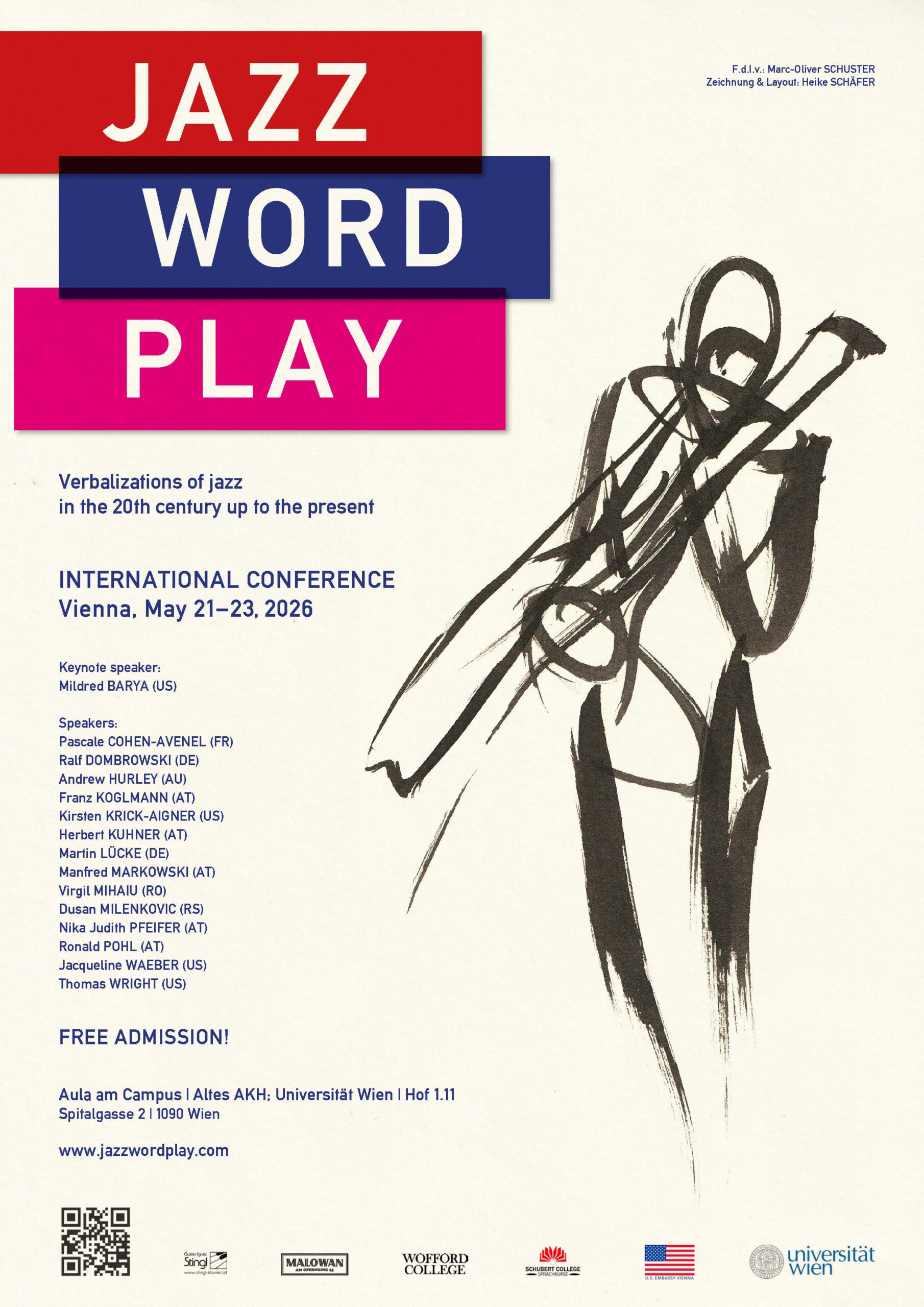
Recently, defying the current global vicissitudes, the same academic tandem made possible yet another Conference dedicated to the confluences between jazz and the arts of the word. The title was expanded by a new reference term: Jazz – Word – Play, bearing the subtitle “Verbalizations of Jazz in the 20th Century up to the Present.”
As such, I gladly responded to the invitation to actively participate in the Conference proceedings, whose papers presented in the auditorium of the prestigious Universität Wien are supposed to become chapters of a forthcoming collective volume.
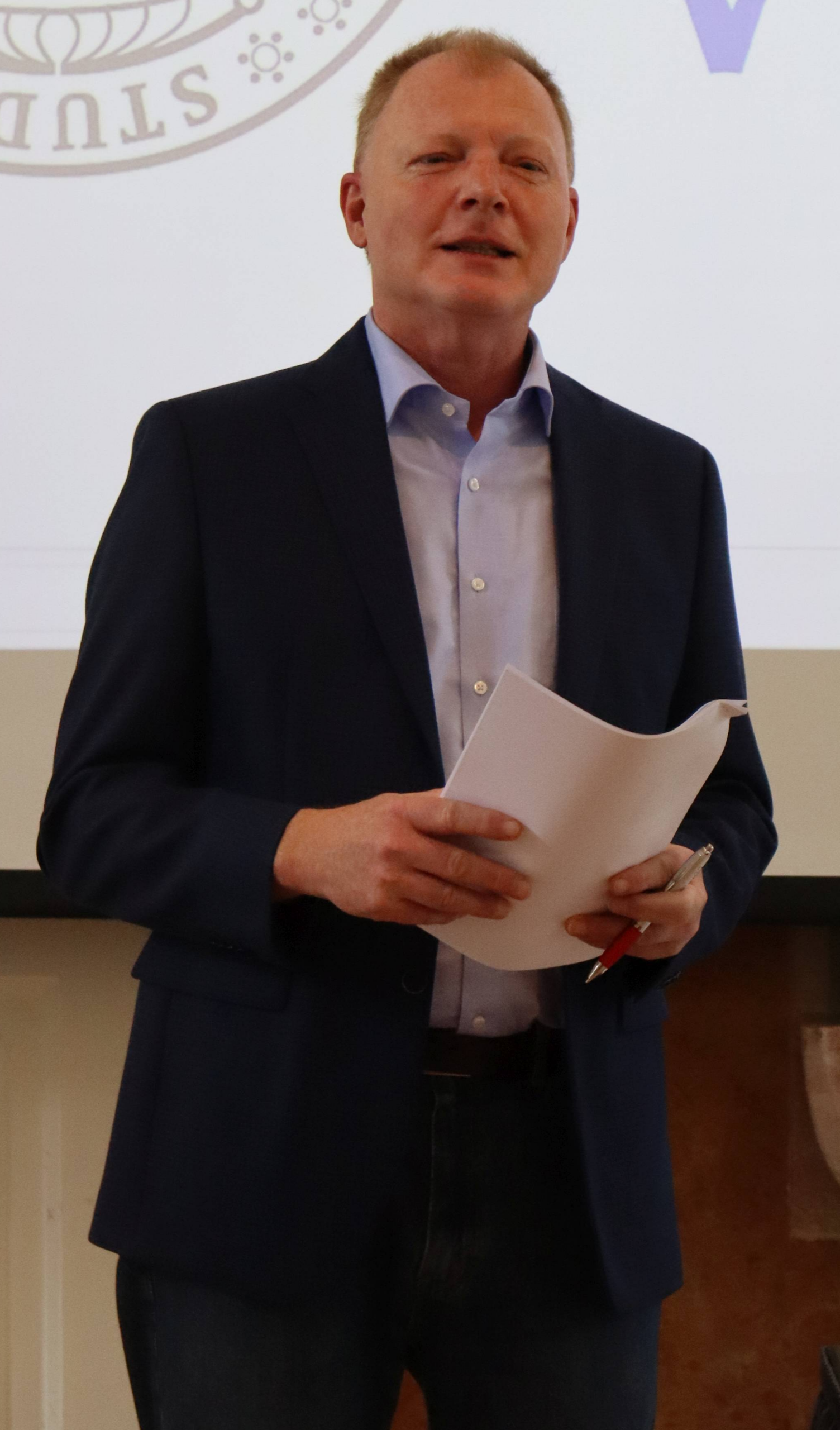
Munich music journalist Ralf Dombrowski opened the proceedings with an essay in German, entitled “A Little Introduction to the Language of Musical Description.” Starting from the general idea that music is a surprising art – nonverbal, without a specific place in the brain, but which nevertheless manages to influence our perceptions of reality – the author reiterates from his own perspective arguments for jazz’s intrinsic capacity to maintain its polysemantic openness, while at the same time evading normative descriptions. Taking advantage of the German language’s specific ability to create compound words, Dombrowski ironically mocked the snobbish tendencies of some critics to conceal the precariousness of their judgments, through a method called Inkompetenzkompensationskompetenz (meaning “incompetence-compensating competence”).
Australian jazz scholar Andrew Wright, professor with University of Technology Sydney, whom I had already met at the previous Vienna Conference, repeated the long journey from the fifth continent to Central Europe in order to present his views on the relationship between “radio jazz broadcasts and the written word.” I was delighted by the photo and video illustrations relating to the beginnings of the “jazz lectures” through which critics of the stature of Joachim-Ernst Berendt pleaded for the recognition of jazz as a high art form. At the same time, I nostalgically recalled similar lectures of five decades ago, in the 1970s-’80s, given by Ioan Mușlea, Zsolt György, Iosif Viehmann and myself at Cluj-Napoca’s Students’ House of Culture.
Berlin musicologist Martin Lücke focused on the reflection of jazz in German detective novels from 1929 to 1938. During the transition period between the Weimar Republic and the Nazi regime, jazz had an ambivalent character: On the one hand it was a symbol of urban modernity, internationalism and social openness; on the other hand, an object of cultural-political defamation and totalitarian control.
American saxophonist and composer Tom Wright presented – in video form – his own adaptation of E.A. Poe’s short story The Masque of the Red Death, performed by his South Carolina Project X Big Band. In this case, Poe’s words are used as a narrative accompanying the orchestra and not the other way around. In addition to his interesting achievements as composer and arranger, Wright would also demonstrate his interpretative talent during the recital at the end of the Conference.
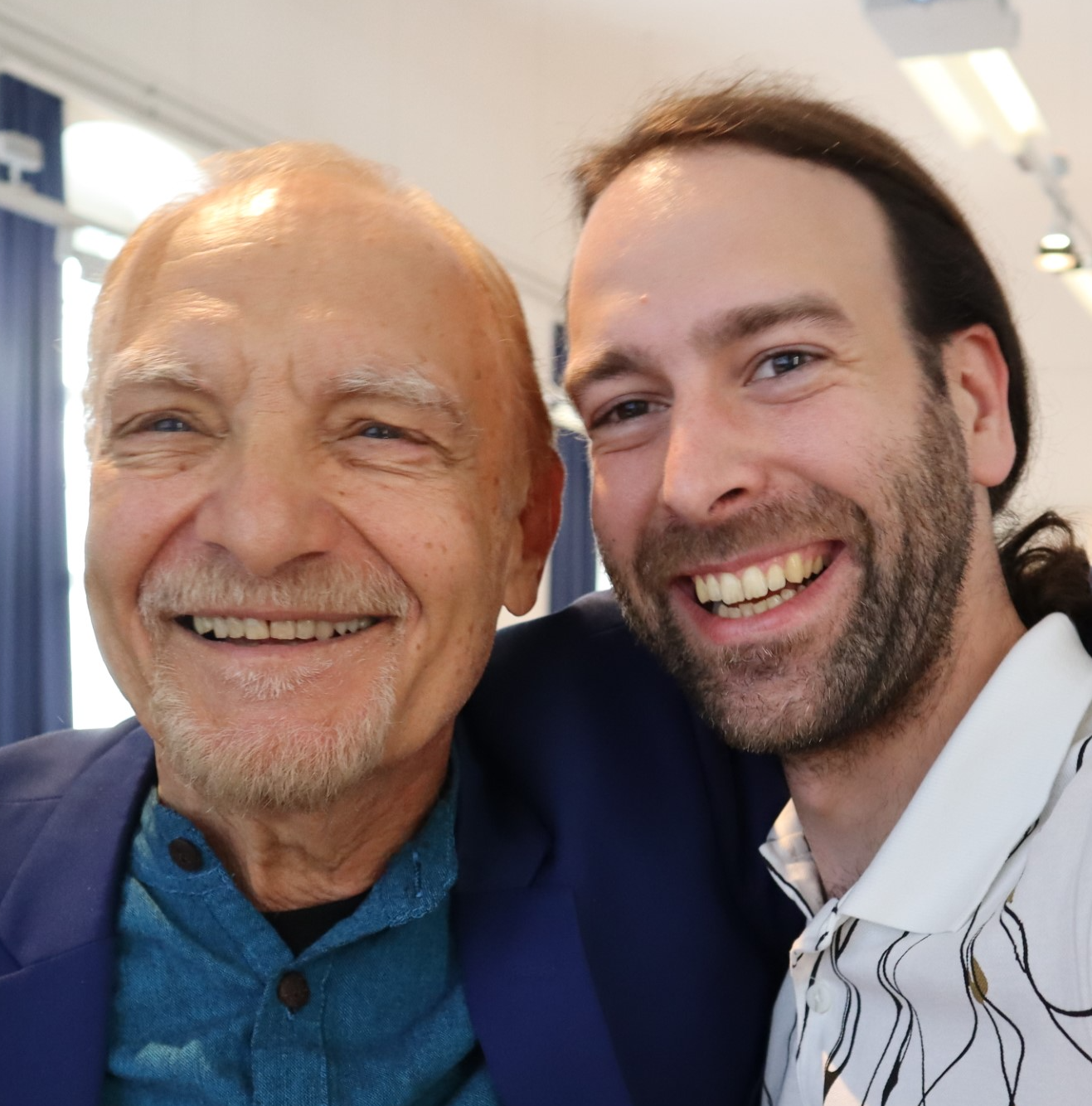
Guitarist Dusan Milenkovic (b. 1991), teaches at the Faculty of Philosophy of the Universityof Nis/Serbia, and is also one of the organizers of the extensive Nisville Jazz Festival in the same city, as well as a co-founder of the European Network for the Philosophy of Music (ENPM). In Vienna, he approached Jean-Paul Sartre’s novel Nausea from a jazz-aesthetics’ perspective. In fact, it was a sample meant to acquaint us with the way the musical aesthetics colloquiums organized within the aforementioned mega-festival proceed. As you may notice, that’s another area of intense activity and attractiveness on the map of European jazz!
Swiss jazzologist Jaqueline Waeber is an associate professor at Duke University, NC/USA. Her captivating essay referred to “Jazzing Language in Serge Gainsbourg’s Songs.” Starting from the idea that – in the post-Charles Trenet era – French singer-songwriters tried to “make the French language swing” (“faire swinguer la langue française”), the author argues that Gainsbourg’s poetry privileges the sonic and rhythmic possibilities of the language over conventional-semantic clarity, appealing to phonetic associations, syncopated phrasing that disrupts established metrical schemes, as well as the corruption of French through the phenomenon of “franglaise” (theorised by René Étiemble in 1964) – adopting Anglophone words, expressions and onomatopoeias.
A real revelation was the exemplifications of the unadulterated jazz charm of some songs composed and performed by Gainsbourg (in the sophisticated arrangements signed by Alain Goraguer), such as “Du jazz dans le ravin” – whose splendid saxophone passages are attributed to Georges Grenu (1958), “Le claquer de doigts” (1959), or “Les femmes c’est du chinois” (1961). The singer-songwriter, born of Jewish parents who were refugees from post-1917 Kharkiv/Ukraine to Paris), later developed his career towards the languid hit of great commercial impact (obviously, non-jazz) “Je t’aime, moi non plus,” initially performed in tandem with Brigitte Bardot, and later with Jane Birkin.
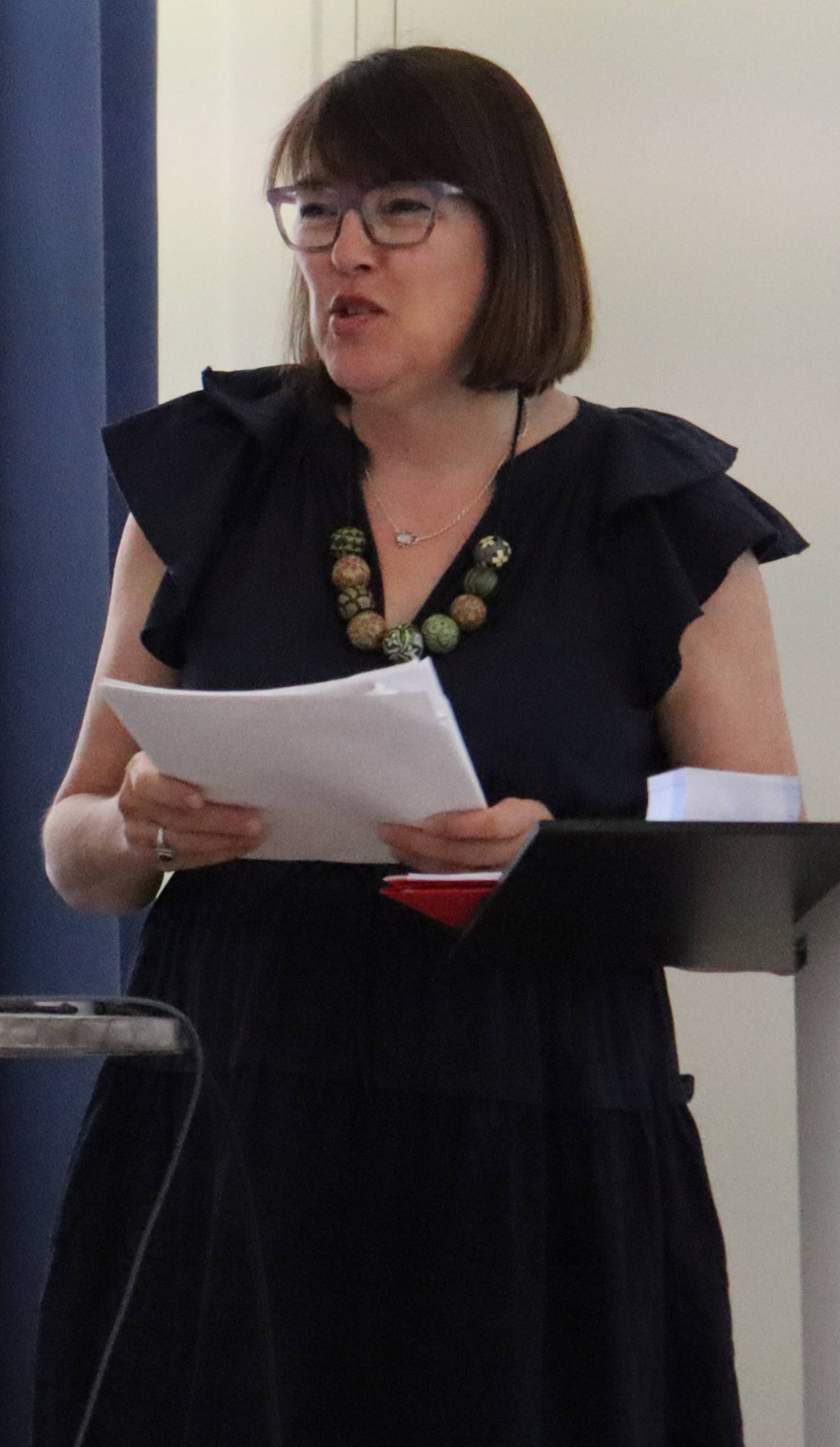
The cultural diplomacy address delivered by Mrs. Elizabeth Martin-Shukrun, counselor for public affairs of the United States Embassy in Austria, emphasized the importance of that institution’s involvement in the co-organization of the successful event.
African-American poet Mildred Barya, born in Uganda, delivered the so-called keynote address, on the topic of “Jazz-Inspired Poems and Other Jazz Literature Stories.” One of the pertinent observations of the young author referred to the inexplicable marginalization of jazz in the American media spotlight, a paradoxical fact if we consider that this musical genre is rightly appreciated as the most original contribution of the United States to the treasury of universal culture. By contrast, Ms. Barya noted the consideration given to jazz in the European cultural space – the Conference at the University of Vienna being itself a peremptory proof in this respect.
Well-documented and attractively illustrated were the contributions presented by Kirsten Krick-Aigner – on the early period of jazz and the emergence of the Charleston dance in the homonymous city of South Carolina – and Pascale Cohen-Avenel, professor at the University of Paris-Nanterre, on the coverage of jazz and jazz dances in the press of the Weimar Republic.
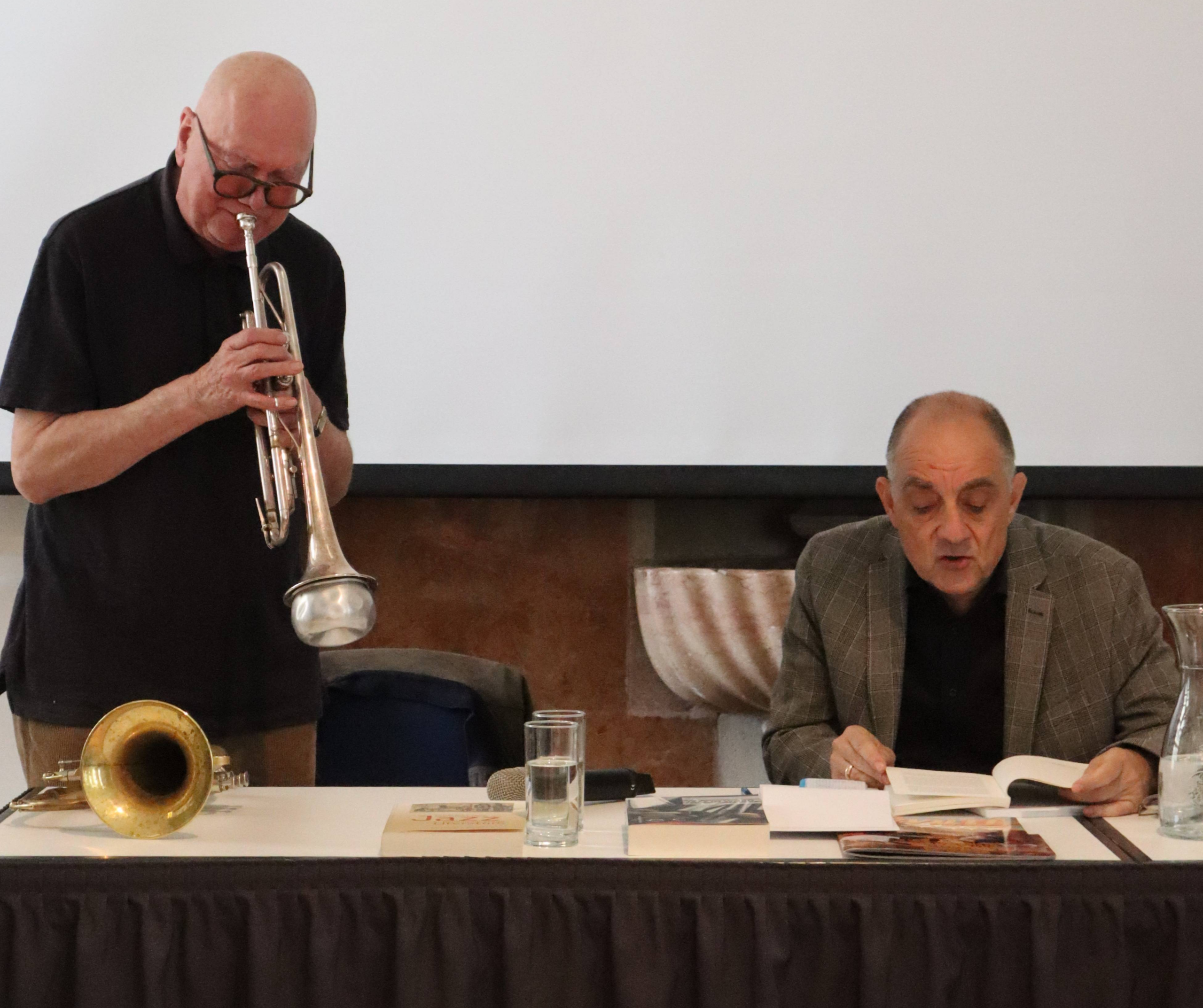
Several “live artistic sequences” featured Austrian guests, having as protagonist the celebrated avant-garde musician Franz Koglmann. He sketched dazzling improvisations on trumpet and flugelhorn, combined with texts about him by jazz critic Ronald Pohl, read by the latter himself.
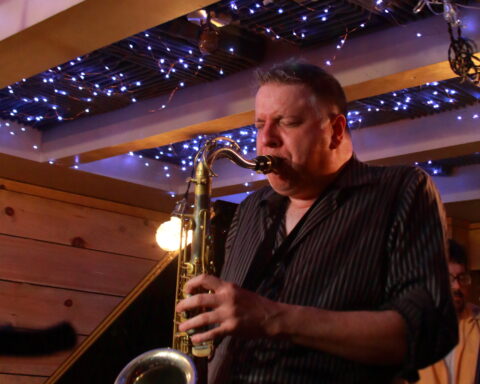
Poet Nika Pfeifer spoke her own improvisationally inflected jazz-poems, marked by the anxieties of the first quarter of the 21st century. Veteran Viennese drummer and poet Herbert Kuhner, born 92 years ago, delighted us with a selection of his countless poems inspired by jazz music and musicians. The final recital consisted of “pieces of resistance” from jazz history, reinterpreted with great verve by pianist Gerhard Buchegger, vocalist Maria Rank and guitarist Manfred Markowski, who were joined by the aforementioned Tom Wright, with his overflowing spontaneous inventions on alto sax.
The essay I presented at the Vienna Conference, under the title “Performing Poetry with Free-Jazz Improvisers,” proposed a retrospective evaluation of my performative experiences, consisting in the direct reporting of my own poetic creation to unconfined artistic expressions. That approach combined elements of avant-garde jazz, improvisational/aleatoric-music, postmodern experiments, instrumental theater, etc. under the sign of creative-ludic freedom.
Between 1978-1989 I had intensively promoted Constanța-based group Creativ, whose core – formed by Harry Tavitian and Corneliu Stroe – epitomized innovative jazz attitudes in the context of oficial cultural closure. In 1993 happened my providential meeting with Alan Tomlinson – member of the London Jazz Composers’ Orchestra and inventor of a sui generis artistic language expressed through the trombone.
For the present conference I havd conceived a kind of impressionistic writing about my experiences of performing my own poems in the avant-garde context offered by our group, Jazzographics,” comprised mainly of Tomlinson, Tavitian (piano, voice, kazoo, little percussion) and Stroe (percussion, drums, euphonium), who improvised on texts I spoke mainly in English and Romanian (but sometimes also in languages from other countries, where we had the chance to perform). My above-mentioned essay aimed to reveal how our poetic-musical collaboration developed, to which the Tavitian-Stroe duo was integrated, thus resulting the loose outfit. The only pre-established reference element was represented by my poems; the musicians enjoyed maximum improvisational freedom.
Since audio/video recordings with the Jazzographics are almost impossible to be found, I illustrated my lecture with a filmed summary of their performance on the stage of Cluj-Napoca’s Romanian National Opera in 1997. The comments from the Conference’s participants and audience, during the 15-minutes dedicated to discussions, were positively gratifying for the author of this article.
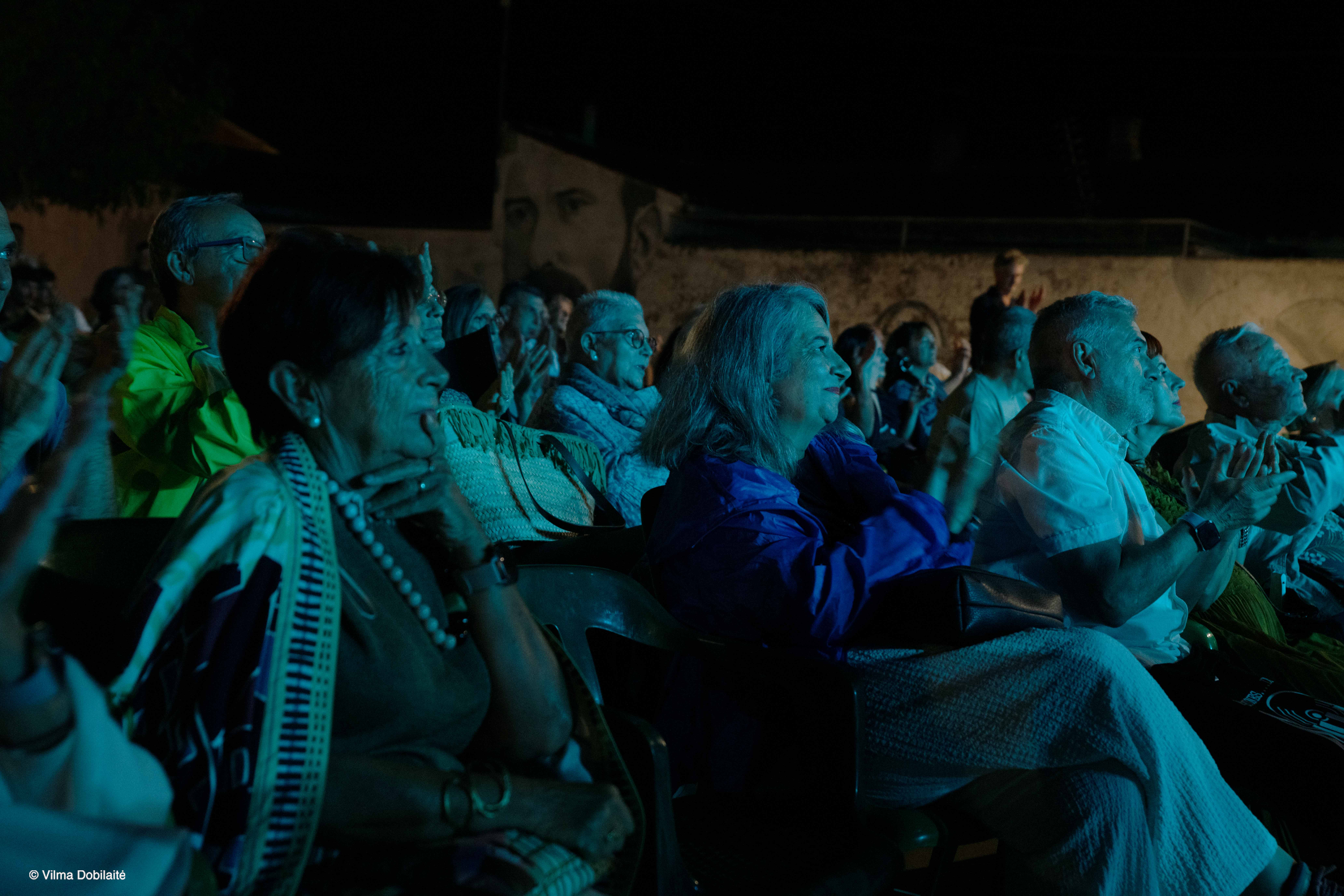
Photos by Dusan Milenkovic