
There’s a tendency, when writing about jazz, to fixate on the stage. But the stage is only one part of the system. Consider, too, the audience — their movement, their sense of urgency. If you’re paying attention, sometimes a city reveals how it actually listens.
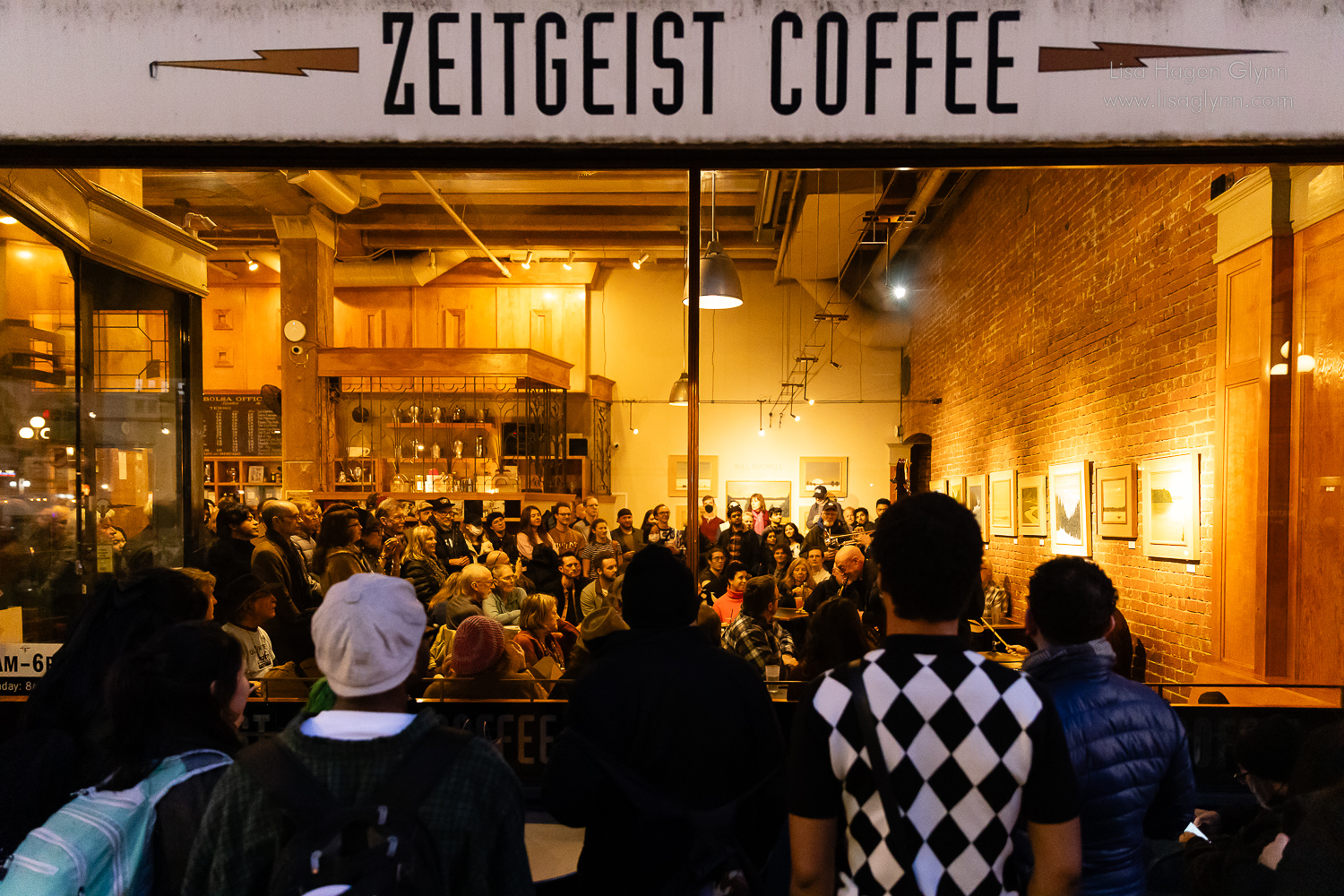
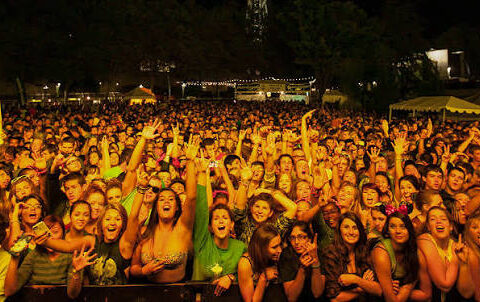
On February 24, Jazz Night in Pioneer Square, Seattle did just that. A free, multi-venue event presented by Seattle Jazz Fellowship in partnership with the Alliance for Pioneer Square activated fifteen venues across the neighborhood from 5:30 to 10 p.m., drawing a crowd in the thousands into a walkable circuit of live performance.
The circuit stretched across spaces like Zeitgeist Coffee, the Pioneer Building’s Expansive, Darkalino’s, Underbelly, Baba Yaga and other rooms folded into the neighborhood’s grid.
Jazz, historically, has never occupied the obvious space. It has lived upstairs. Around corners. Behind unmarked doors. You had to know where to go — or be willing to follow someone who did. That hasn’t changed. What has changed is the density in composition.
The crowd skewed younger than expected and noticeably so. Not just more people, but different people. New listeners brought with them a new pace and a different expectation of access. They weren’t waiting to be told where to go. They were finding it. Presence became a form of currency. The clubs were full in a way that altered behavior. See, for the younger generation of listeners, when access is limited by space rather than by algorithm people behave differently. They listen harder. They calculate movement and linger. The act of choosing a room to linger in becomes part of the experience itself. Jazz, in this sort of configuration, refuses passive consumption.
What emerged wasn’t just a series of performances. It was a map. Of where jazz happens — but also how it lives. Building, in real time, a map of experience.
So if you find yourself in Seattle, and you want to understand what the jazz scene actually feels like here — not just what it programs or promotes — the answer is simple: Wait at the edge of a room that might not let you in anyway.
Welcome to Seat Map with Emily Steinhilber. Now let’s find you a chair.
“Wow,” my friend said, looking around at the bodies pressing into the sidewalk. “I didn’t know so many people in Seattle liked jazz.”
I laughed — not politely, not delicately.“Jazz is alive,” I told her. “It liiiiiiivvveeeesss.”
Like I was the Bride of Frankenstein. And for once, that wasn’t dramatic exaggeration. It was field research. Fifteen venues. Fifteen bands. One night. Pioneer Square breathing like a lung full of Seattle people who desperately needed a good exhale. Thank God it wasn’t raining. A perfectly cool, forgiving evening.
My friends and I converged outside Baba Yaga initially, and I called it from the street, “Yup, Joe Doria on keys at this spot.”
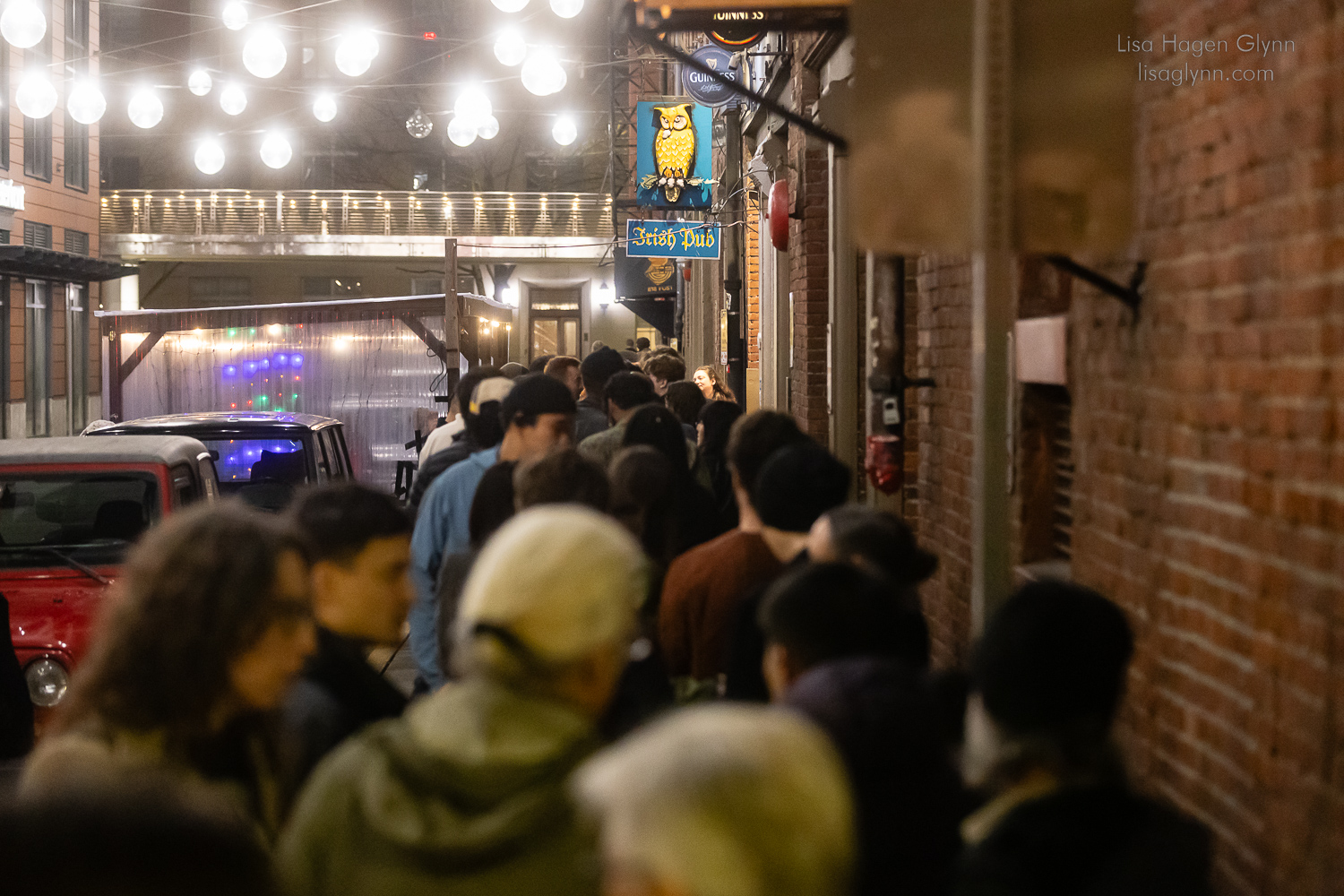
There are certain nights when a neighborhood stops being geography and becomes evidence. Lines wrapped around corners. Music leaking from doorways. Brick buildings holding low-end frequencies like they were engineered for it a century ago. People navigating from set to set with the kind of commitment that requires sacrifice: Which set do we leave early? Which line is worth the wait? Which room might we not get back into if we step out?
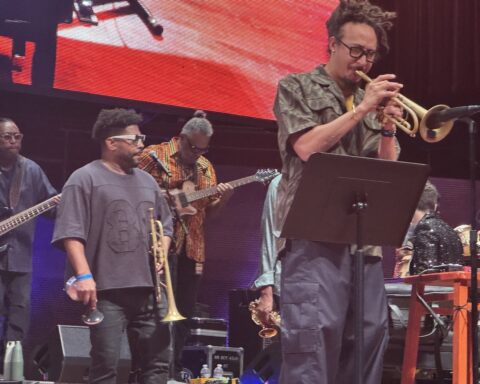
From the sidewalk we peered into Zeitgeist Coffee as Beserat Tafesse woo’d the audience, which appeared sealed inside a Tupperware of his trombone; in much the same peeping tom fashion we looked in at Thomas Marriott (trumpet) and Dvonne Lewis (drums) surrounded by the glow of a warm grateful audience. This wasn’t wine-glass background jazz. This was every venue at capacity with lines out the door. And capacity is an argument.
At the Pioneer Building, my buddy Adam Chmaj was playing saxophone with Sidney Hauser and her quartet. Moe Weisner on bass, Dylan Hayes on keyboard and Adam Kessler on drums. The room was so full I couldn’t get in. Not metaphorically full. Physically. Bodies pressed to the doorframe. No room to wedge into a chair or lean against a wall.
I’ve clocked these players separately all season. But together in this space felt like divine alignment. So me and my buddies peered into the tall old glass windowpanes until someone inside opened the venue’s door, inviting us in. Most of us being music or film industry people were not going to open the sealed barrier, but naturally took the patron’s friendly gesture as a cue.
Or rather, the cue. As my editor at Earshot Jazz begans to attempt propping the door open with whatever she could find, I ushered the folks behind us in like an elementary school lunch lady feeding hungry children — and together we filled the room. Oddly enough this venue, which is located inside the massive brick Pioneer Building, is called Expansive. Kismet.
We ended up in a side hallway. And that felt correct. If you grew up around live jazz as I did, you learned early that the stage is never the only story. You learned to read the architecture and to sense the air and to notice how sound bends before it arrives.
I tend to move on communal nights like these. However, occasionally the set locks my knees into the legs below me or a saxophone causes me to forget oxygen entirely. I couldn’t get close enough to be locked in at essentially all 15 of the venues. So I moved, but not away from the music, more like around it. I was with Paul Rauch, another jazz journalist in the Seattle area, and he pointed out to me between the listeners’ bodies the endlessly vertical staircases inside the Pioneer building. We studied their wood grain, like it mattered.
“It’s not quite mahogany,” he said, both of us secretly wishing maybe it would admit all of its history; “But it’s something sturdy. Probably trees from right around here.” He was as invested in the bannisters as he was in the band. And I understood that immediately.
Because I’m the same way. I want to know the trees that made the walls that hold the sound that holds the people. Jazz is ephemeral, yes — but it is never placeless. It presses against grain and brick and history. Sidney’s horn didn’t stay inside the room. It bled outward, through open doors. It didn’t allow for pristine, easy listening. It was large porous listening. And porous listening is historically accurate. Jazz has never belonged exclusively to the seated and silent. It lives in the listeners sitting on the stoop or peeking through windows; the listener twirling in the street.
We carry a narrative in Seattle that jazz is fragile. That it’s a niche. That it’s fading and not wild. But fragility does not create lines around corners! Fragility does not overfill historic buildings! Fragility does not force you into a hallway. What I saw was demand outpacing square footage. That is a very different thesis.
Was this my most transcendent listening night? No. It was connective. Circulatory. I met writers I’d only known online. Reconnected with musicians. Shook hands. Drifted because there wasn’t enough room to settle. But infrastructure nights matter. Not every jazz evening is devotional. Some are nights where a scene sees itself in and realizes: We are not small or fragile or old. We have simply been dispersed.
Centralize the music. Make it walkable. Stack the programming. This removes friction. The audience will show up. Women in floor-length white fur coats outside Darkalino’s. Others in pillbox hats like jazzy Jackie Os. By 8 p.m., every venue had a line around the corner. Every single one, at capacity.
At Expansive, a man wandered in from the street wearing a neon construction jacket, swaying without self-consciousness. “Tremendous!” he shouted toward the band.
I looked at Paul and laughed quietly, “I get that.” Sidney was tremendous, her clean and enchanting tones wrapping around the audience. At first, the joy of that stranger dancing was intoxicating, but the room seemed almost embarrassed of his interruption. We were standing directly behind the man, so when a wave of smiles across the faces of the audience blew by us, so did a wave of Seattle’s of warmth.
Paul laughed, too. Because sometimes Seattle needs permission for jazz to live like this. Permission to loosen the collar. Permission to swing without irony. We intellectualize before we move. But once people leaned into it, more shoulders and hips swayed. Jazz can be shy of its own joy here.
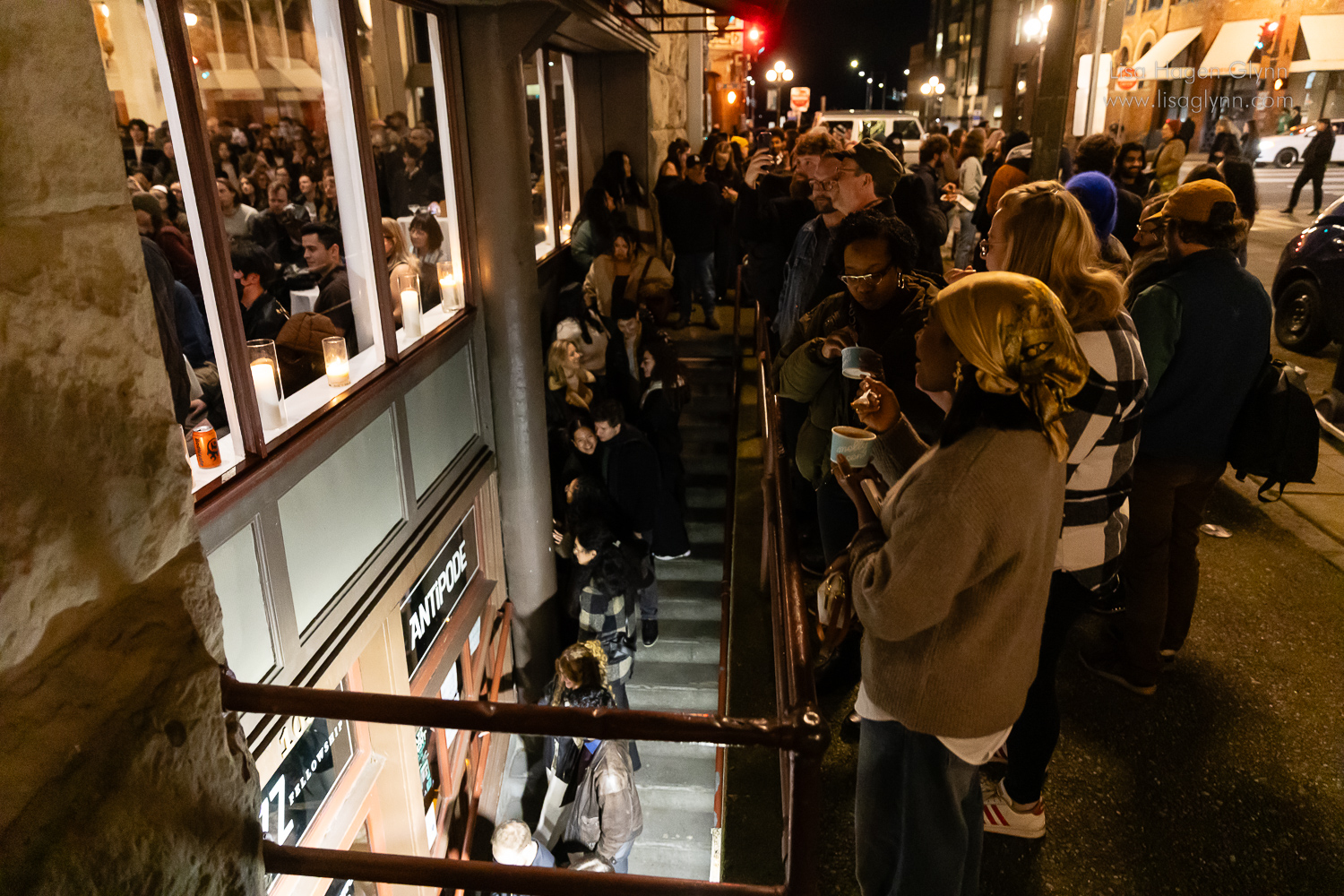
Not I — onward! When someone opened the door to let me in, I let in as many people as I could before it closed again. And the first person to instinctively try to prop it wider? An Earshot Jazz employee. Of course it was. The infrastructure must understand how this music behaves. If the hallway is full, you don’t tighten the entrance. You widen it.
My friend’s comment keeps echoing: “I didn’t know so many people in Seattle liked jazz.”
That sentence reveals the problem. We assume jazz has an audience deficit. What if it has a visibility deficit? What if it has an access problem? Scarcity creates value. And this wasn’t a digital scarcity. It was analogue, physical. If you left a room, you might not get back in. That changes behavior.
Walking back to my car over those unforgiving Pioneer Square bricks, I overheard a young couple half-smooching, half-smiling.
“It sounds so good down there,” she said. “It’s hard to leave.”
That feeling is the system working.
The infrastructure is already here in Seattle. The question is how we meet it and our posture in doing so. Because the music doesn’t need saving or defending. It’s not shy. It needs somewhere to go — and, in a city like this, people willing to take responsibility for receiving it where it lands.
Seattle-based Emily Steinhilber is interested in developing coverage of live jazz through the lens of audience experience, listening culture and local infrastructure.

So happy to stumble upon this fantastic article by Emily Steinhilber, I met Emily last year while on tour with Jamaaladeen Tacuma, now I see exactly how humble Emily is as she did not reveal just how talented she was ! This arrival reminds me of my time in Seattle in the mid 1990’s when live music was a staple for the “young hip” crowd . We made places like the OK Hotel our second home where we were exposed to new music from out jazz to rock and everything in between. Makes me miss Seattle even more . Congratulations to “Jazz Night “ and everyone who came together to make it happen. Looking forward to being there in person.