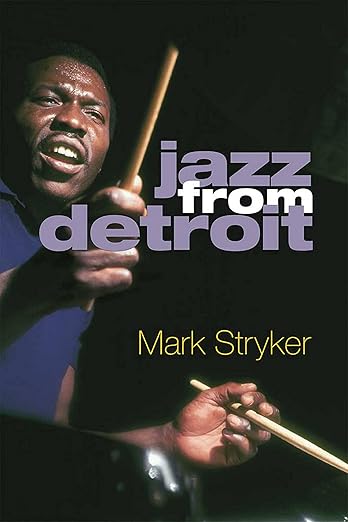
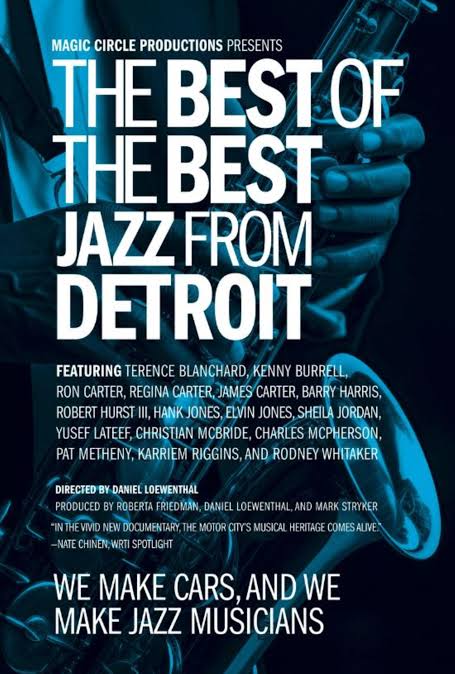
Detroit journalist Mark Stryker’s Jazz from Detroit was the 2020 Jazz Journalists Association’s Book of the Year, and now a documentary based upon his work, The Best of the Best: Jazz from Detroit, is streaming
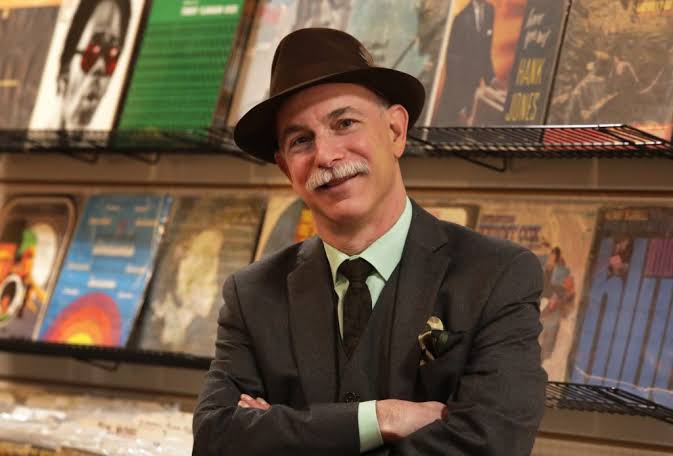
on Amazon Prime, YouTube TV, Google Play and Tubi.
In a recent phone interview Stryker reflected on the documentary’s path to development, the under appreciated contribution of Detroit’s jazz to Motown, and the city’s robust mentoring culture which has produced so many jazz luminaries.
Leslie Lynnton-Fuller: How long has this film been in development?
Mark Stryker: The film grew out of my book in March 2020, right before the world shut down. I was in Urbana, Illinois, giving a couple of talks about my book Jazz From Detroit which had come out the previous year. I was having dinner with some old friends, and one of them said, “Have you ever thought about making a movie or documentary out of your book?”
And I said, no, but that’s a really good idea. And she said, “I have these friends, they’re filmmakers in New York, would you like to meet them?” She connected me with Daniel Loewenthal, the director and editor of the film and co-producer, and Roberta Friedman, who is a producer. The three of us, me as a writer and co-producer, made this film.
What has always driven me is telling the story of Detroit’s remarkable jazz heritage. Detroit is a city and a scene that hasn’t gotten the credit it deserves as being one of the primary feeders of talent to the national scene. As Don Was [Blue Note Records president, and leader of the Pan Detroit Ensemble] says in the movie, if you take the Detroiters out of jazz history, jazz history would look like a Swiss cheese with all these holes in it.
What we have done, quite consciously, is embedded the history of jazz from Detroit within the history of the Black community in Detroit that created this legacy. What happened in Detroit was not an accident. It was the result of very specific historical, cultural, economic conditions and people that all came together to create this jazz legacy, and then has sustained it over all these decades all the way up until the present day, even as the city declined in economic power and has lost population. The film tells two stories, it tells the history of these great jazz musicians, why they’re important and why they’re innovative and why their music matters. It also tells you the city that created it, and the integral, indivisible relationship between the history of Detroit and its Black community.
LLF: Jazz gets overlooked for its contribution to Motown. Why don’t we hear more about that?
MS: Jazz itself is overlooked in American culture. I mean, Louis Armstrong and Duke Ellington should be on our money, right? When you go to Hungary, Béla Bartók is on the currency.
We wanted to show that without Detroit jazz musicians, Motown would not have existed. All of the studio musicians that played on those iconic records, they were almost all trained as bebop musicians. We focused on the great bassist James Jamerson.
As Christian McBride says in the film, when you’re talking about the bass in R&B and soul music, James Jamerson is Genesis. He’s book one of the Bible, and James Jamerson was a student of Barry Harris. Along with Charles McPherson and Joe Henderson and Roy Brooks, Yusef Lateef, and Paul Chambers, and Doug Watkins, Curtis Fuller and Donald Byrd, Pepper Adams, and so many others.
When you listen to James Jamerson’s baselines on those Motown records, you can hear the influence of his jazz training and his sophisticated approach to harmony, his sophisticated approach to voice leading, to creating melodic baselines, the way he locks in with the drummer to create the groove, all that stuff has roots in his jazz playing.
Many people who are going to see our film, they’ve never heard of Barry Harris before, right? They’ve never heard of Elvin Jones before, Joe Henderson or Ron Carter or people like that, but they sure as hell have heard of Stevie Wonder and Smokey Robinson. When you begin to put Motown in the context then of these Detroit jazz musicians, that can hit home with a broader audience in a way that very few things can.
LLF: Sometimes you see conflict at jazz festivals, when there are artists that are not jazz artists, one section of the community is excited about that, while purists say it’s a scandal.
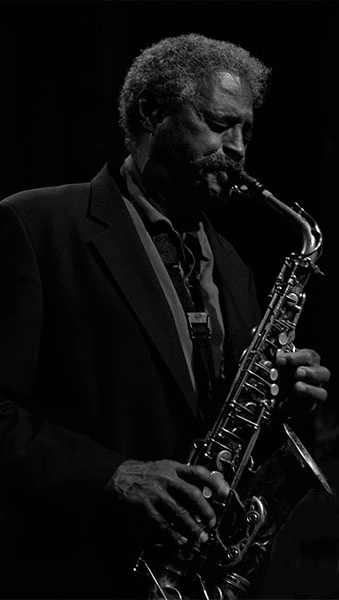
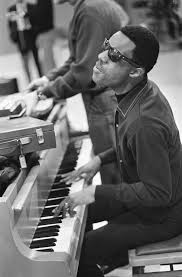
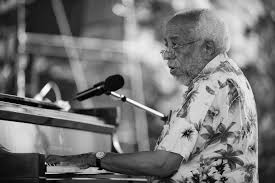
MS: In Detroit, there’s always been an openness about genre. And our musicians, everybody learns bebop. That’s the thing that really ties together all Detroit musicians. If you can’t swing and play the blues and play bebop, you get run over in Detroit.
So many of our musicians have made significant forays into other forms of contemporary music. A good example is Karriem Riggins, the drummer who was with Ray Brown for a long time and plays with Diana Krall, Bob Hurst and Geri Allen, all these heavyweight jazz musicians, and then on the other hand, he’s producing hip-hop and playing drums with Common, and worked with J Dilla extensively.
On the other hand, we have people like Barry Harris. You cannot get more pure in terms of jazz musicians than Barry Harris. Barry left Cannonball Adderley’s band in 1960 because he thought playing songs like “Work Song” was too commercial.
If you think about Black music, it’s a continuum. Spirituals, ragtime, blues, New Orleans jazz, swing, bebop, hard bop, post bop, jazz fusion, the avant-garde, house music, R&B, soul, gospel, hip-hop. It’s all an expression of African-American culture.
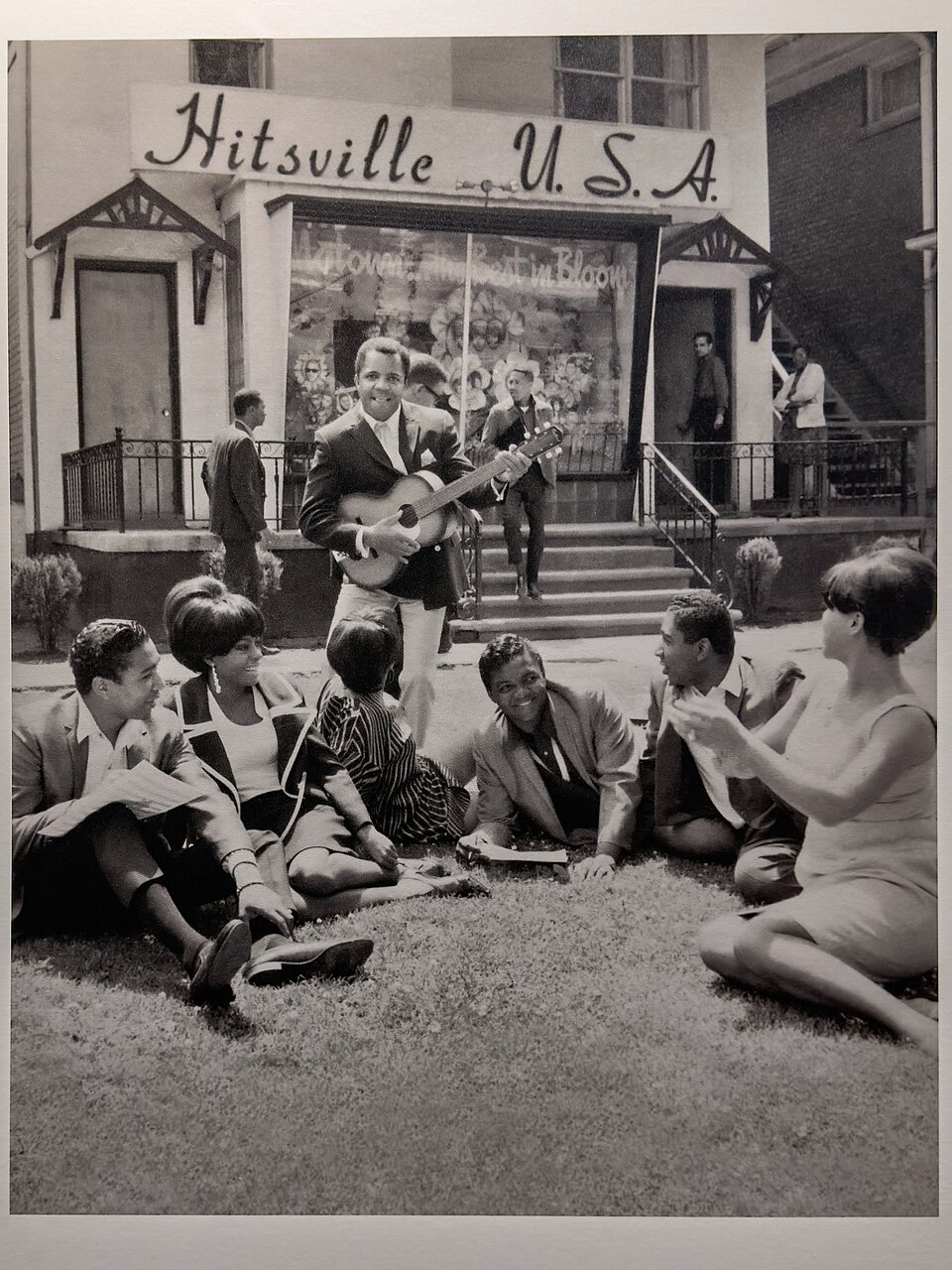
I’m a jazz person. That’s where my heart lies. I think it’s the most profound expression of American culture and African-American culture that we have, but I recognize the ties to all of these other genres of music and I find value in all of it. And I think Detroiters historically have found value in all of it.
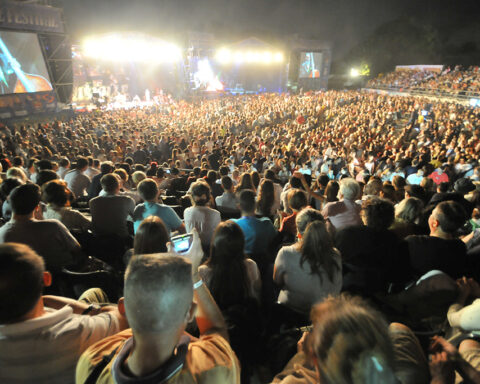
At the same time I will say that we wear our straight ahead bebop and blues and swing legacy with a real pride and when you come to the Detroit Jazz Festival, that’s a jazz festival where you’re going to hear jazz with no hyphens.
They don’t go chasing after pop stars, and the festival is one of the great festivals in the world and part of it is because it’s retained that jazz legacy of the city itself.
LLF: When did your love for Detroit jazz begin?
MS: I grew up in Bloomington, Indiana, and I grew up as a jazz musician. I was an alto saxophone player and was very serious about the music. I went to school at the University of Illinois. I was an American history major, but I was working with my own small groups around town and playing in the top jazz bands at school.
When you’re a young jazz musician and you begin collecting records, you begin to notice reading the liner notes, Paul Chambers is from Detroit, Elvin Jones is from Detroit, Donald Byrd is from Detroit. Oh, look at that, Curtis Fuller, he’s from Detroit. Oh, Yusuf Lateef, he’s from Detroit. Oh, Tommy Flanagan, he’s from Detroit. And Marcus Belgrave. You start putting the pieces together and you begin to realize that, yeah, something was going on in Detroit.
When I came here many years later to work at the Detroit Free Press as an arts and culture reporter and critic, that’s when the depth of the tradition and how profound the tradition is here, that’s when that became clear to me.
What you find when you move here is a couple of things. First of all, you learn that for every musician that was here and moved away and got famous, there was another man or woman who stayed behind, who played almost as well, sometimes just as well as the people that left. Then you begin to learn how the tradition here sustains itself, and that’s a story of mentorship that we talk about extensively in the film.
You know, Barry Harris in the 1950s trained almost every famous person that came out of here in the 1950s. Now today, there are a number of mentors. The most important, I think, is Rodney Whitaker, the bass player [ed note: And 2023 JJA Jazz Hero]. So in the film, we focus on, you know, Barry, Marcus and Rodney, the torchbearers carrying this tradition of mentorship that keeps helping regenerate the scene generation after generation.
When you move here, you see that in action up close, the way the community here adopts musicians. And then you see how strongly jazz remains a true social music here in the African-American community. It is part of everyday life on the ground in a way in Detroit that it remains in very few other cities.
LLF: Is the film receiving recognition internationally?
MS: We’ve gotten reviews in England. We have also been seen at nine or 10 film festivals all around the world, including in Germany and in Romania. We expect to see the film in Japan, in Italy, places in Europe where they love jazz, where Detroit is a recognizable name.
LLF: Have you been getting feedback from the Detroit music community?
MS: People are so gratified that something that they have known about all their lives is being put in the spotlight for a national and international audience.
When I screen the film in Detroit, I often have tears in my eyes because I can feel and hear in the voices of the people that come up afterwards or ask questions, I can hear their connection to the culture and history and the music that’s represented in the film, not just musicians, everyday folks, it’s extraordinarily rewarding.
When we started working on the film, we hoped that it would have a big impact. But you never know. It’s a long road. The three of us started working on this film five years ago. It’s incredibly expensive to make a documentary film about music. Dan, Roberta and I, without the contributions of all three of us, this film doesn’t get made.
It was a labor of love and we are gratified that we are now reaping some rewards, not financial rewards, but the rewards of knowing that this film will last forever, and we’ve got a document here of Detroit’s contributions to jazz and American culture that is unique.
For more about The Best of the Best: Jazz From Detroit, see: https://www.jazzfromdetroitfilm.com/