Since 2011, I have had the chance to participate in most editions of Jazz Appreciation
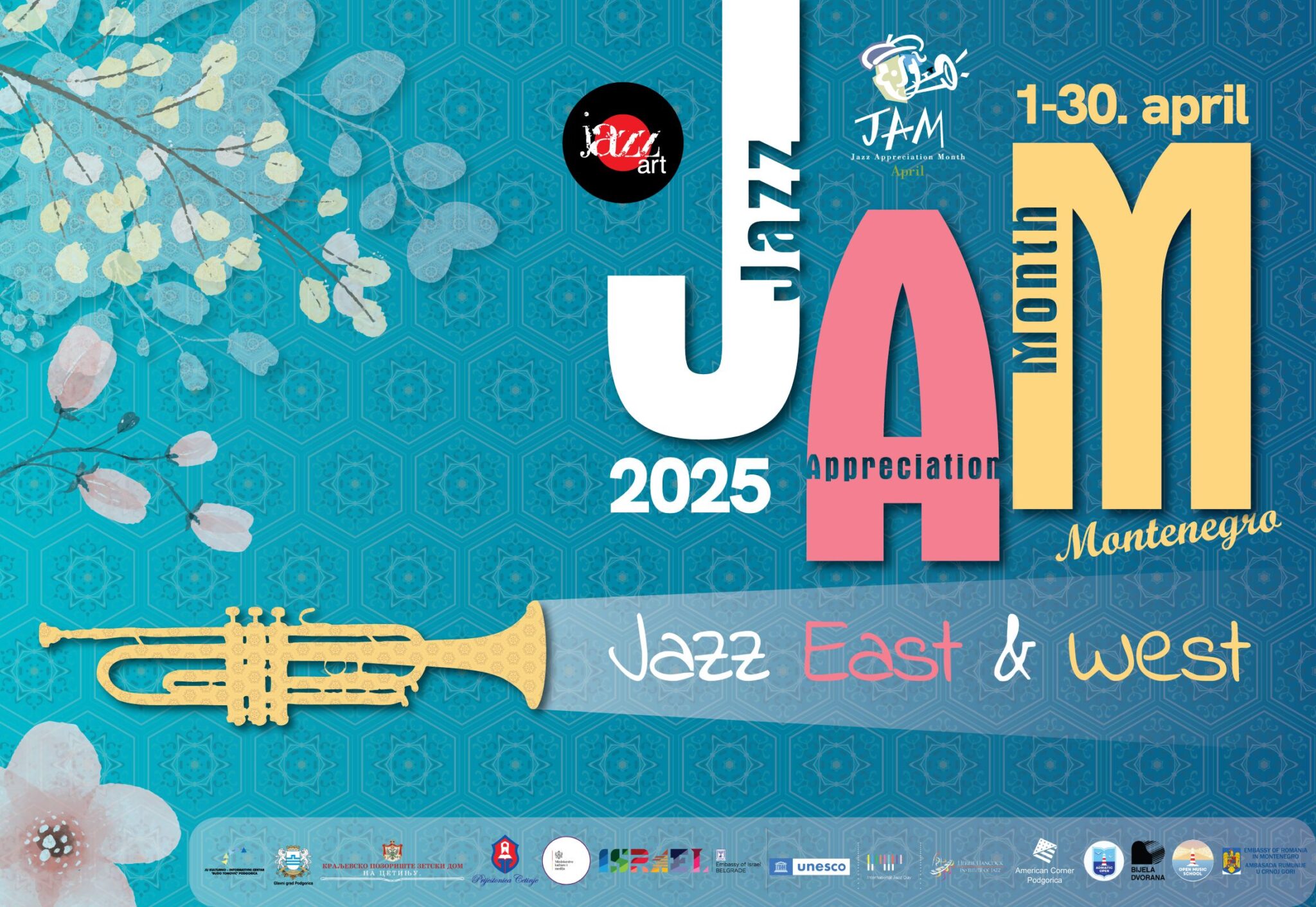
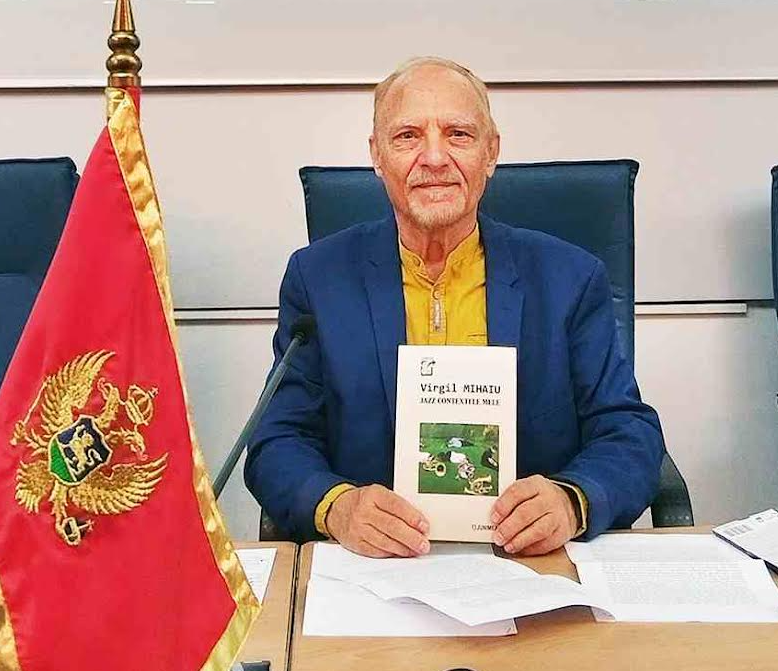
Month in Montenegro (= JAM Montenegro). Pianist and manager Maja Popovic – the incomparable coordinator of the event, which takes place every April since the country regained its independence in 2006 – proposed that I give lectures on certain topics of jazzological interest. For the April 2025 edition, a theme was chosen that was as provocative as it was vast: “The Relationship between Jazz Music and the Idea of the Orient”.
The proposed title instantly reminded me of the famous lines that begin “The Ballad of East and West“ by Rudyard Kipling (1865-1936): “Oh, East is East, and West is West, and never the twain shall meet,/ Till Earth and Sky stand presently at God’s great Judgment Seat”. However, for an adequate perception of the conception of the British writer born in the Indian metropolis of Bombay, the other two verses of the introductory quatrain (also repeated at the end of the ballad) cannot be neglected: “But there is neither East nor West, Border, nor Breed, nor Birth,/ When two strong men stand face to face, tho’ they come from the ends of the earth! ”.
After more than half a century of observing the global jazz phenomenon, I can say that both of Kipling’s assertions have a “use value” that goes beyond poetic metaphor. Beyond stereotypes or preconceived ideas – expressing apprehensions, animosities, antipathies, resentments, adversities, etc., or simple temperamental disagreements between families, castes, tribes, communities, peoples, etc., in short, between different cultures – music in general, and jazz in particular, act as conciliatory/coagulating factors.
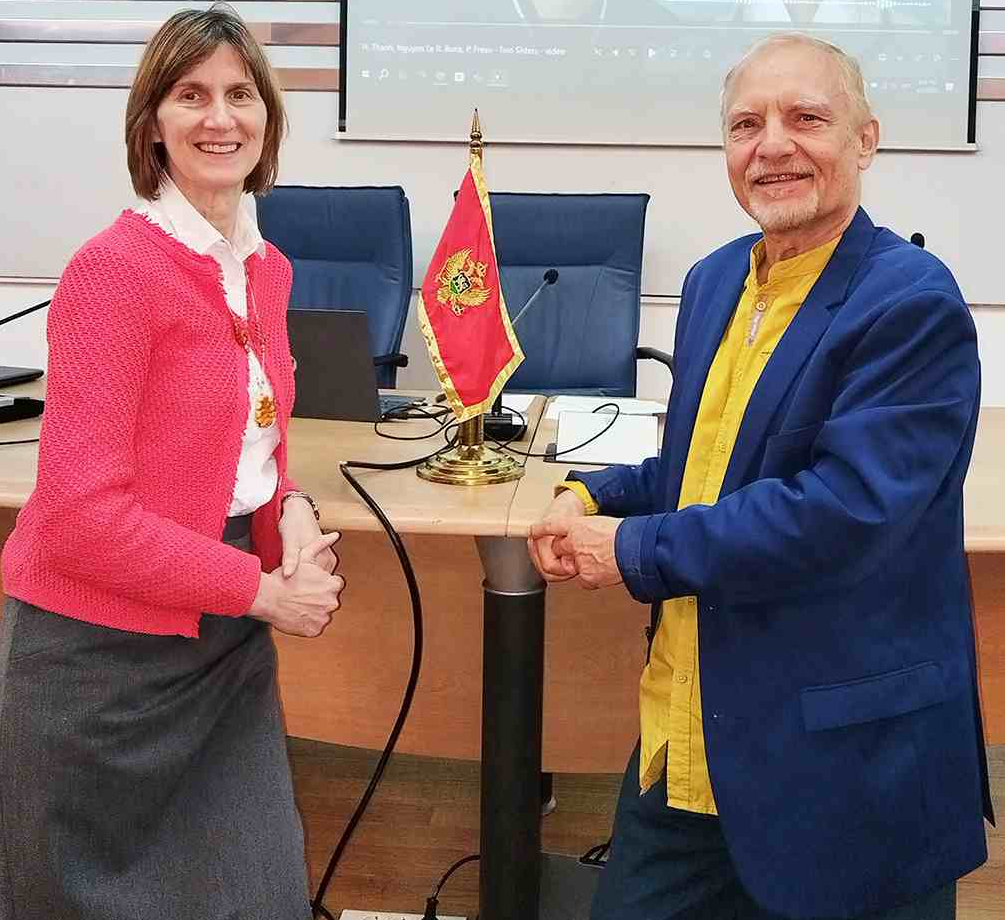
By a salutary coincidence, on the very day my lecture in Podgorica was scheduled, John Edward Hasse himself, the initiator of the global appreciation of jazz, was being celebrated in a ceremony via zoom by the JJA in the United States. In 2015, at my initiative, for the first time a higher education institution in Romania – the National Academy of Music in Cluj – had conferred the title of Doctor Honoris Causa on a jazz scholar, in this case – J.E. Hasse. Also at my suggestion, he would participate in a subsequent edition of JAM as a special guest.
In line with the festival’s theme, this year’s JAM program focused on musicians representative of jazz created on the touchlines (stylistic, mental, etc.) between the West and the East. The opening of the festival was marked by three successive concerts – in Podgorica (the current Montenegrin capital), Cetinje (the former royal capital) and Bar (an important port and former royal residence on the Adriatic Sea) – offered by the Israeli-American duo Itamar Borochov, trumpet and Rob Clearfield, piano.
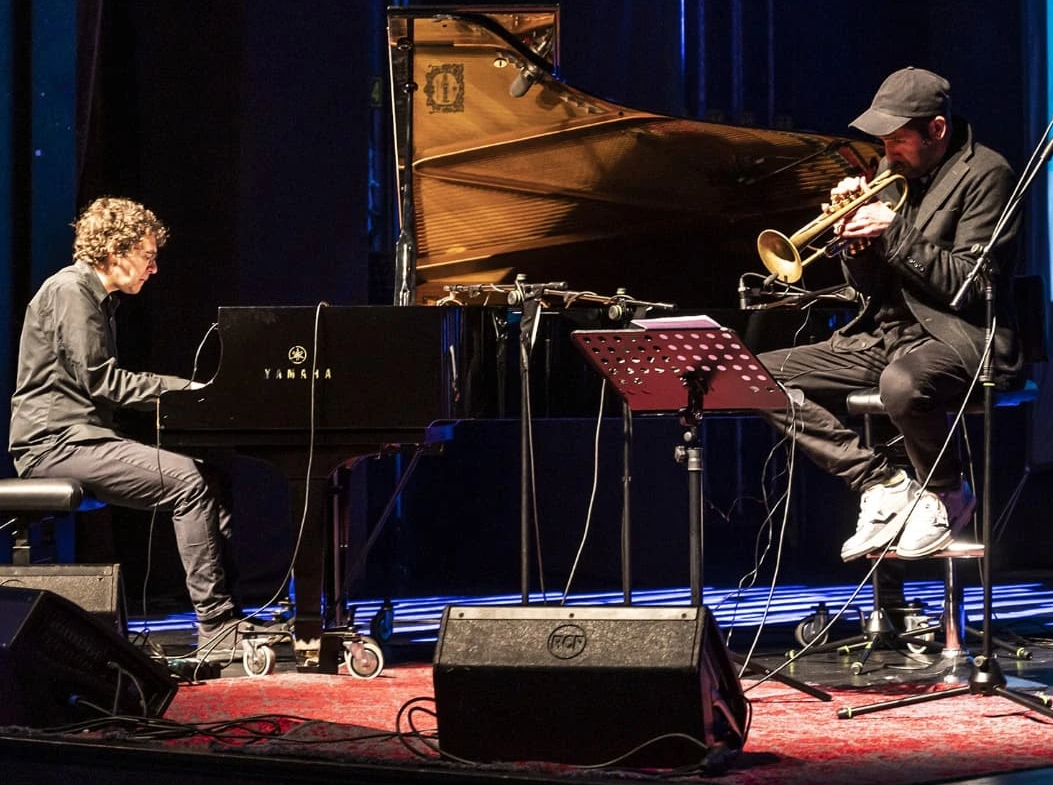
I’ve already applauded Borochov, two years ago at Romania’s Bran Castle Jazz Festival where he demonstrated his ability to combine the universal principles of jazz with secular elements of Israeli and Bulgarian origin, in the company of pianist/composer Dimitar Bodurov’s group. In his Montenegrin debut, Borochov gave priority to the introverted side of his sensitivity, expressed through meditative cantilenas, in which the organic connection between the performer and his own ancestry is felt.
From an enlightening interview with Jane Enkin I learned that the Borochov musical family is made up of Israelis of Bukharan Jewish heritage, and their culture has a long tradition originating from the areas that are now Tajikistan and Uzbekistan. As in the case of the Bulgarian one, the music of Bukhara also excels in rhythmic sophistication, with provocative measures, such as 5/8, 7/8, or 11/8. Like other immigrants who arrived in Palestine in the 1930s, Itamar Borochov’s grandparents brought with them ancient songs, some with texts in Bukhari – a Hebrew language analogous to Yiddish or Ladino.
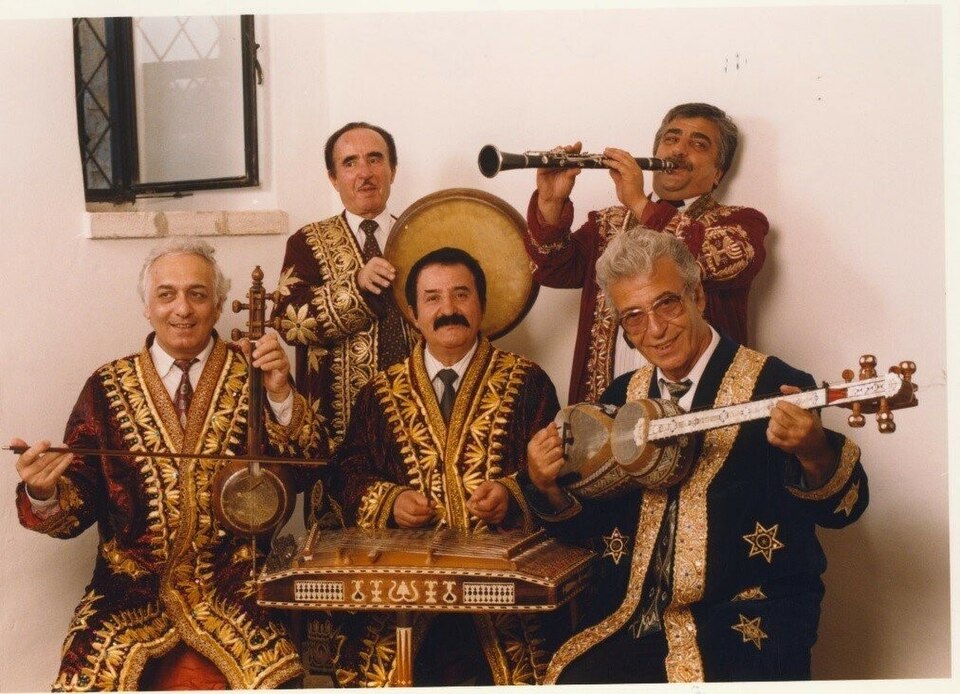
After 17 years spent in the USA, trumpeter Borochov has configured his own universe, in which classic American jazz is allied with resonances from Middle Eastern and Central Asian melodies, Sephardic, Arabic inflections, or African-American rhythms. It is worth noting his involvement in arrangements based on Yemeni melodies and rhythms, performed with aplomb by the Yemen Blues band. The audience in Montenegro, a country with a keen sense of historical identity, received the musical proposals of the Borochov/Clearfield duo with great interest. According to Maja Popovic, the maximum success was achieved in the concert at the Adriatic Open Educational Center in Bar.
A pleasant surprise were the recitals in Podgorica and Cetinje of the Trio comprising vocalist/multi-instrumentalist Golnar Shahyar, guitarist Mahan Mirarab — both Iranians — and percussionist Amir Wahbam, of Egyptian descent.
In this case, the emphasis was on the mixture of contemporary jazz and the Persian traditions cultivated by Shahyar and Mirarab, pigmented with microtonal modes, polyrhythms and postmodern chamber experimentalism. An exciting, effervescent, unpredictable and, at the same time, endearing music.
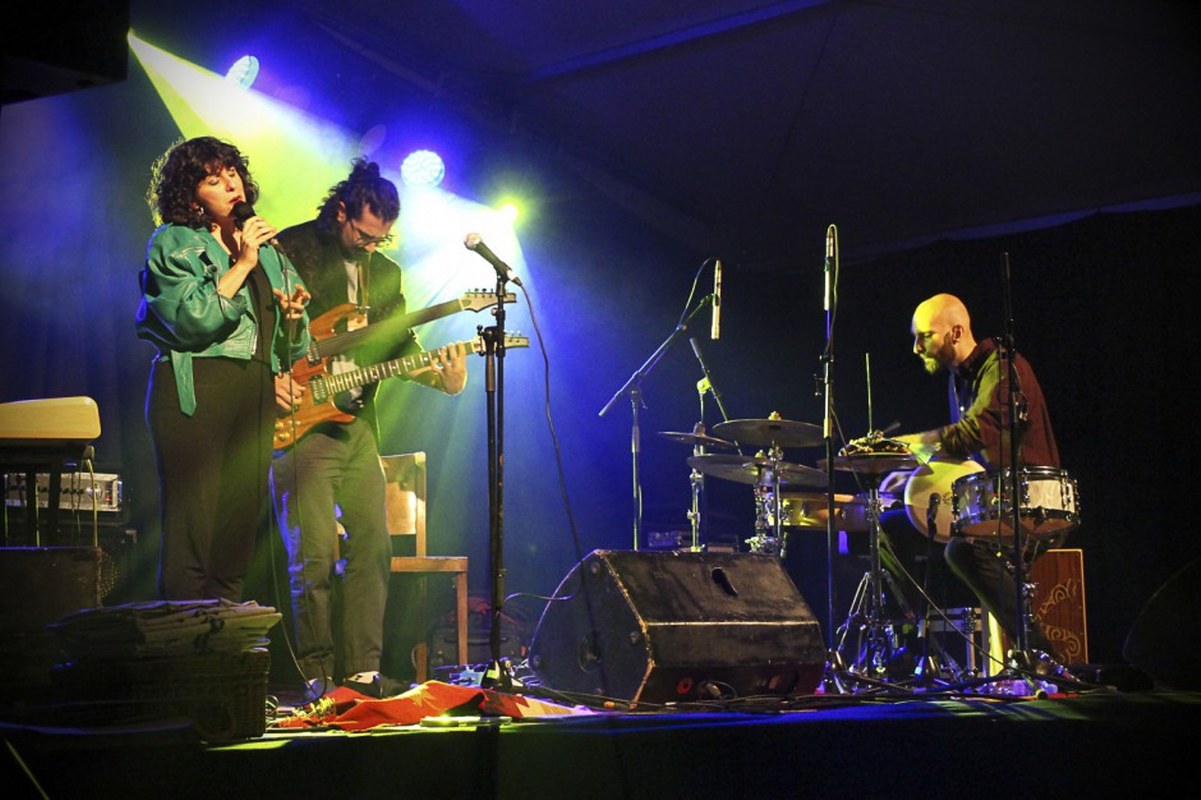
The determination and passion with which the vocalist – originally from Iran, raised in Canada and settled in Vienna – interprets her songs in Farsi are admirable. She compensates for the absence of the bass in the band with a small keyboard, which reminded me of the so-called “basset “(produced in the former German Democratic Republic), used by the trailblazing Russian (now Israeli) musician Vyacheslav Ganelin. The sound configurations spontaneously created by the three “accomplices” also highlight the compositional and improvisational gifts of Mirarab, who wields his two-neck guitar in synergy with the inventive percussionist Wahba.
On the occasion of International Jazz Day – April 30 – JAM Montenegro offered another high-class premiere to the local audience: Isfar Sarabski – a young master of keyboards (piano, organ), born in Baku, the capital of Azerbaijan, in 1989.
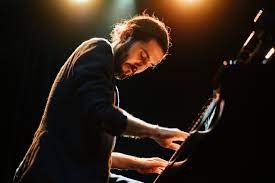
Great-grandson of Huseyngulu Sarabski, a renowned singer from Azerbaijan (the first Islamic country where Western cultural institutions such as opera, philharmonic, ballet and jazz ensembles, etc. were established), he asserted himself internationally at the age of 19, when he won Montreux Festival’s solo piano competition. As we could witness in his concerts in Romania (starting from the Mozaic festival in Sibiu, or Jazz in the Lutheran Church in Bucharest, where he had as his partner Rain Sultanov, the emblematic figure of Azerbaijani jazz in recent decades, we are dealing with a worthy successor to the unforgettable Vagif Mustafazadeh (1940-1979). Thanks to the latter’s groundbreaking musical activity, Baku has become a significant landmark on the map of contemporary jazz.
Isfar Sarabski’s ability to reabsorb the musical codes of mughamic origin into his improvisational flow is admirable —mugham being the specifically Azerbaijani folkloric source, which Vagif had managed to capture and remodel into a jazzy character. The musical discourse is organized in a silky dynamic, decorated with melismas and undulating arabesques, sprinkled with specifically oriental ornaments.
On the other hand, Sarabski elaborates his own compositions in a quasi-Beethovenian style: balanced distribution of energies, more suggestions than melodic lines, rhythmic-harmonic nuclei intersected with surprising counter-melodies, crystalline lyricism, sensitive but resolute. The Azerbaijani pianist alternates gentle force with firm delicacy. In his demonstrations of clarity of ideas and musical expression, he received efficient support from his trio colleagues, double bassist Makar Novikov and drummer Amir Bresler (the latter, a close collaborator of the renowned Israeli double bassist Avishai Cohen).
The evening dedicated to local talents featured pianist Sara Jovovic, a graduate of two renowned higher education institutions: Berklee College of Music in Boston and the Jazz Department of the Faculty of Music in Belgrad. Related activities included a film series featuring Quincy Jones musical soundtracks, as well as a colorful exhibition of jazz album covers.
Among the entities to which the organizers extended special thanks was the Romanian Embassy, led by H.E. Ambassador Viorel Matei Ardeleanu, a diplomat who demonstrates his appreciation for jazz through deeds, for the benefit of mutual respect between Romania and Montenegro.