With the decision to spend the winter in Copenhagen in the middle of a geopolitical crisis between the US and the EU, I agreed to face the other side of the Danish capital: the cold and the expensive.

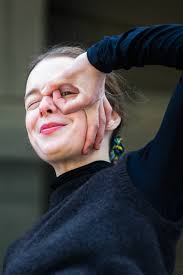
Around noon an unpleasant northern wind blows – although locals still consider it part of the pleasant atmosphere – and a five-day public transport ticket costs 40 euros. Hospitality was provided by Zagreb artist Katja Crevar, who provoked me by claiming that štrukle are better in Denmark, and I set my route toward the Vinterjazz festival.
Denmark is an archipelago with more than 400 islands, an indented coastline, gentle hills and wind-shaped beaches. And Greenland, or Kalaallit Nunaat, as its inhabitants call it, is the world’s largest
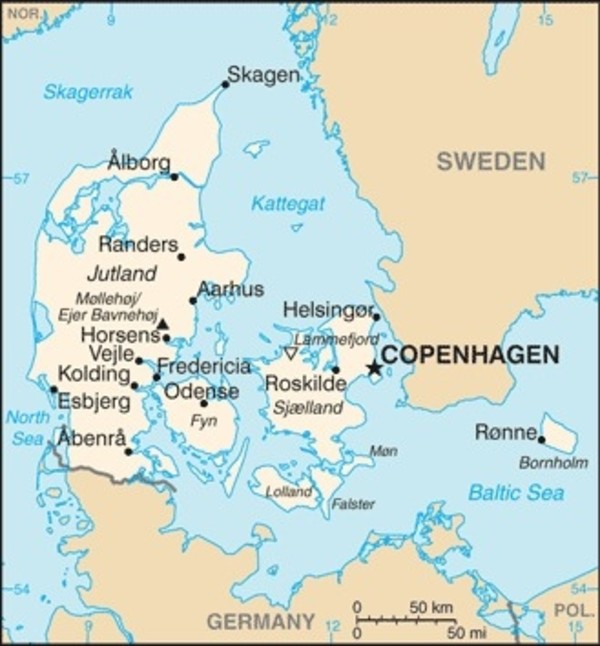
island, lying in the North Atlantic Ocean, noted for its vast tundra and immense glaciers. As the southernmost Scandinavian country in Europe, Denmark occupies the Jutland peninsula (Danish: Jylland) and numerous islands. The country borders Germany and is connected to Sweden by the Øresund Bridge.
The Jutland peninsula forms the mainland of Denmark and stretches toward the North Sea, separating it from the Baltic Sea; it also includes part of northern Germany. At its northernmost tip lies the island of North Jutland. The peninsula connects the country to continental Europe, while larger islands such as Zealand, Funen and Bornholm lie in the Baltic Sea. Natural landmarks like the steep cliffs of Møns Klint, the shifting sands of Råbjerg Mile and the calm lakes of Silkeborg highlight the beauty of the Danish landscape.
Since Zlatko Burić, an actor of Croatian descent renowned as recipient of an European Oscar for his role in The Triangle of Sadness, apologized that on the day of my arrival he would be leaving for Ljubljana, I left myself to the mercy of a younger
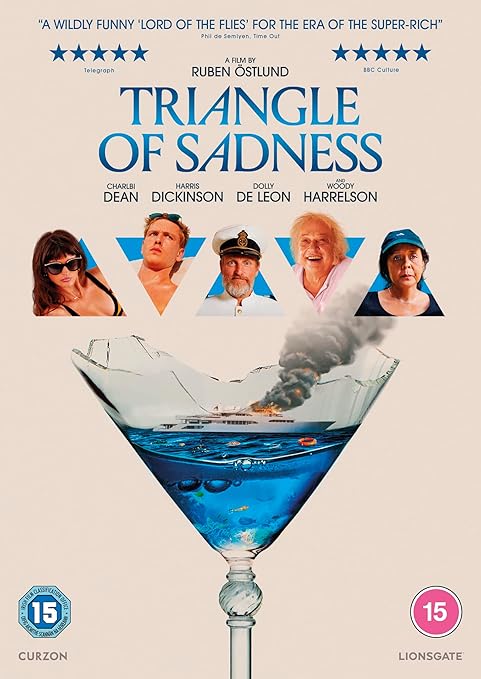
colleague who introduced me to the cream of the Danish jazz scene.
Vinterjazz stretches from the beginning to the end of February across many venues throughout the city. On the day after arriving I set out for a concert at the Alice venue. The Italian group Zu, one of the festival’s headliners, had played a week earlier in Močvara in Zagreb, my city of residence.
The ticket was 170 kroner, and Katja warned me that Alice is one of the most expensive cultural venues in the city — one that even local musicians rarely visit as guests. Between two cigarettes I figured I might still manage to ask the band to put me on the guest list; after all, a few years ago I played with their drummer in Vienna in an American-Italian band, featuring bass-guitarist Mike Watt, that, during the same tour, visited Zagreb.
Paying four euros for half a liter of filtered coffee at a café near City Hall sits uneasily on my wallet – or rather, my card. Cash at city counters is already lost folklore. Beyond wearing gloves, my fingers go numb during walks, it’s that cold. Google Maps goes crazy, adding streets that don’t exist, while kind passers-by help me find my way. I spend the afternoon at the Husvet café where young Danes socialize over board games, stretching my afternoon between two cigarettes while shivering over two cups of green tea. In the evening I had planned to attend student concerts at the Royal Music Conservatory near the Opera building at 8 pm.
Locals direct me to a solo performance by saxophonist Asger Nissen, who lives

between Berlin and Copenhagen and has just recorded a new album with the quartet of American drummer Jim Black (Better You Don’t). Around two in the afternoon snow begins to howl through the city, and although no one mentions Greenland, the weather disturbances make it impossible for me to shake thoughts of crisis.
Buses are late, the city sinks into its proverbial unplanned chaos, and darkness slowly falls. At the moment the Light Festival is taking place across the city; when night falls, squares and facades glow with luminous sculptures. The square looks as if it has blossomed overnight, and in a bookstore near City Hall I buy William S. Burroughs Cities of the Red Night, a fitting literary treat from the Penguin Classics series – surprised that it’s cheaper than in Zagreb. I board a bus toward the Opera, and since the displays don’t work, the driver shouts the route number at every stop. At least I learned how to say “2A.”
Friends in Copenhagen treat snow and wind on social media as if it were the Apocalypse. The same vibe greets me at the campus when I got off the bus that drives through semi-darkness, but most of the small group of passengers heads toward the Opera while I remain alone. Entering a polyfunctional hall with a small stage, I run into the scene’s veteran, T. S. Høeg, an author of an essayistic book about music in
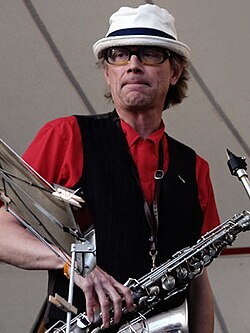
general, currently in the making – a face familiar from visits of Burić’s friends to Močvara productions since the late 1990s.
The concert opens with a pianist and guitarist on retuned instruments. Before Nissen’s performance there is another duet – piano and saxophone – that leads the musical journey from the previous duet’s noises and string-scraping into fluid polyphony.
Nissen plays from the floor below the stage, strikingly connecting ideas of bebop deconstruction and leaving the impression of ideas straight from the source. I am definitely in a foreign country!
The next day I consider visiting the Basquiat exhibition at the Louisiana Museum, 40 minutes from the city, but the plan falls apart. My accommodation is in the southern part of town in Hestehaven. There is nothing nicer than waking up in the morning, looking through the window, and seeing snow outside. Even nicer is how easy it is to quit smoking in Denmark: at the bus stop none of the passengers – mostly Asian immigrants – had a lighter. Addiction, as it seems, is a phenomenon conditioned by social pressure.
People arriving from stops deeper along the route say buses won’t be coming, so I walk toward the city, catch a train to the center, and go to a café. So much for social conditioning. Station names dissolve into homonyms and foreign words, offering little help with orientation. Before leaving, scheduled for early afternoon, a disarming sense of disorientation appears – the moment when a tourist begins to suspect that navigation is pulling his leg. If I didn’t once sit on a metro going the wrong direction, I also experienced the navigation showing two stops to the destination only to reveal two more after arrival along the same route. Bizarre – I feel like I’m in Kafka’s The Castle.
Another train excursion option runs along the embankment toward Malmö, a popular route for Swedes who come to Copenhagen looking for cheaper access to alcohol. I comment to Asger that a small beer costs ten euros, and he replies that it’s eight. Is that also a form of prevention? Busy avoiding slush, I almost forget about the afternoon concert at the Jazzcup club. They close at five in the afternoon because the venue sits inside a record store in a residential building opposite the entrance to the royal park Kongens Have, which must be magical for walking in the snow.
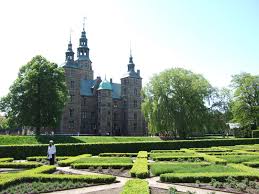
I orient myself toward Nørreport station, though the name doesn’t indicate the north — those are Nordhavn and Nørrebro. Nørreport is in the center; it means “gate to the northern part of the city,” while Nørrebro is called “Copenhagen’s Berlin,” a friend tells me while juggling two deadlines and suggesting we go for Bosnian burek tomorrow. Maybe it’s better to visit Malmö for the weekend, since Copenhagen is rather dull on Sundays – small shops don’t open and everything becomes strangely quiet. And Malmö doesn’t take long to see anyway, because it’s actually quite small. Doesn’t its name say so, I joke?
Shivering from the cold, I pass the Uniqlo department store and consider buying thermal merino wool underwear, a popular extra layer among locals. After a short walk along the fence of the city park I reach the concert, which starts exactly at half past three.

Katja wants to introduce me to young Danish pianist Jeppe Zeeberg, playing in the quintet of drummer Kresten Osgood, my contemporary. In a club filled mostly with older faces and a few youngsters, Osgood presents a quintet. When I complain about transport frustrations, locals wave it off — typical Copenhagen, they say, “traffik kaos” as a protective layer of the city’s charm. Still, I find my place on the stairs of the packed club.
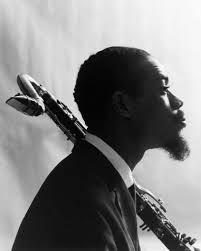
In a band driven by strong authorial personalities, the setlist rolls out with a composition by modernist Eric Dolphy, the composer and alto saxophonist, followed “for appetizer” by pieces from Osgood.
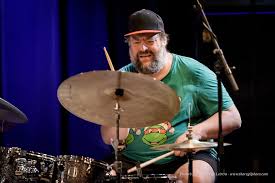
His aura is compelling, as he juggles jokes about non-existant Brazilian rhythm-patterns he is interrupted by a group of visitors. As the most interesting soloist, Zeeberg’s fingers ride across the keyboard. Moving aside to avoid the double bassist, he holds chords with his right hand while building the melody with his left, like Keith Jarrett. He plays so softly that the entire band must quiet down – yet it sounds like two pianos at once, like iconoclastic Croatian pianist Ivo Pogorelić.
Zeeberg studied in America with pianist Jason Moran and also with the 90-year-old classical mentor Sophia Rosoff, who died in 2017, the last student of the legendary piano pedagogue Abby Whiteside. At five in the afternoon Katja, Jeppe and I step outside with saxophonist Mads Egetoft, whose red curls flutter in the wind.
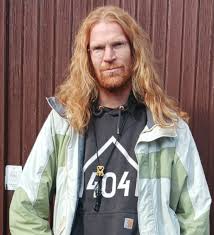
On the way to the restaurant, Zeeberg suggests visiting Christiania, the city’s most famous squat, for a jazz concert, but Katja interrupts to announce that by pure coincidence she got me a ticket for Alice that morning – for free. Zeeberg’s friend from another band can’t go. Obviously, I can’t avoid Balkan hospitality, so I take on the obligation to pay for dinner.
After dinner we part ways, and after some additional trouble with the app I arrive at the club where they demand 60 kroner for the cloakroom. Luckily know an Italian who sells records for the band, so I leave my jacket and backpack with him. While waiting for Luka Gabrić, a fellow saxophonist who said he was going to Zu, I glance at a young girl who brought her dad to the concert – or maybe the other way around. A multicultural audience follows the performance of an expressive singer-songwriter sparingly using the bass guitar alongside an expressive drummer — something in the style of Lydia Lunch, feminism squared.

It’s the opening act, the Swedish singer Fågelle. Not unusual, since feminism here is a state religion just as nationalism is back home. In the local culture there are benefits for children, including housing support, people marry early, and it’s perfectly normal to divorce by the age of thirty when the kids are already ten, find new partners, and keep the economy running. There are also benefits for same-sex couples.
At the entrance, there’s a trouble with the ticket – the attachment behaves like a Snapchat photo, opening only briefly, not long enough for the guard to scan it. While waiting for Katja to send me a .jpg version, Gabrić messages that he’ll arrive soon because he’s stuck having a drink.
The sound is good; the massive drum hits are not so much loud as precise. The frontman plays baritone sax in a band that has played Zagreb about 20 times since the late 1990s, and on the new album they play prog-metal in the vein of the English group Guapo.
I leave early because of a heartburn. Luckily, the station is just a spit away from the club. A text arrives: the guys send their regards and thanks for today. We agree on burek tomorrow in Nørrebro around four. In Denmark it’s customary to thank someone for good company – and when you see them again, the first thing you do is thank them for the previous time: “Tak for i sidst!”
The next morning I head straight for Nørrebro. On the hipster street Jægersborggade I buy sweaters and a shirt, then walk across frozen bridges and lakes near the square Blågårds Plads where people hang out in warm weather. Assistens Cemetery is a beautiful graveyard that in summer serves as a park for sunbathing, jogging and barbecuing — often in semi-nude attire. Hans Christian Andersen and philosopher Kierkegaard are buried there. Nearby Harbo Bar is filled with people with books — either readers or writers — close to two cult beer bars: Brus, known for its excellent kitchen, and Lygtens Kro, which someone compares to Zagreb’s Krivi put, my favourite beer-garden. A „kro” moniker, provides for a sense of home. I stare in disbelief at the prices on the beer list after chatting with two men carrying a Roland piano whose case looks like a coffin.
After a greasy lunch at Balkan Burek I find the Lygtens Kro closed and pass the time in Mikkeller instead with the book “The Philosophy of the Province” by Serbian philosopher Radomir Konstantinović. On the way out I realize I still owe for two bags of chips – or was it chips and a small beer? The oversight is mine. Sorry, next time!
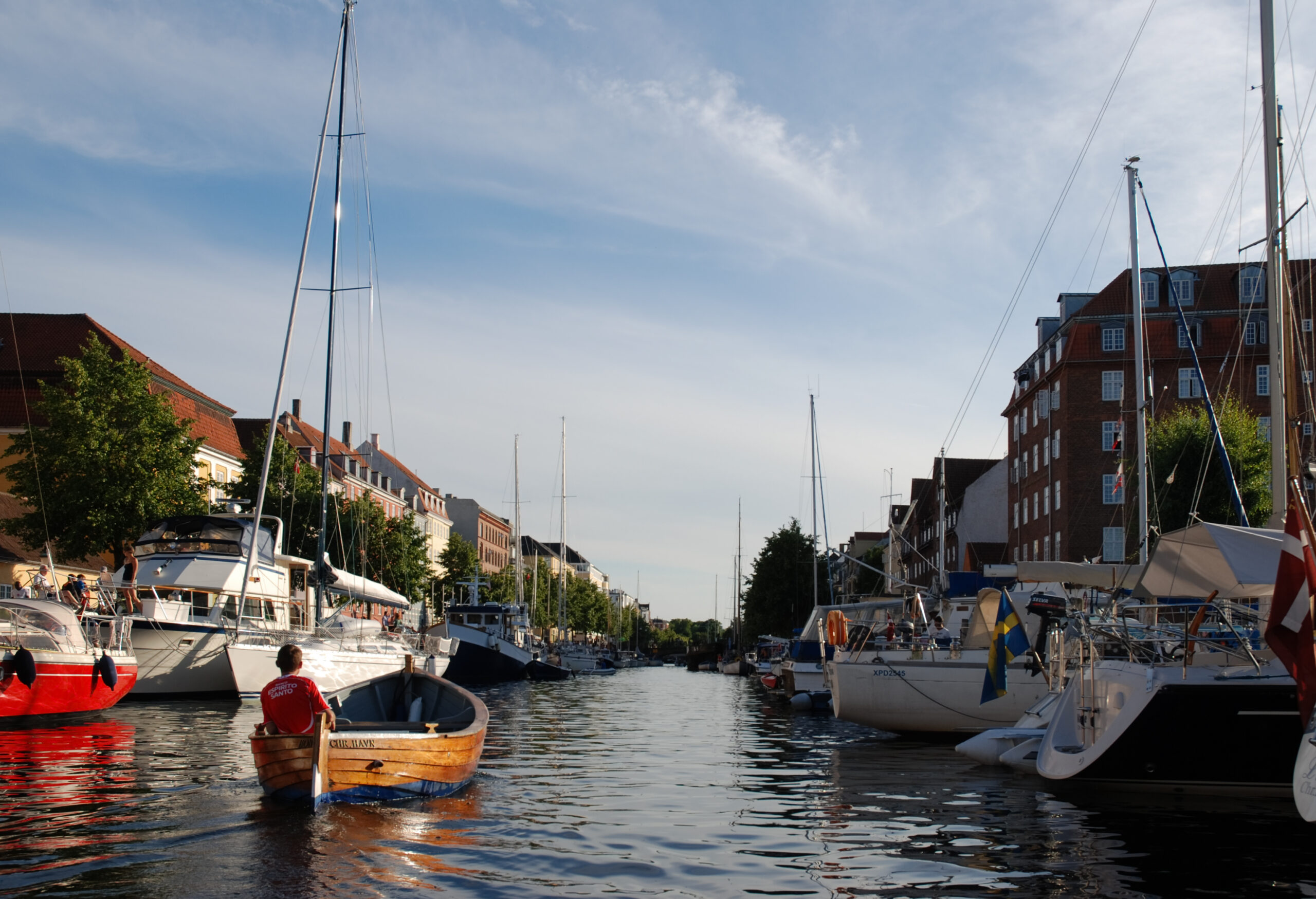
With plans to attend a concert by Zeeberg’s younger brother, a tenor saxophonist, I decide to visit Christiania, but Google Maps sends me on a completely different route — to Østerport station. I return to Christianshavn square where Inuit emigrés from Greenland hold court. I observe them from the fast-food bar where I have dinner, sitting in front of the windows of a closed shop, sitting in a kind of imported nirvana, merged with the shadows outside the light beams. I walk down along the canal and ask for directions just in case; a passer-by grumpily points toward Christiania. I cross the deserted rail tracks at whose entrance stands a mural depicting eternal spring.
If it weren’t Saturday evening, the complex covered in snow would look fairy-tale-like, the most beautiful part of the city. I strike up a conversation with two girls and we part near a circular café. Apparently since the mafia took over, nightlife people have been avoiding the area in recent months. Even the Christianites themselves ask people not to come so as not to support it. I turn right – following unfamiliar girls here is not recommended – and bypass a long courtyard building, climbing over a snow-covered hill to a meadow the size of two sports fields overlooking the frozen river. I complete a full circle and check with people outside the Jazz Club, where my group had gone after dinner on yesterday eve. Inside, a small stage with a grand piano hosts what turns out to be a child’s birthday party. People sit at tables; nothing is happening. On the way back I meet three Russians who, when I ask about Coke Zero, send me back toward the tracks where there is a small neighborhood shop. They look at me suspiciously even though we are clearly on the same errand.
I head for the club Ølsnedkeren where a piano-less trio session is underway. Upon arrival I show the group the contents of my backpack. Everyone is surprised by the ping-pong paddle, just as I am surprised by saxophones with pre-war mechanics where the low-tone keys are on the inside rather than outside. Someone recognizes a Dolphy tune played at the Jazzcup. I run into Asger again – we agree the beer is expensive but the music is good.
On the way home I wait for buses and check what’s happening in the café next door. They’re playing “around the table” ping-pong – about 30 rackets in hands, open bottles on the tables forming the main atmosphere.
The next morning I decide to visit Copenhagen Contemporary, the modern art museum in Refshaløen. Katja again arranges tickets for me since she works there during the week. Last Saturday Pussy Riot performed there. In the hangar across the way there is a flea market for furniture, where a friendly Jamaican salesman entertains me by interpreting my facial features as those of a typical Ethiopian.
The name Denmark means “the land of the Danes” which fits its largely flat landscape with farmland suitable for growing grains – though not sugar cane. Long after the Viking age, Danish maritime tradition continued to develop, and through its colonial past and the influence of the Danish West Indies – today the U.S. Virgin Islands – it also shaped Denmark’s rum heritage. Between 1460 and 1864 Flensburg was Denmark’s second most important port after Copenhagen. Its connection with the Danish West Indies opened trade routes through which rum reached the region. Today Flensburg lies in Germany, but it was once a rum capital known for importing high-ester Jamaican rum that was blended with local spirits.
From 1672 to 1917 the Caribbean islands of St. Thomas, St. John and St. Croix were Danish colonies. The period was marked by sugar-cane production and rum distillation in the Caribbean. Another link to jazz – the famous calypso tune “St. Thomas” is one of the best-known jazz standards, as played by the great Sonny Rollins.
Copenhagen Contemporary opened in the B&W shipyard halls on the island of Refshaleøen, closed in 1996 – an enormous space whose walls change for every exhibition. Nearby they are currently building an artificial island, which is controversial: the project hasn’t even received all the permits yet, and construction has already begun, polluting the sea – architecturally interesting, though. Nearby stands the famous waste-incineration plant that doubles as a ski slope. But quitting smoking in Copenhagen – that’s the last thing I’d think of before leaving.
Katja again warns me not to buy a ticket – she’ll put me on the guest list, it’s too expensive. In the fast-food place across from the museum I meet German architect Jonas May, who works for the Estonian Ministry of Foreign Affairs.
I return to Christianshavn to try to get statements from Greenlanders – trying, that is, to draw comments from the indigenous locals. But the people there are sad, on the fringe. A man who could be my father says he has all the social rights and privileges and has never needed to work in his life. Instead, he drinks. Passing by the restroom he knocks over my bottle and spills it on my laptop. The waitress quickly runs over with a sponge; the device keeps working.
According to PBS last September, nearly 150 Inuit women sued Denmark last year and filed compensation claims against the Danish Ministry of Health, saying health authorities violated their human rights. Danish authorities said that as many as 4,500 women and girls allegedly half of all fertile women in Greenland at the time – received IUDs between the 1960s and mid-1970s. More than 350 members of the indigenous Greenlandic population – women and girls, including those aged 12 or younger – said Danish health authorities forcibly administered contraception in cases dating back to the 1960s, according to findings of an independent investigation published Tuesday. The Inuit victims, many of them teenagers at the time, were fitted with intrauterine devices or given hormonal birth-control injections. They were not informed about the procedure or did not give consent. Victims described traumatic experiences that left some with physical consequences ranging from pain and bleeding to severe infections.

The governments of Denmark and Greenland officially apologized last month for their role in this historical abuse, apparently trying to get ahead of a long-awaited report covering 488 cases of forced contraception between 1960 and 1991. The alleged purpose was to limit population growth in Greenland by preventing pregnancies. The population on the Arctic island was rapidly increasing at the time thanks to improved living conditions and healthcare. Greenland took control of its own healthcare system on January 1, 1992.
I head to the final concert of my trip: Jeppe Zeeberg and the Absolute Pinnacle of Human Achievement, another show by the young pianist – and by now I feel like a groupie.
The prog-rock quartet draws heavily on King Crimson and Frank Zappa, moving across genre lines like a stylistic demigod switching FM radio frequencies between stations. The introduction to one composition would easily mislead you into hearing the opening phrase of the Croatian anthem. A piano beside Zeeberg’s electric organ serves for a performance of the standard “On The Sunny Side of the Street” in the stride-piano tradition, teleported straight out of the Tin Pan Alley era – with the sound of a “second piano,” once again in a footnote.
JJA member Vid Jeraj is a poet, novelist and musician.