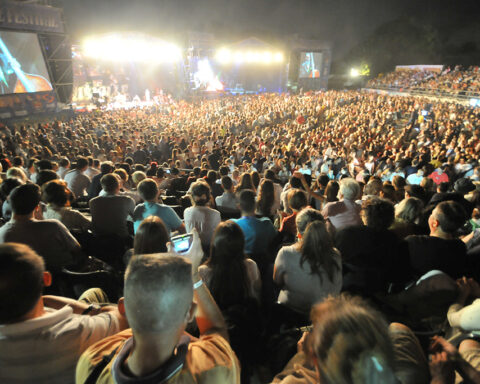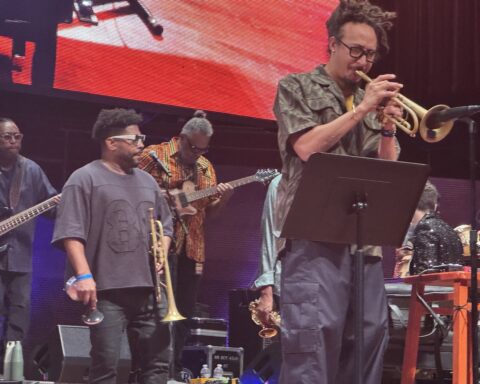
Braving turbulent times, the Bran Castle Jazz Festival successfully staged its 13th edition. This spectacular medieval building is situated in Romania’s
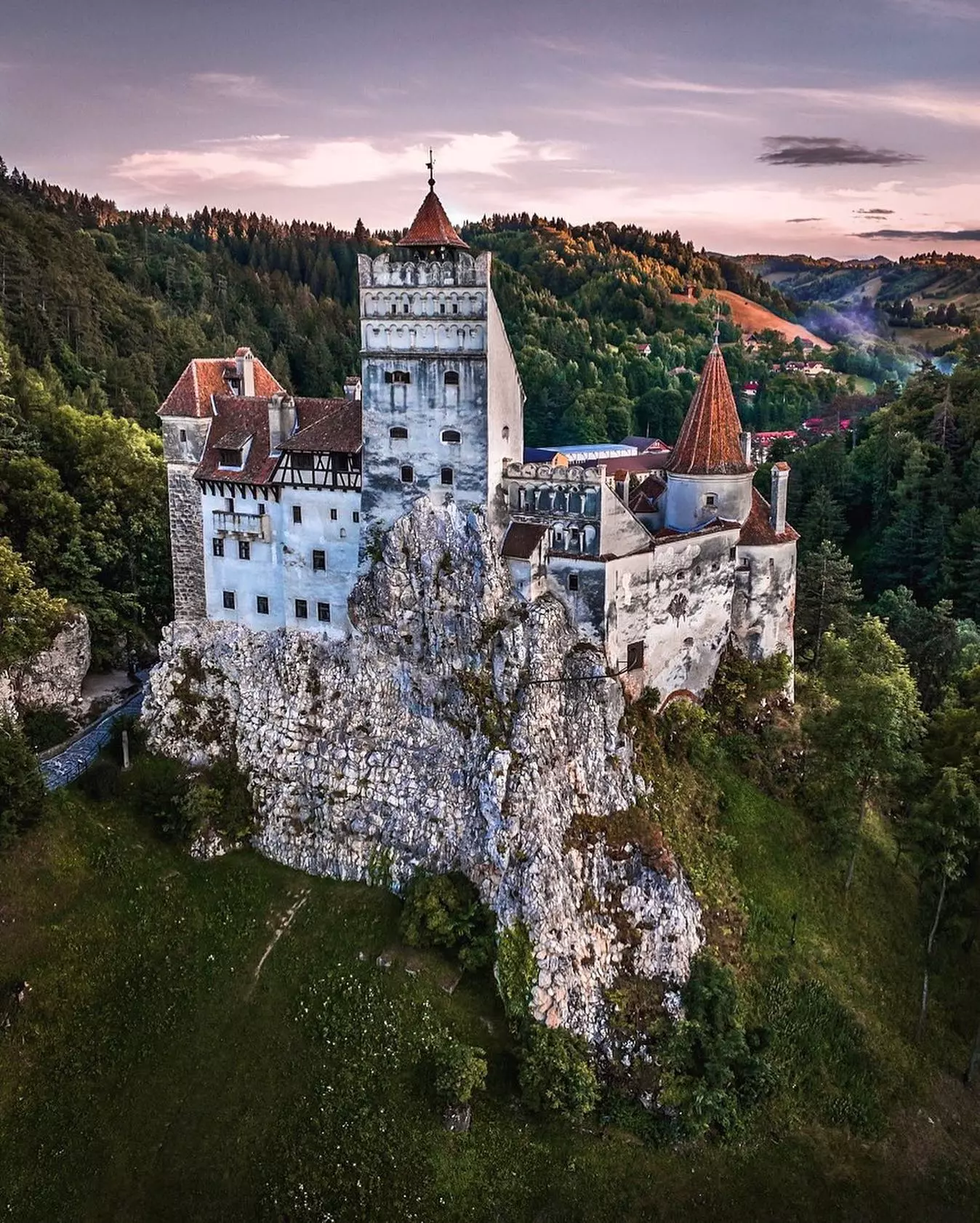
Transylvanian Alps area, and was one of the favorite residences of Queen Marie of Romania (1875–1938), daughter of Prince Alfred, Duke of Edinburgh, and Grand Duchess Maria Alexandrovna of Russia. The castle’s new General Manager, Brian King, an American national — working closely with jazzologist Paul Tutungiu, seasoned marketing expert Alex Prișcu, and their efficient organizing team — laid the groundwork to ensure the event maintained a high artistic standard. Valuable support was also provided by sponsors ING, the Branul Nostru Association, and Mercedes.
The festival opened with a trio led by Parisian double bassist Stéphane Kerecki, joined by two accomplished representatives of the French jazz scene: pianist Enzo Carniel and drummer Fabrice Moreau. Their program centered on the repertoire of the renowned Liberation Music Orchestra, the group launched on record by American double bassist Charlie Haden in 1970—the very year Kerecki was born. The music featured arrangements by Carla Bley, drawing on revolutionary songs from Latin America and the Spanish Civil War.
Kerecki explained the programmatic intent behind revisiting this repertoire after half a century in a recent interview with Franck Médioni: “Today, we live in a world that is unraveling and disintegrating, pushing past planetary boundaries. We find ourselves in a state of panic in the face of an uncontrollable collapse; technology is being used for manipulation beyond our comprehension, depriving peoples of the ability to govern themselves. This stands in contrast to the time when our generation lived in a bi-polar, relatively intelligible world—a world of utopian visions we could choose from, aimed at building a society with a desirable future.
“I wanted to give the Liberation Music album a humanistic dimension: an invitation to reconnect with oneself and with others, which gives meaning to our presence here. And that presence only makes sense within a framework of freedom and shared equality.” The reinterpretation of the pieces was quite unexpected — approached from a predominantly modal-tonal perspective that was rather delicate and sensitive, stripped of the boisterous references to the avant-garde tumult predominant on Haden’s historic album.
Swedish drummer Magnus Öström’s quartet largely carries on the aesthetic legacy of the late Esbjörn Svensson Trio, of which Öström was a member. The lineup features
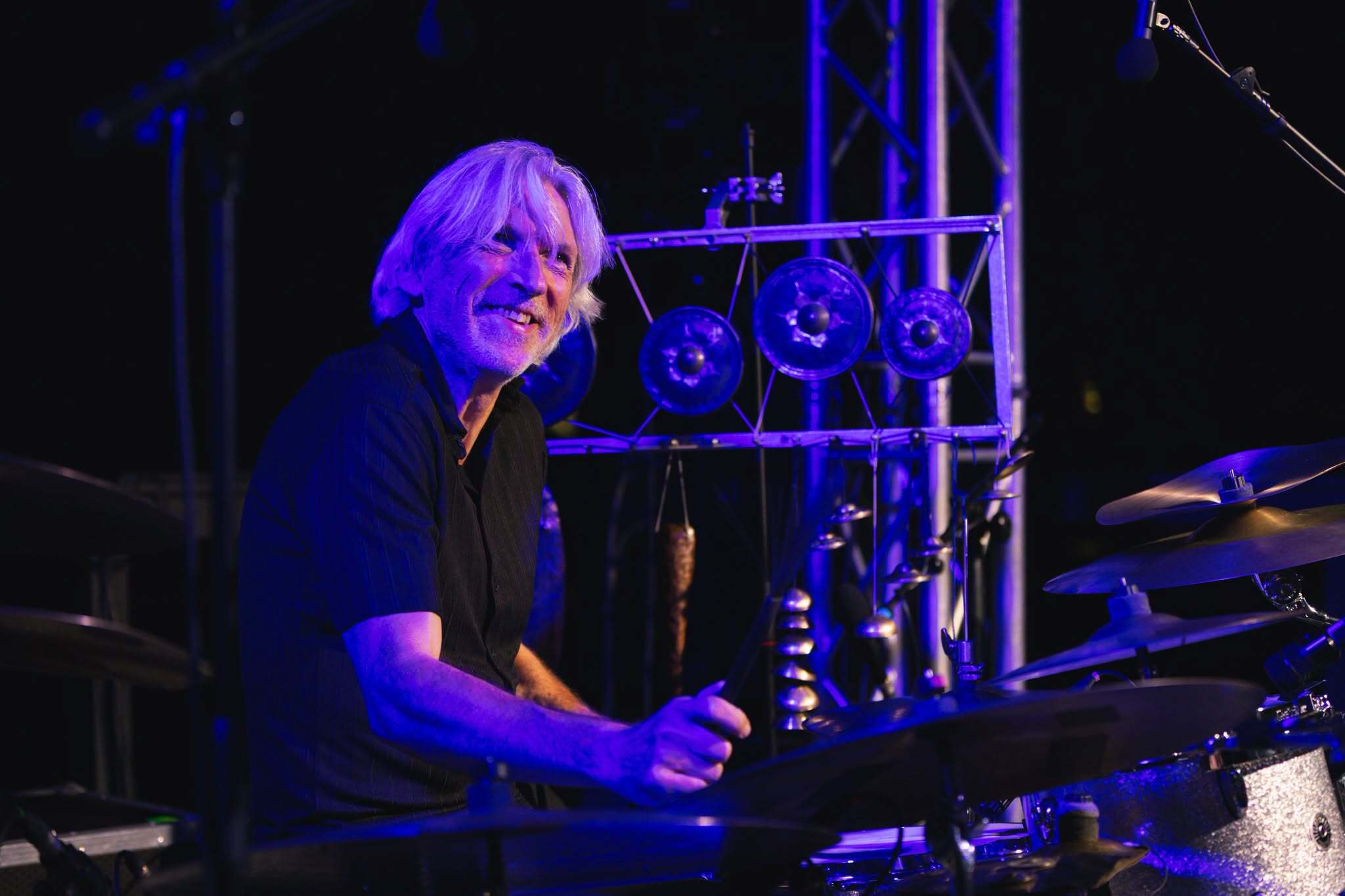
seasoned musicians Andreas Hourdakis (guitar) and Daniel Karlsson (piano), successfully joined by the Irish-born bassist Conor Chaplin. The fluid, repetitive themes characterizing most of the tracks confirm the enduring strength of the jazz-rock vein cultivated by the band.
However, the performance could not do without a few melancholy-infused ballads reminiscent of visa songs—a type of Swedish folk tune masterfully adapted by Jan Johansson on his consequential 1960s album Jazz på Svenska (Jazz in Swedish). The highlight of the recital was the percussion mini-suite, conceived and performed by the quartet’s leader. It was a captivating acoustic-electronic blend, introduced by cascading sonic garlands—created from distorted gongs — and shot through with apocalyptic shivers. This interlude of pure art, born of a controlled release of energy, was followed by a gentle, moderato-tempo melody, akin to a bolero crescendo.
The now-traditional additional concert at the Reformed Church in Râșnov featured Swiss guitarist/organist Stephen Thelen and American guitarist Jon Durant, incorporating electronic elements. In keeping with the ecclesiastical setting, both performers focused on atmospheric soundscapes—reminiscent of the temporal expansion found in Indian ragas or in films like Andrei Tarkovsky’s SF dystopia Solaris. The duo’s guitar-playing approaches drew inspiration from the explorations of artists such as Robert Fripp and Terje Rypdal.
Jens Düppe, leader of his namesake Quartet, transcends the role of a mere backing musician; he is not only a hyper-energetic percussionist but also the composer of most of the repertoire and the driving force behind the programme’s cohesive artistic vision.
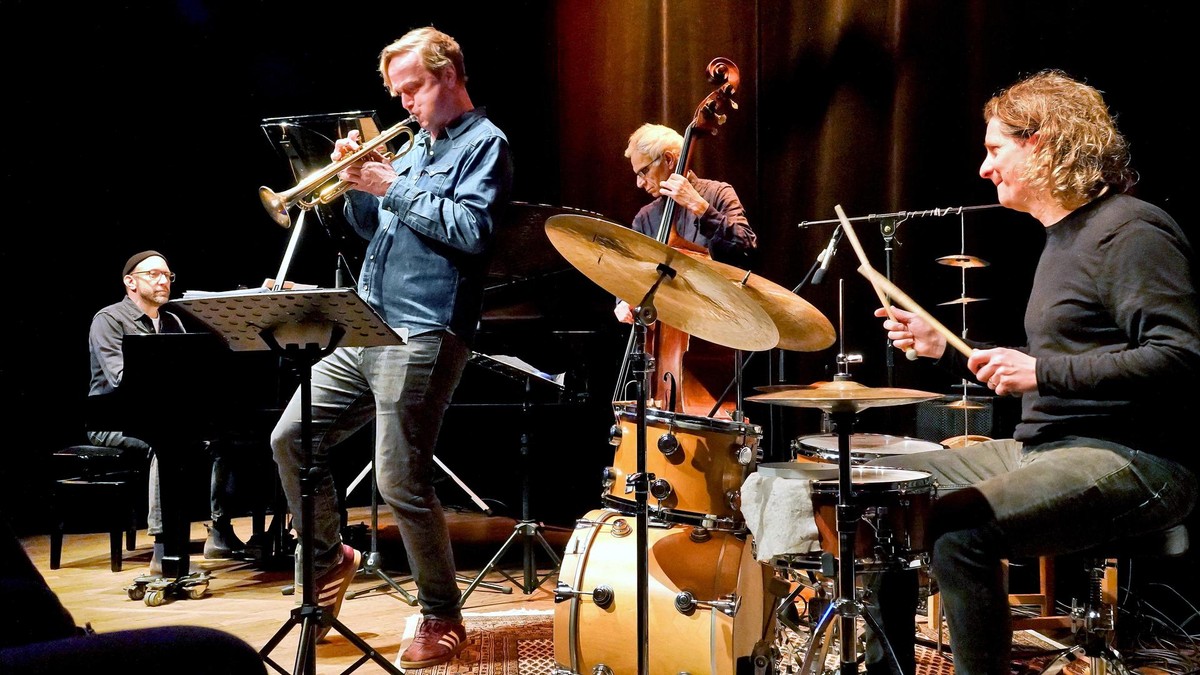
Originally from Swabia (southwestern Germany), Düppe studied at music academies in Weimar, Amsterdam, and New York. From 2002 onwards, he played in Germany’s National Jazz Orchestra (BuJazzO) under the direction of the renowned conductor and trombonist Peter Herbolzheimer — who was born in Bucharest! I had previously enjoyed seeing that big band perform at the Cluj Philharmonic, and now — a quarter of a century later — I observe that the drummer’s jovial personality reflects the positive influence of his mentor. In Bran, Düppe engaged in intense musical interplay with trumpeter Frederik Köster, pianist Lars Duppler, and bassist Christian Ramond. The group’s enviable cohesion gave me the impression that the collective result was greater than the sum of its individual contributions. The four musicians rely on an aesthetic of surprise, reshaped through a postmodern lens yet free of tiresome concessions. Naturally, I was pleased by the message of Bill Evans’s composition “Peace Piece” —reimagined by Düppe and his associates as a cantilena with dramatic undertones and retitled “Piece for Peace.”
The next two items on the festival programme celebrated the heyday of so-called progressive jazz-rock. Bringing this chapter to the stage was the work of the dynamic impresario Leonardo Pavkovic, head of the independent label MoonJune Records (founded in New York in 2001). Born in 1962 in Jajce (then Yugoslavia, now Bosnia and Herzegovina), this “polyglot citizen of the world” has succeeded in rallying an international network of open-minded musicians and music lovers, “united by the desire to build bridges rather than dividing walls.” In recent years, he has organised an exciting traveling festival held in historic locations across various countries. Thanks to Pavkovic’s efforts, Bill Bruford — drummer for the legendary bands Yes and King Crimson — was brought back to the concert circuit, and we were able to see him in action at Bran. Although nearly 80 years old, he retains his mental clarity and inter-stylistic agility—qualities that, back in the 1980s, even earned him a photo on the cover of DownBeat. Fortunately, alongside his current partners—the dynamic Pete Roth (guitar) and Mike Pratt (bass)—Bruford remains the same rigorous, inventive, and versatile musician. His respect for authentic music places him in the fine company of Charlie Watts—the drummer for the inexhaustible Rolling Stones and a lifelong jazz devotee.
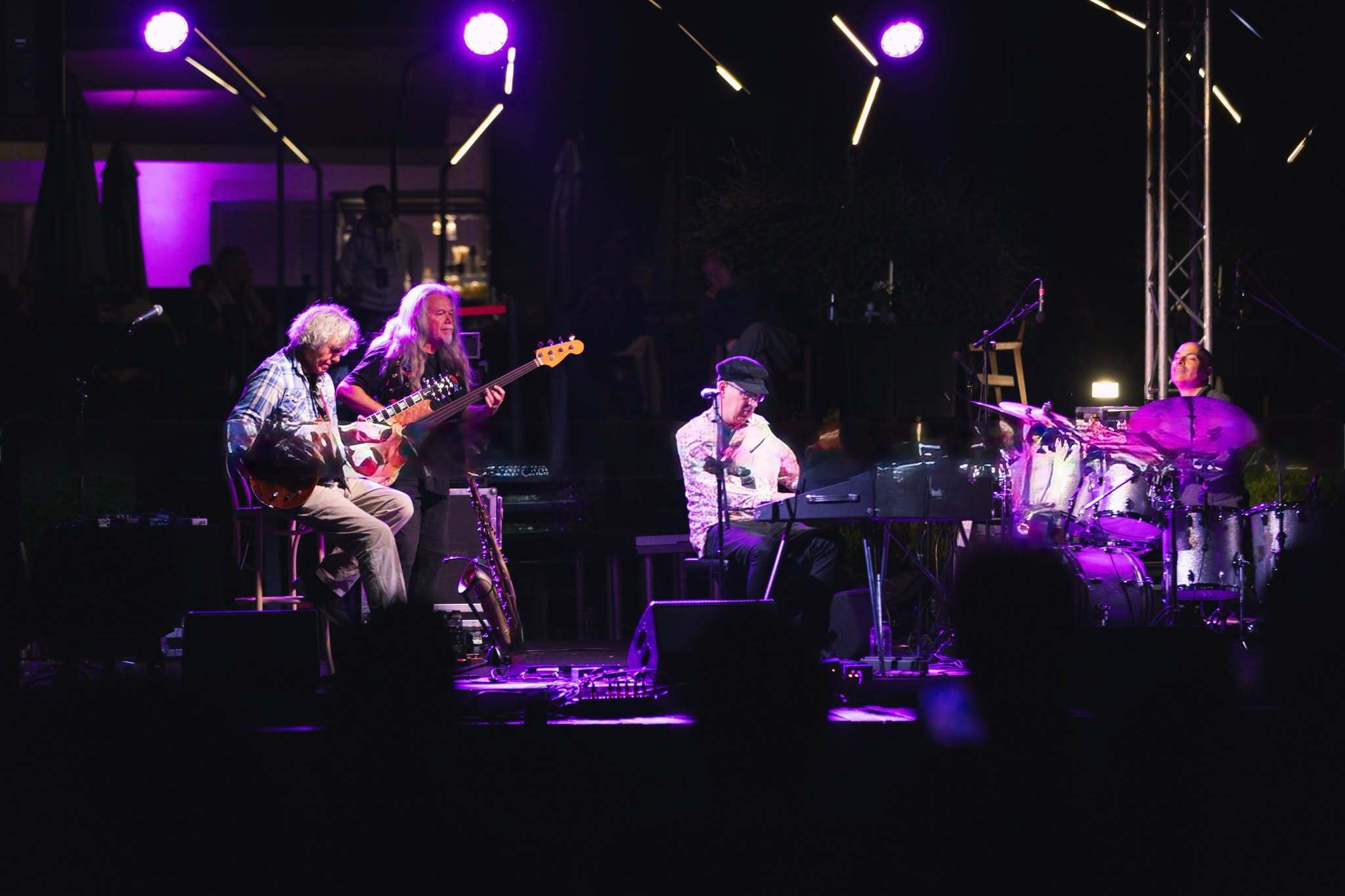
The sense of nostalgia was further extended by the engaging performance of Soft Machine, a benchmark name in British jazz-rock fusion. In 1972, when I first arrived in Britain (as participant in some students’ summer courses), connoisseurs recommended the band to me as the most interesting embodiment of the emerging fusion trends. Six decades after its inception (1966), the reputation of this musical “VSOP” is upheld by four excellent professionals: Theo Travis (sax, flute, keyboards), John Etheridge (guitar), Fred Baker (bass), and Asaf Sirkis (drums). This exercise in “musical archaeology” — drawing upon the Soft Machine compositional treasure trove — continues to be sustained by the efforts of individuals like Pavkovic and his new associates from Bran (Tutungiu, Prișcu, Eugen Oprina, Stefan Faff, Felix Nazarevscky…), all in harmony with our loyal and discerning audience.
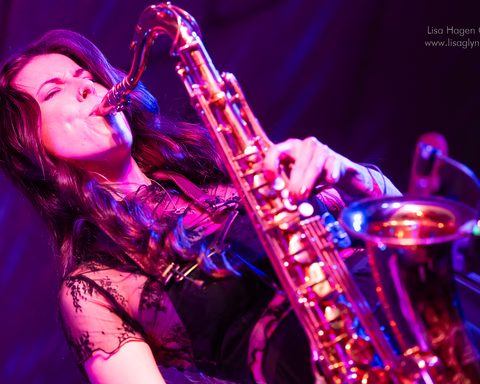
Born at the turn of the 21st century, saxophonist Emma Rawicz is already a prominent figure in European jazz—not only as the leader of her own combo but also as a conductor and composer for big bands in England, Finland, Germany, and Austria. The repertoire performed in Bran with her young British quintet reveals the perfectionist nature of a musician wholly devoted to her art. She possesses an insatiable appetite for expansive solos—reflecting a diligent assimilation of models such as John Coltrane and Sonny Rollins. The arrangements are meticulously crafted, demonstrating a keen sense of nuance, dynamics, and agogics. At the same time, the compositions evoked the powerful jazz-fusion movement of 1970s and ’80s Poland (perhaps an atavistic trait from the musician’s paternal lineage?). Paradoxically, the only vulnerable spot of this combo’s music seems to be its characteristic of being overly premeditated or elaborate, hinting at a potential drift toward mannerism. Yet, given its current level of youthful energy, Emma Rawicz’s quintet can afford to disregard such speculation, savoring its well-deserved acclaim from both audiences and critics.
In contrast, the final act of the program excelled precisely through its unpredictability: The Boxhead Ensemble project—led by the multifaceted American artist Michael Krassner (b. 1971) — explores horizons that defy easy classification, hovering at the intersection of contemporary music, free improvisation, post-rock, jazz-poetry, ambient, and more. The protagonist’s guitar, keyboard, and vocals found their counterpart in playful exchanges with gifted vocalist and multi-instrumentalist Annie Barbazza (b. 1993). Just as at the previous edition in Bran (where she performed alongside the Welshman John Greaves), the young artist was accompanied by producer Max (Massimo) Marchini, head of the Dark Companion record label, founded in Piacenza in 2015.
It was a pleasure to witness the latter’s subtle bass guitar contributions, which created an ethereal bond between Krassner’s ideas, Annie’s voice, and the wondrous interventions of percussionist Lino Capra Vaccina (b. 1953). The bearer of this outré stage name (in Italian, as in Romanian, capra means goat, and vacca means cow, hence also the medical meaning vaccine) deserves his status as an esteemed paladin of the Italian musical avant-garde; his career also includes a significant tenure as a percussionist with the world-renowned Teatro alla Scala orchestra in Milan.
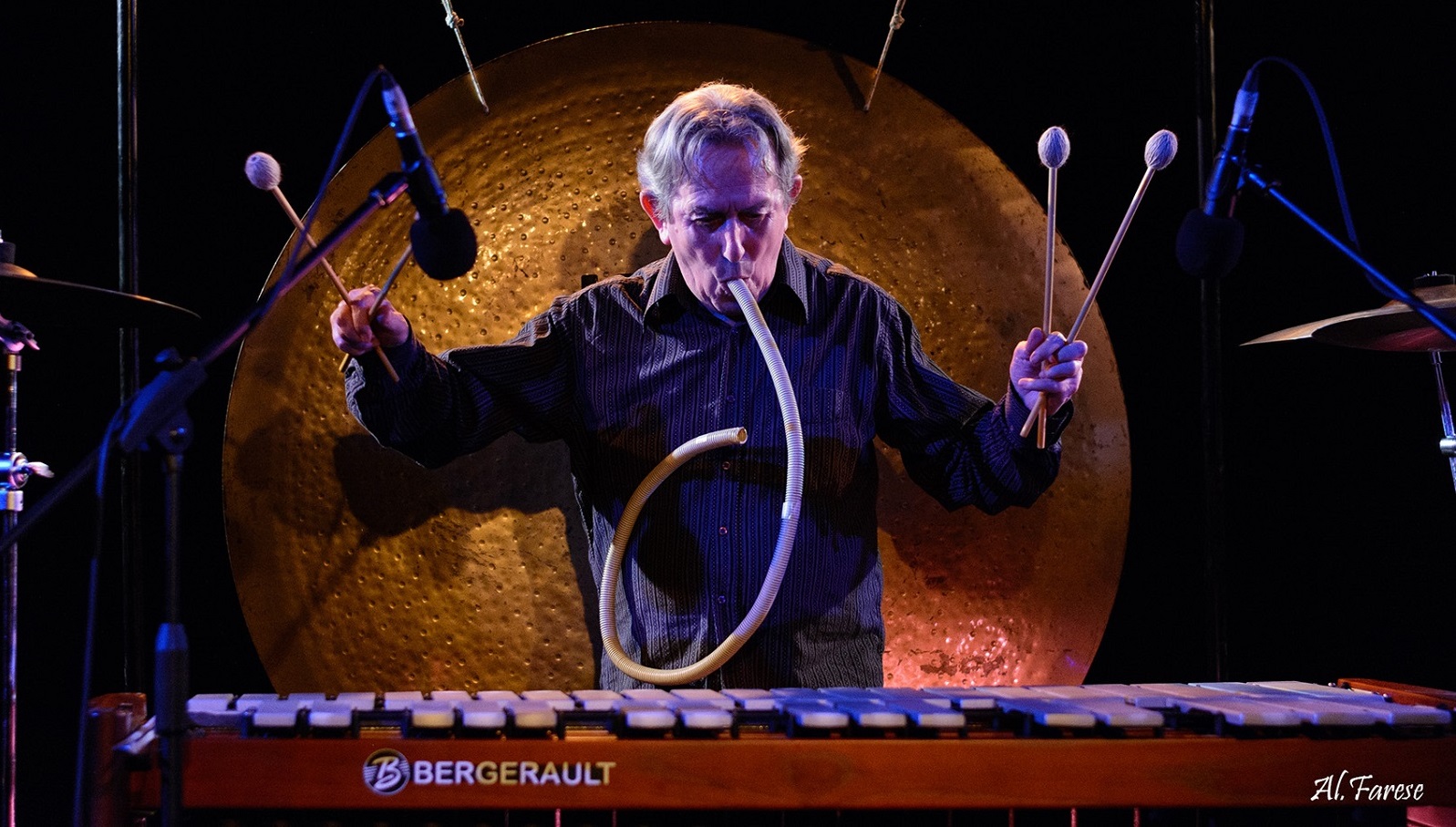
Although often labeled — likely out of convenience — as a minimalist, L.C.V. is an inexhaustible creator of never tedious soundscapes. He favours the vibraphone played with four mallets, yet he expands the instrument’s very raison d’être through quasi-expressionist reverberations. From imperceptible rustles to the sardonic strike of the great gong, Lino Capra Vaccina’s aesthetic celebrates the importance of every single sound in revealing the poetry of the instrumental-vocal interplay. The eclectic approach proposed by the Boxhead Ensemble stems from (seemingly) disjointed structures that often coalesce into songs sung by Annie, or by Krassner—whose vocals bear subliminal traces of Dylan or Cohen. Amidst the euphoria of this intimate festival finale, the group’s leader publicly revealed his Romanian ancestry on his grandmother’s side. This reminded me of my only encounter with Paul Bley (in Geneva, 1993), when the amazing musician confided that his own mother had been born in Iași. Such unlikely connections validate Krassner’s remark during the concert: “Jazz is a vast network.”