Comprehensive reviews of Newport, NN North Sea Jazz Festivals and Jazz Day in Montenegro — Notes from Austin, Montreux, Rochester, Syracuse and Tri-C (Cleveland) Jazz Festivals, the Chicago Blues Festival and Edmonds WA Jazz Walk —
More Festival coverage: Hear Northampton Jazz Fest’s Ruth Griggs, JJA Jazz Hero, on The Buzz
Elias Haslanger at Monk’s Club — A power bigger than the city? — Austin, Texas
by Thierry De Clemensat
When I arrived in Austin after leaving France, I discovered a city unlike any other, a place where music seems to live in every street, every venue and every conversation.
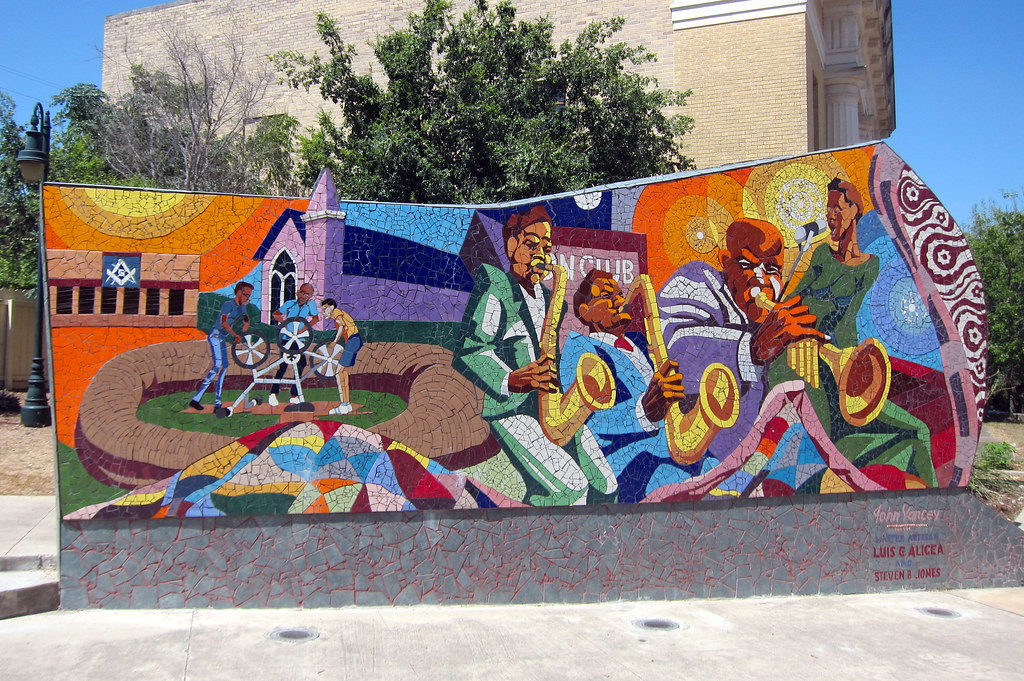
Among the first musicians I encountered in this remarkable city was saxophonist Elias Haslanger. Seeing him perform onstage recently at Monk’s Jazz Club brought back that first impression and confirmed something I understood years ago: Elias Haslanger is not simply a talented jazz musician. He is a force of nature.
From the opening notes, his performance creates an immediate impact. His energy is intense, almost unstoppable, yet his playing carries the precision of a Swiss watchmaker. Every phrase is controlled, every note has a purpose, and every solo reveals a musician who has spent a lifetime mastering his craft. But technical excellence alone does not explain his appeal. Haslanger is also a natural showman, an artist who knows how to communicate, inspire and bring an audience into the heart of the music.
His career has been built on experience and dedication. In 2000, he joined the tours of Maynard Ferguson, one of the most influential figures in jazz history. That experience placed Haslanger among musicians who understand both the tradition and the responsibility of carrying jazz forward. So he represents the very best of Austin’s musical spirit: authenticity, excellence and a deep connection to those who hear him.
But watching Elias Haslanger’s recent concerts — which include weekly stands at the Continental Club Gallery with a big band called Church on Monday — one question naturally comes to mind: Is this city big enough for a musician of his dimension? Austin is famous worldwide for its music culture, but artists like Haslanger remind us that extraordinary talent can sometimes exceed the boundaries of the place where it performs.
His latest album, as of this writing just issued and titled Legacy, is a powerful statement. It is not only a tribute to the musicians who came before him, but also proof that jazz continues to evolve through artists with vision, passion and personality. In my opinion, rhe album deserves recognition as one of the outstanding jazz recordings of recent years, combining tradition, creativity and unforgettable performances, Yet for anyone who believes in the power of live music, Elias Haslanger’s in-person performances are essential.
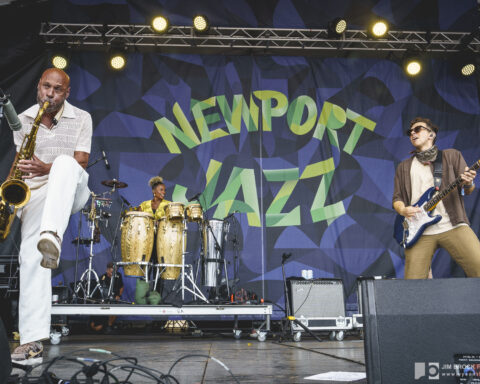
Newport Jazz Festival, Newport RI – Aug 2
by Emily Steinhilber
The Sunday afternoon by the Brothers McWayne — Dana and Alden — on Newport Jazz Festival’s Harbor Stage was rewarding in the best way: a standing ovation.
By Day Three, I’d started to wonder whether the Harbor Stage had a little luck of its own. Every afternoon, I found myself watching another audience rise to its feet here. But on Sunday, even the drummer stood up.
At one point, Alden rose behind the drums, his platform bouncing beneath him as he leaned into the music. It wasn’t theatrical. It simply felt like the music had nowhere else to go. Saxophonist Dana answered with remarkable restraint, allowing melodies to breathe instead of rushing toward resolution. The result was music built on trust.
That same spirit carried into our conversation a few minutes later. I admitted I’d had “Norm,” from the duo’s 2025 album Speedo, on repeat. “It feels deeply understated,” I told them, “but emotionally enormous.”
Dana smiled. The song, he explained, began late one night in Portugal after Alden had already recorded the drum part and left for the evening.
“I would play a line,” he said, “then start pacing while listening to it. I’d hear another line in my head, play that line, then start pacing again. I literally just kept laying down layers until I stopped pacing.” The meaning didn’t arrive first. “I discovered the meaning and the emotion through the process.”
Part of the affect of “Norm” also traces back to an unlikely instrument: a roughly 175-year-old piano belonging to political scientist Norman Finkelstein’s family. It had belonged to Finkelstein’s mother after she immigrated to the United States. Slightly out of tune, yet somehow perfectly in tune with itself, the instrument offered Dana its melody almost immediately. “It felt like the piano just played me,” he said.
Listening, it seemed, wasn’t simply something Dana and Alden practiced onstage. It was how they wrote. The duo has been making music together since they were teenagers. Alden laughed remembering convincing his mom to let him buy a drum kit off Craigslist before Dana started bringing him to jazz gigs. They grew up immersed in many of the same records — Pharoah Sanders, Talking Heads, Bob Dylan and Weather Report — before their musical interests gradually branched outward.
“It’s like a Venn diagram,” Alden said. “We almost read each other’s minds.”
I mentioned how remarkably patient their music feels in a culture built around immediacy. Alden laughed.
“We were bored a lot.” Growing up in Eugene Oregon, without constant access to cable television or the internet, the two spent their time drawing, reading comic books and making things up. “I feel like we juiced our imagination a lot as kids.” Then he admitted something that drew another laugh.
“I fall for reels every day.” Rather than treating platforms like TikTok as the enemy of thoughtful listening, Dana and Alden see them as another doorway. “We have a foot in each world.”
Someone might discover them through a 15-second clip. Then, Alden said, “They go to our discography and they’re like, ‘Whoa… there’s a lot more here.'”
That struck me because it also describes Newport.
For more than70 years, this festival has rewarded curiosity. Once upon a time, discovery happened because someone wandered past an unfamiliar stage. Today it might begin with a phone screen. The medium changes. The invitation doesn’t. When asked what they hoped first-time listeners would leave carrying, neither musician mentioned virtuosity. Or even jazz.
“Hope,” Dana said.
“A warm hug,” Alden added. We all started laughing as the metaphor kept evolving.
“A sonic hug.”
“An audible hug.”
“An ear hug… (both),” I said, drawing imaginary parentheses in the air with my hands.
“That’s genius.” Alden immediately pointed across the table.
“Write that down.”
For the next minute we joked that maybe we’d accidentally named a jazz magazine. Ear Hug (Both).
As I walked away from the press tent, I realized that listening had quietly become the subject of nearly every meaningful conversation I’d had at Newport this weekend. Earlier, I had watched Artistic Director Nate Smith transform a canceled performance into an impromptu collaboration built on trust and deep musical relationships. Later that afternoon, pianist Nduduzo Makhathini would speak with me about improvisation, silence and the spiritual practice of listening — a conversation deserving of its own story. Together, though, these moments suggested something larger about Newport itself. Beneath the performances, the packed schedules and the festival’s remarkable history, this is still a place where listening is treated as an active, generous practice. We stood up to take a photo together. That’s when we realized something none of us had mentioned until the interview was over. It was my first Newport. It was theirs, too. We laughed.
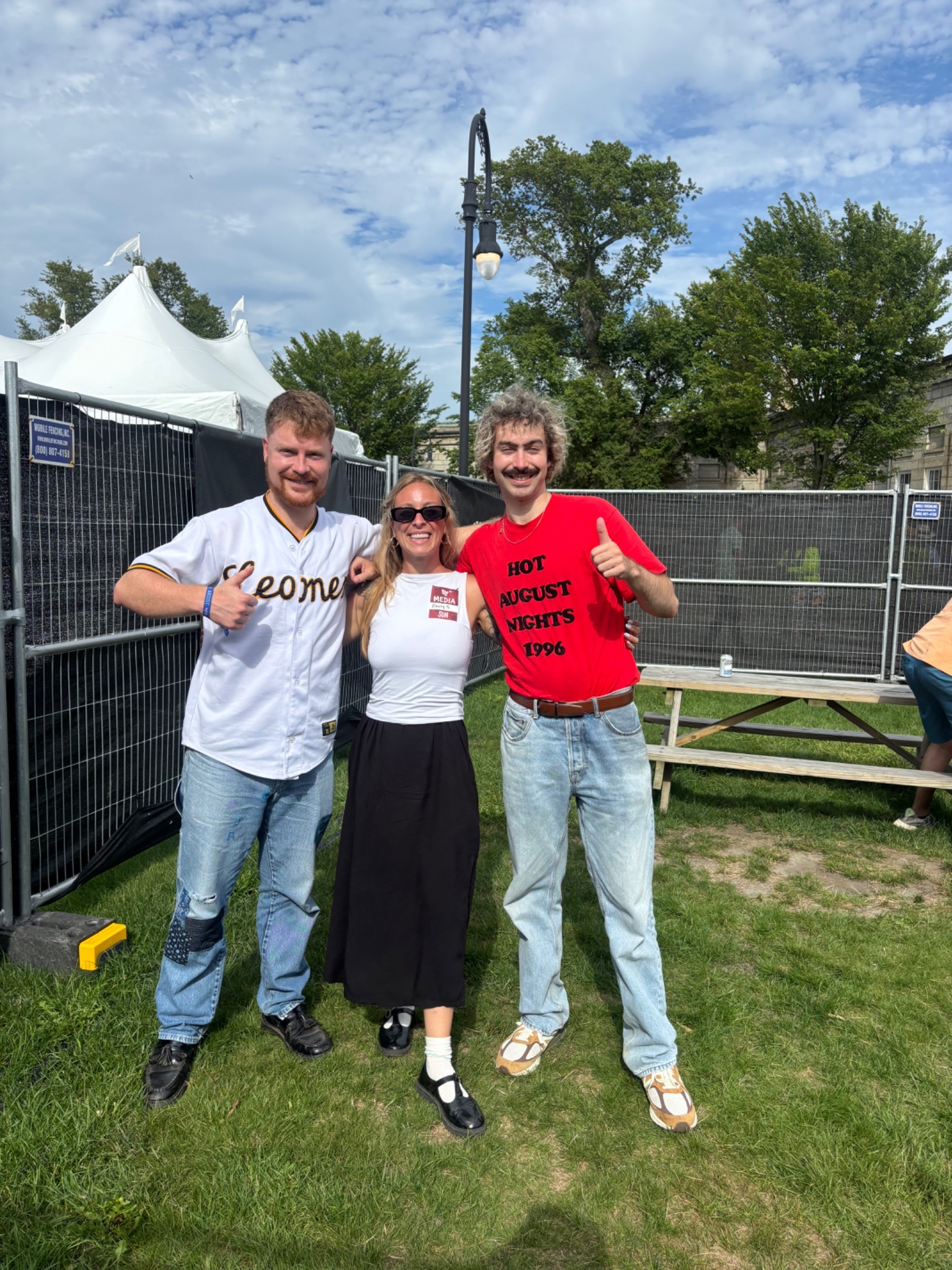
“Newport babies.” For a festival so rooted in history, I loved that realization. Every year, someone walks through these gates for the first time. Every year, someone hears an artist they’ve never heard before. Every year, new conversations become part of a tradition that’s been unfolding for decades.
We’d joked that maybe we’d accidentally named a jazz magazine, Ear Hug (Both). If that publication ever exists, I’d like to think its origin story begins here: around a folding table in the Newport press tent, where three Newport babies spent a Sunday afternoon laughing about music and discovered, almost by accident, that listening was the real story all along.
Newport Jazz Festival, Newport RI – Aug 1
by Emily Steinhilber
Today I shook hands with editors who have turned me down, and instead of feeling embarrassed, defensive, or even particularly
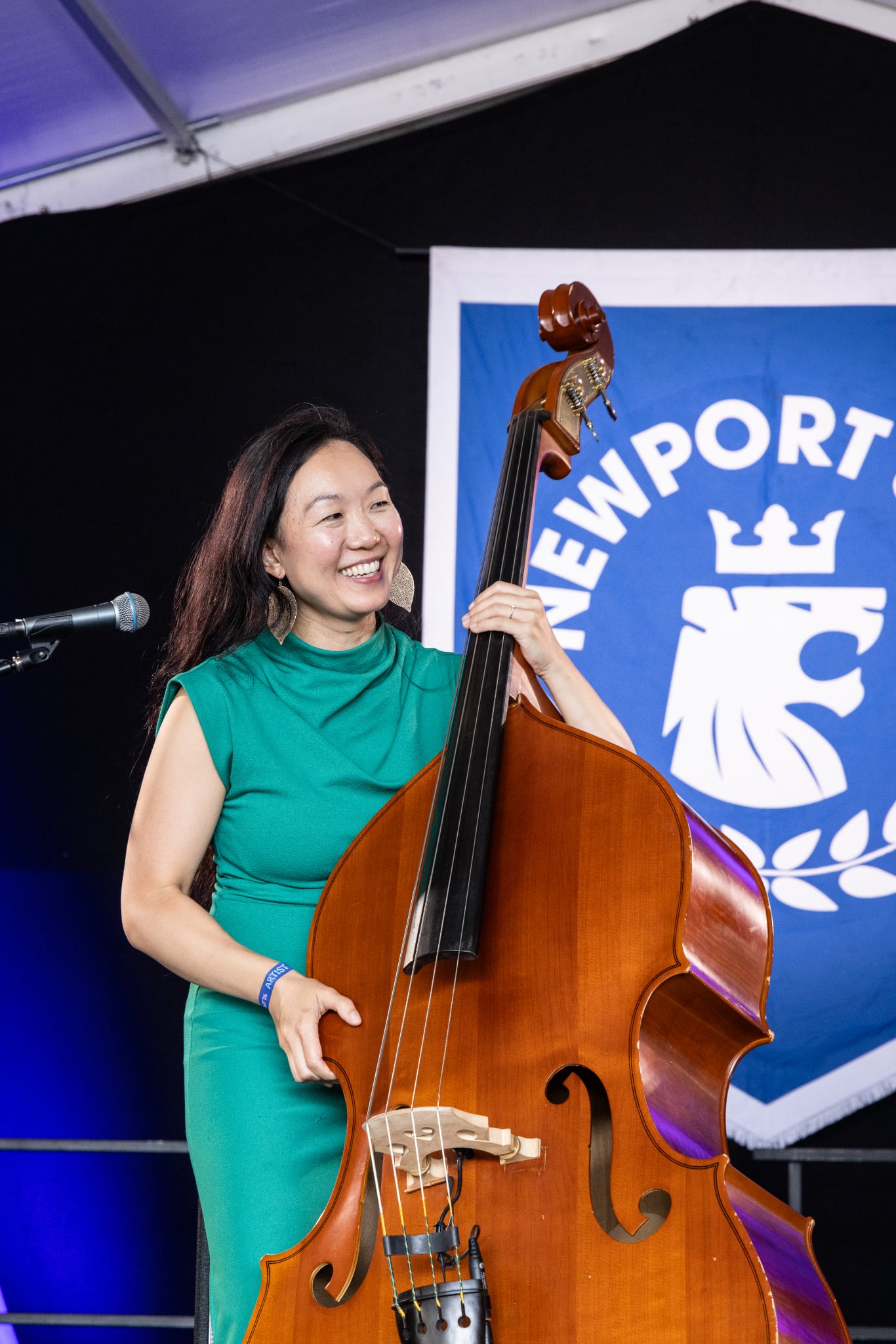
aware of the rejection itself, I felt grateful that I was standing there at all, inside the press tent at Newport Jazz Festival, talking with people whose work I have read, admired, argued with in my own head, and hoped, sometimes very openly, might someday make room for mine.
That realization did not arrive dramatically. Nobody pulled me aside to offer a grand lesson about perseverance, and no editor suddenly reversed course on an old pitch. We were simply there together, moving through the same hot, humid afternoon, comparing notes, talking about music, laughing about Newport, and carrying on as though rejection had never been the whole story, because of course it had not. From the lonely distance of an inbox, rejection can feel like a locked door, but in person it becomes something much smaller and more ordinary: one piece that did not fit, one conversation that ended before another began, one answer inside a much longer professional life.
By the end of the day, I was less interested in who had said no to me than I was overwhelmed by the fact that I had been allowed to sit among people who had spent years, sometimes decades, paying close attention to this music.
Today was always supposed to be my quieter day, the day I intentionally leave more room for the audience and less room for appointments, because I have learned that I cannot understand a festival by moving through it only as a reporter collecting interviews. At some point, I have to stop chasing the people onstage and sit among the people receiving what is being made there. I have to notice when someone leans forward, when a conversation stops, when a crowd begins rising before the applause has fully formed and when hundreds of people seem to discover the same thing at once.
Olive Jones was extraordinary, and Gotts Street Park absolutely leveled Newport, earning a standing ovation that felt less like a formal response than a collective decision made by the audience before any of us had time to think about it. People simply stood. That is one of the things I love most about festivals: When curiosity becomes visible, when a group of listeners who may not have arrived knowing exactly what they were about to hear suddenly realizes, together, that they have been given something worth remembering.
I spent much of the afternoon inside that feeling, not rushing away from it, not immediately trying to convert it into a quote or a clever observation, but letting it settle long enough to become part of the day.
The press tent carried its own rhythm between sets, and it may be the place where I understood Newport most clearly. One of the photographers I had met the day before walked in with me and continued telling me stories about the town, including the fact that the arcade downtown used to be a strip club when he was growing up, which he delivered with the casual confidence of someone who seems to know the history of every building within walking distance. He would point toward a street or mention a corner, and suddenly the Newport I had been moving through as a visitor gained another layer, one that did not exist on a map and would never appear in a festival press release.
That kind of knowledge matters to me because festivals are never only about what happens onstage. They are also about the places that hold them, the people who remember what stood there before, the stories that become attached to buildings, ferry routes, bars, restaurants, hotel lobbies, and stretches of grass where someone once played a set that people are still talking about years later. The concert is the entry point, but the ecosystem is the story, and the press tent is one of the places where that ecosystem becomes audible.
People compare notes there, but they also compare memories. Someone mentions an artist they first saw decades ago, someone else remembers an older version of Newport, and another person begins telling a story that may or may not have anything to do with the set everyone just heard but somehow belongs to the same larger conversation. The music continues after the applause ends, only now it moves through language, memory, argument, recommendation and the subtle passing of context from one person to another.
I found myself speaking less than I normally would, not because I felt diminished, but because I wanted to hear how these people remembered. There is a particular kind of authority that comes from spending years paying attention, and it does not always arrive as certainty. Sometimes it arrives as a story about a building. Sometimes it sounds like someone saying, “You should have heard them then.” Sometimes it is a book recommendation, a name offered quietly across a folding table, or a correction delivered without cruelty because somebody believes the history deserves to be precise.
I do not want to rush past those moments in an effort to prove that I already belong in the conversation. I want to listen long enough to understand what conversation I have entered.
Derrick interviewed me today, which is still a strange sentence to write because he has already become someone I think of as a mentor, and at one point he asked how I found my way into talent booking. I know I gave him some kind of answer in the moment, but I have been thinking about the question ever since because the truth is much simpler than any professional chronology I could have offered him.
It is all in the ears, baby.
I did not find talent booking because I had a perfectly ordered plan, and I did not find journalism because I had chosen a clean, sensible career path. I followed what moved me. I heard musicians and wanted to know who was making room for them. I watched audiences and wanted to understand why certain performances changed the temperature of a room. I noticed who was being invited, who was being overlooked, who was carrying history forward, and who was quietly creating the conditions for discovery.
The booking came from listening. The writing came from listening. The questions came from listening. Even my interest in the audience, in acoustics, in venue history, in the way people behave together inside a room, came from an instinct I had long before I knew how to explain it.
Long before I understood criticism, I understood jazz because my dad played it constantly. It was not introduced to me as a subject I needed to study or a genre I was expected to appreciate correctly. It was simply there, moving through the house, shaping the air, teaching me something about time, tension, patience, surprise and the way people can speak to one another without using language at all.
Before I knew who was soloing or why one recording mattered more than another, I knew what happened to a room when jazz was playing. I knew when the music asked for attention. I knew that listening was not passive. It was participation.
Looking back, I do not think I became a jazz writer so much as I finally found a form capable of holding something I had already been carrying. Writing arrived later, after the listening, after the wondering, after years of understanding the music in ways that were emotional and instinctive before they became intellectual. The sentences came after the sound.
That is part of why today affected me so deeply.
There is something almost impossibly intimate about writing that I do not think we acknowledge enough, because when someone tells you they have read your work, what they are really telling you is that they have spent time with the way your mind pays attention. They have noticed what you linger over, what you choose to preserve, what details you trust, what questions you leave open, and what kind of truth you are trying to reach even when you do not quite know how to name it yet.
A club owner from New York and his wife, who is an architect, had read my writing before they met me. We began talking, and at some point I realized we had not really started from zero because they had already encountered a version of me, not through a résumé, a credential, or a practiced introduction, but through the way I had arranged sentences around something I cared about.
They had spent time inside my attention.
That realization has unsettled me in the gentlest possible way, because writing is such a solitary act. You sit alone with a draft, moving a paragraph around until it begins to resemble what you actually mean, and then you send it out into the world without ever really knowing where it goes. Most of the time, the reader remains abstract. You imagine someone on the other side, but you do not see their face, hear their voice, or watch the exact moment a sentence lands.
Then one day you are standing in the press tent at Newport Jazz Festival, and someone tells you they have read your work.
Not your Instagram. Not your biography. Your work.
For years, I have lived inside the sentences of other writers because I am a very picky reader and do not give my attention away casually. When I choose to read someone, I am choosing to spend time with how they see, how they listen, and what they believe deserves to be remembered. I have let writers teach me how to notice, and I have returned to certain voices because their attention sharpened my own.
Today, I realized someone had made that same choice with me.
I do not experience that as recognition so much as responsibility, because if another person is willing to trust me with their attention, then I owe them my best attention in return. Maybe that is journalism at its most generous: Not the simple transaction of information, but the stewardship of another person’s attention, handled carefully enough that what they give you is not wasted.
That is also why the bookstore mattered.
I bought a Newport Jazz Festival T-shirt today, and I love it. It is bright, unmistakable, a little playful, and exactly the kind of thing I will wear until the fabric softens and the colors begin to fade. But I also bought Greg Tate’s Flyboy in the Buttermilk and Jonathan Iel’s Dreams in Double Time, and those felt less like souvenirs than provisions.
Not really merch, more like fuel.
I was not looking for something that would simply remind me I had been here. I was looking for something that might change the way I return.
That difference feels important because I do not want Newport to become a collection of credentials, photographs, and moments I can point to later as proof that I attended. I want it to deepen my work. I want the books, the conversations, the awkwardness, the rejections, the standing ovation, the stories about old buildings, and the shock of meeting readers to alter the way I listen the next time I enter a room.
I called the fundraiser that helped get me here Seeking Survival and Finding Sound, and when I named it, survival meant something immediate and practical. It meant finding enough support to get on the plane, enough generosity to cover the hotel and enough belief from other people to make the trip possible.
I thought finding sound meant Newport.
Tonight, I understand that the sound had been with me all along.
It was in my father’s records before I knew how to name what I was hearing. It was in every artist I followed because something in their work insisted that I stop and listen. It was in the talent booking, the journalism, the audience, the ferry ride, the photographers, the editors, the books, and Derrick asking me a question that quietly revealed the throughline of my own life.
I kept following my ears.
What I found at Newport was not the sound itself, but the culture that has spent generations carrying it.
That culture is not abstract. It is built by musicians, certainly, but also by the people who document them, teach them, photograph them, book them, edit them, argue about them, recommend their records, remember their earliest sets, and bring someone new into the room. It is built by audiences willing to stand when something moves them, by people who preserve histories no institution has fully captured, and by writers who understand that the work does not end when the final note disappears.
I do not want to be adjacent to jazz. I want to help sustain the culture that allows it to keep evolving, not because I believe I am central to it, but because I am beginning to understand that no one person is. Culture survives through accumulation, through attention given and returned, through people deciding that what they have inherited is worth carrying a little farther.
I am as serious as a heart attack about this music, but seriousness does not require solemnity. Joy is evidence. The laughing, happy blonde moving through every festival, talking to strangers, buying books, asking too many questions and standing in the audience with her whole face lit up is not separate from the journalist. That joy is part of the method because it keeps me open, and openness is what allows the work to deepen instead of harden into performance.
I think that is part of what made today so emotional. I had imagined some of these people as distant figures because I knew them first through bylines, editor names, radio voices,and the work they had already contributed to the culture. Then I met them as people, with stories, jokes, histories, awkward moments, opinions and ordinary conversations about horses, buildings, music and next year.
Sally talked about where she rides horses around Newport, and by the end of the conversation she was already talking about next year as though I would be back. Derrick asked questions that made me reconsider my own path. A photographer turned a downtown arcade into a portal to another version of the city. Editors who had turned me down laughed with me in the same room where we were all listening for what mattered next.
Nobody announced that I belonged there.
Something quieter happened.
People spoke to me as though I might return.
That may be the most generous form of welcome I know.
The harbor is quiet now, the festival is over for the evening, and I am sitting on the hotel roof with a sunburn, a new T-shirt, two books, and more gratitude than I know what to do with. I am still stunned that people have read my writing, and I am still trying to understand what it means that the words I wrote alone have traveled into the lives of people I am only now meeting.
What I know is that I do not want to waste that trust.
I want to keep listening to the people who have carried this music longer than I have been alive, and I want to develop without rushing to perform certainty I have not earned. I want to understand how memory moves through a press tent, how discovery moves through an audience, how a place becomes inseparable from the music it has hosted, and how writing can preserve something without trapping it.
I used to think I was trying to build a career around jazz.
Now I think I am trying to become useful to it.
That feels less glamorous and much more sacred.
Maybe the work is simply to listen carefully enough that someone else can hear what they almost missed, to protect curiosity without pretending it belongs to you and to leave behind sentences that help carry the sound forward after the stages go quiet.
For tonight, that is enough.
Tomorrow, I will keep listening.
Newport Jazz Festival, Newport RI – July 31
by Emily Steinhilber
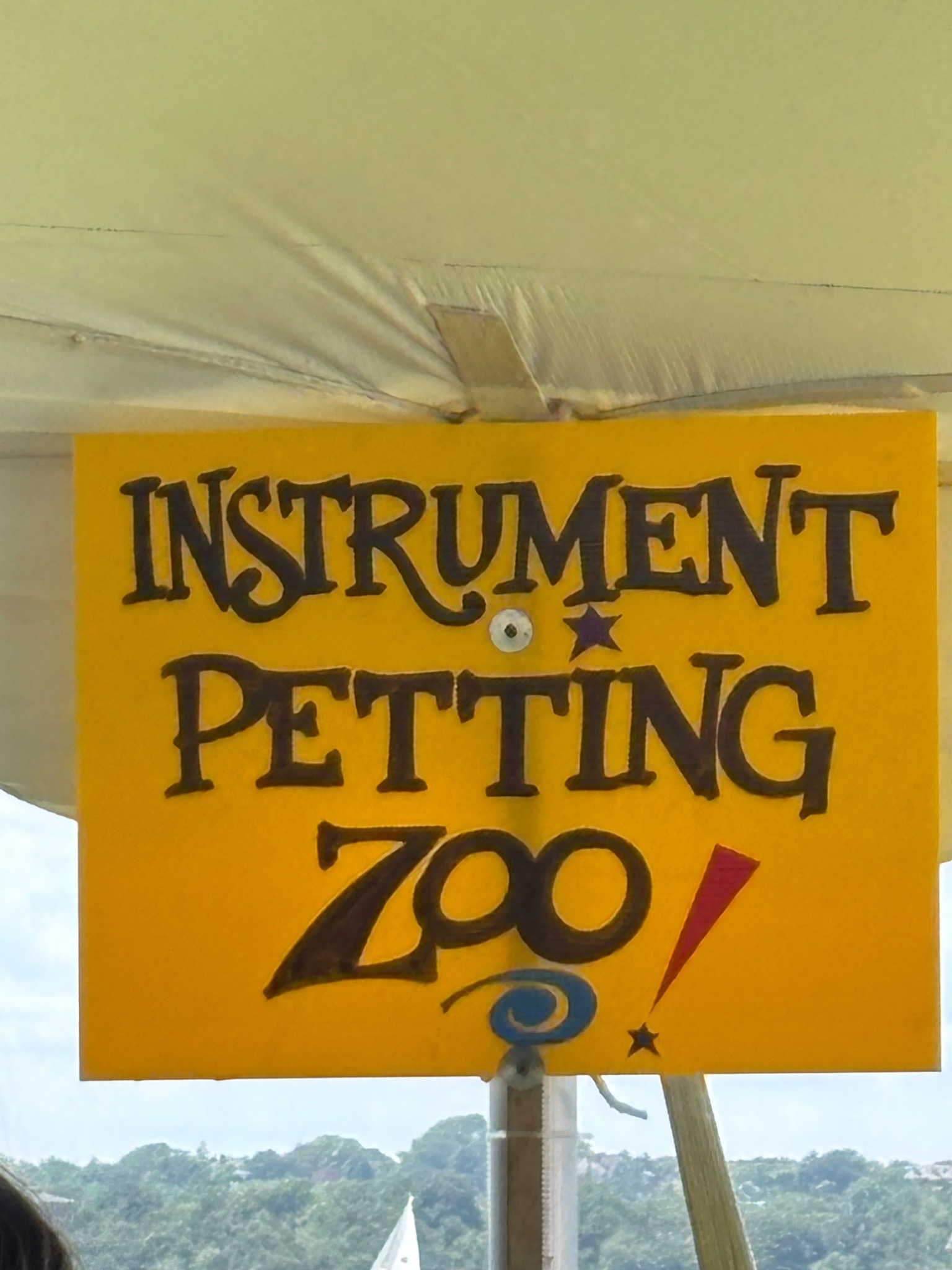
An Instrument Petting Zoo. It’s impossible not to smile.
No, I didn’t wander in— I was definitely a few decades older than the target audience—but I stood there longer than I expected, watching kids tentatively pick up instruments, parents snapping photos and volunteers patiently encouraging the next generation of musicians. And I kept thinking about what that little sign represented.
This festival has spent decades reminding people that jazz isn’t preserved behind glass. It survives because someone eventually hands a child an instrument and says, “Here. Try.”
For all the legends who have played Newport, for all the history that hangs over Fort Adams, the festival understands something essential: the future of jazz won’t be secured by nostalgia. It’ll be secured by curiosity. Whoever came up with the phrase “Instrument Petting Zoo” deserves a raise. It’s one of the funniest and most endearing things I’ve seen all day.
Sometimes a festival tells you exactly what it believes with a mission statement. Sometimes it does it with a yellow sign and a trumpet. That idea lingered with me as I walked toward Harbor Stage for Concurrence’s opening set. The band opened Newport Jazz Festival Friday morning with Indivisible, an album project that asks listeners to hear the communities American highways erased— and imagine the music that might have flourished had those neighborhoods remained intact.
Speaking after the performance, pianist Paul Horton and bassist Greg Bryant traced the origins of the project to conversations about Nashville’s Jefferson Street, once a thriving Black cultural corridor where artists including Jimi Hendrix and Ray Charles built lasting musical connections before urban renewal and interstate construction transformed the neighborhood.
“We kept asking, ‘Why didn’t our community have the goods, services, and arts that other parts of the city had?'” Bryant said. “That story isn’t in the history books.”
Those conversations grew into years of research and composition. Horton explained that the project began by imagining an alternate musical history rather than simply documenting one.
“I started to think about an alternate reality where these interstates did not tear through these neighborhoods,” Horton said. “What would that sound like?”
Instead of treating Indivisible as a historical lecture, Concurrence approached each composition as though the vanished clubs themselves still existed. Songs such as “Del Morocco” imagine musicians performing in Nashville venues lost to redevelopment, while other pieces reflect the emotional weight of displacement and the communities left behind. The result transforms archival research into lived musical experience. Rather than reconstructing the past, the band invites audiences to hear what was interrupted.
That perspective carried particular resonance at Newport, a festival long associated with musical discovery and community gathering. Presenting Indivisible in that setting underscored the contrast between spaces created to bring people together and histories shaped by policies that divided neighborhoods. In the span of an afternoon, Newport quietly posed two versions of the same question. One asked how musical communities begin. The other asked what happens when they disappear. Between an Instrument Petting Zoo and Indivisible, the answer seemed to be the same: Culture survives because someone chooses to pass it on.
NN North Sea Jazz Festival @50, Rotterdam, the Netherlands – July 10 – 12
by Danica Pantovic, © photos
What: The 50th edition of NN North Sea Jazz Festival anchored in Rotterdam, the Netherlands, the largest European port, for the 20th time. Scope: 1.300 artists, approximately 30.000 daily audience, 17 stages, 150 performances, some 200 hours of music, or
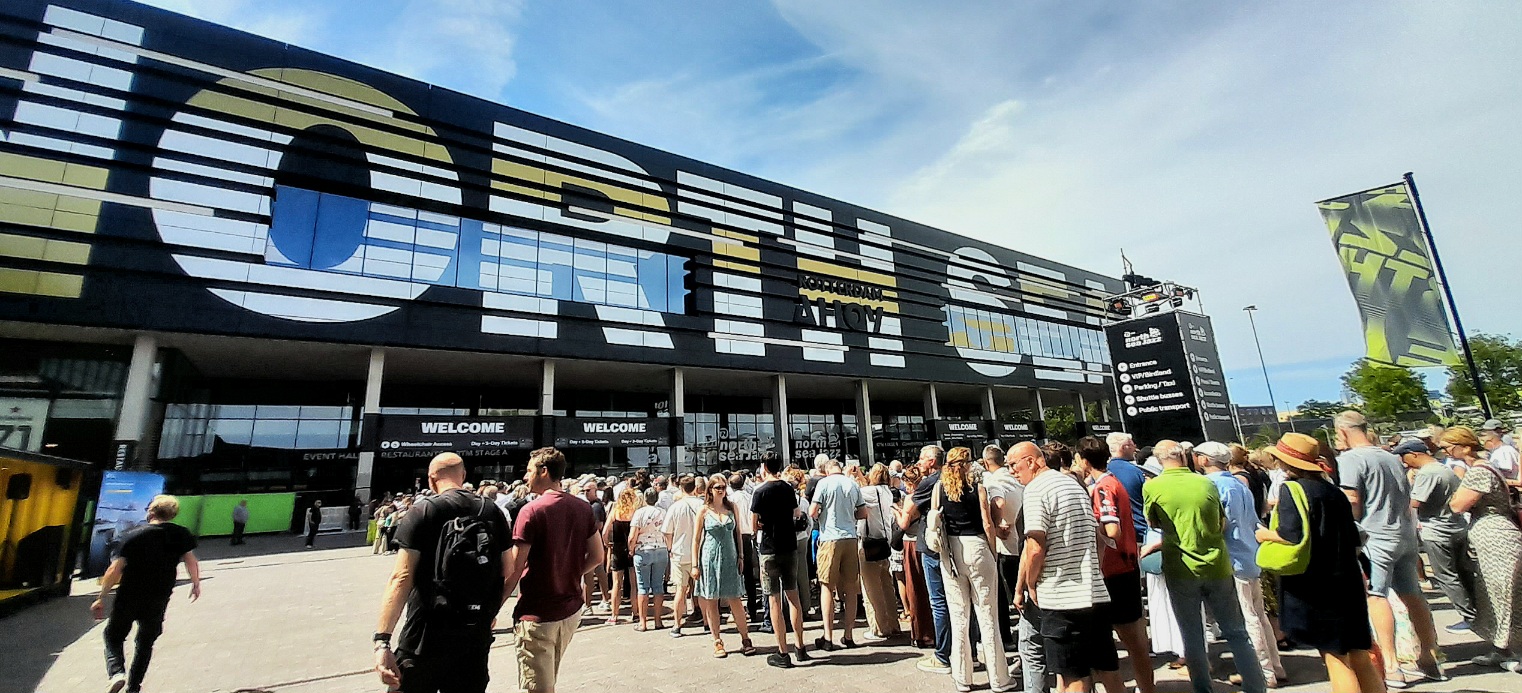
ten times more than one can hear from 10th till 12th July. The third festival director Irene Peters aimed “to offer complete, panoramic overview of jazz and related art forms.” It definitely was, as usual, an extensive preview of festival productions for the rest of the year.
The stages, named by the greatest rivers in the world, were not strictly orientated by subgenres (straight ahead jazz to modern creative, free improvisation) as they used to be, the way Paul Acket (fest founder in 1976) envisioned them. The complete program predominantly consisted of first liners from America and the vivid, eclectic Dutch scene.
Talented you Dutch composer-saxophonist-and flute-player Ben van Gelder featured his winning free composition commissioned to NN NSJ, The Whole Wide World Is Round, in a balanced arrangement for vibraphone, guitar, drums, double bass and sax.
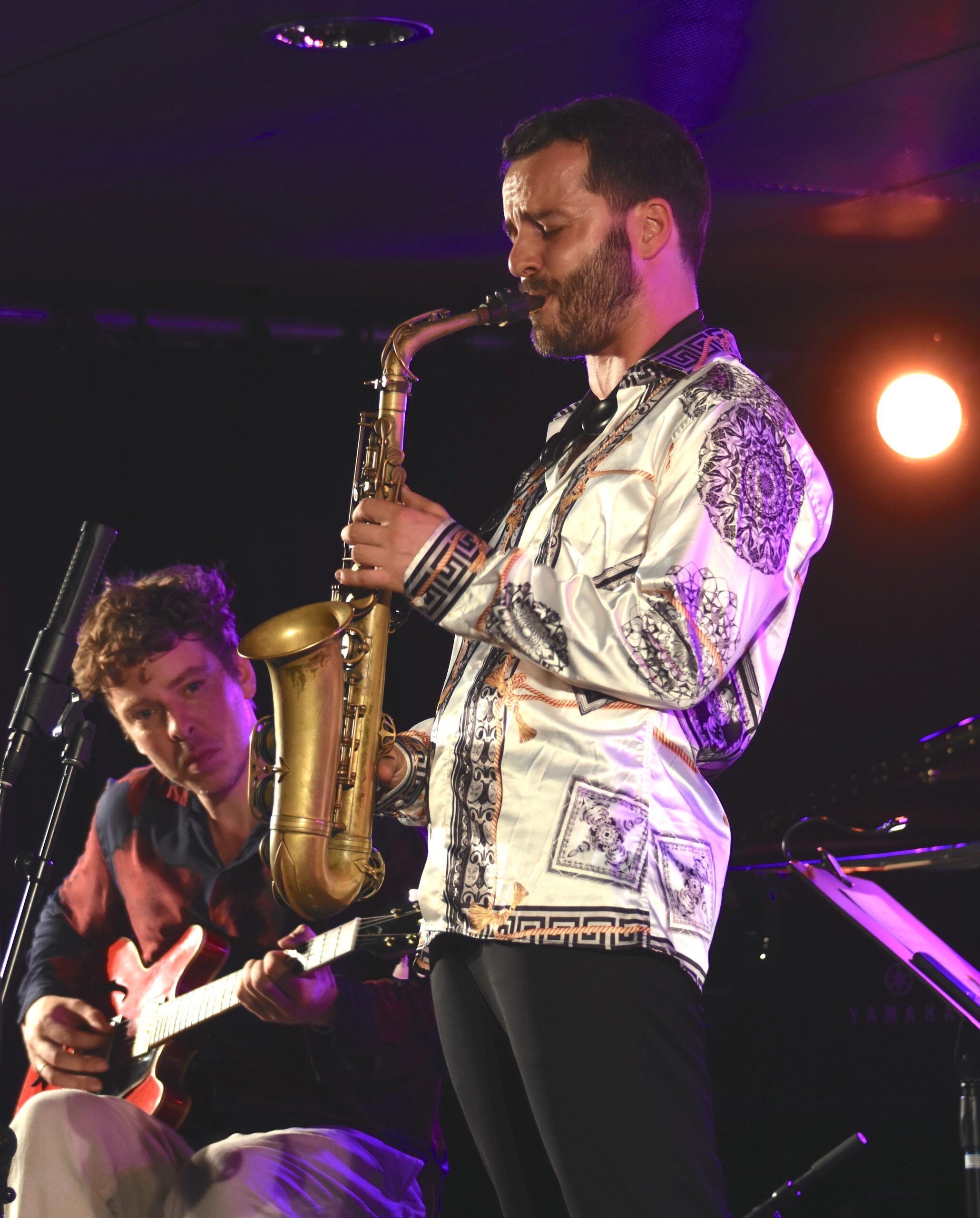
Van Gelder served as a sideman several times, once with the versatile drummer Jamie Peet and other time with guitarist, composer and recording artist Reinier Baas. The latter duet played a tribute homage to Abbey Lincoln, over and along with the original words and instrumental extracts from her performances, part of the North Sea Round Town program in very vibrant Dutch art center at LantarenVenster.
The creative Dutch scene was further represented by new projects from saxophonists Tineke Postma‘s Quartet featuring Theo Bleckman, and Yuri Honig‘s Peace Orchestra. Mete Erker(ts) along with Floris Kappeyne (p), Tijs Klaassen (db) and Wouter Kuhne (d) was treated with a standing ovation for a rendition of their intimate acoustic album presented Tilburg Noord.
Standing ovations also honored quartets led by James Brandon Lewis (ts), Aruan Ortiz (p), Brad Jones (db) and Chad Taylor (d), and Joshua Redman (ts), Paul Cornish (p), Philip Norris (b) and Nazir Ebo (d). The audience warmly welcomed the unpredictably liquid soundscapes of Swedish-Berlin sensibility brought by Y-Otis led by Otis Sansdjo (ts) Dan Nichols (synt), Petter Eldh (db) and Jamie Peet (d).
The annual Paul Acket Award for extraordinary musical quality was assigned to Amaro Freitas, pianist, who proved to be a master of tempo and shuffled styles during performance merging Brazilian heritage and jazz idioms, dancing and joyfully playing every note and measure with Sidiel Vieira (db) and Rodrigo Braz (d).
Homages were paied to the centenaries of Miles Davis (Marcus Miller‘s We Want Miles! project, and Miles/Coltrane Legacy by Terence Blanchard & Ravi Coltrane) as well as Isaiah Collier with Tomoki Sanders (Pharoah Sanders’ son). Sonny Rollins was celebrated by Jesse Schilderink (ts), a member of legendary 80-year-old Dutch drummer Pierre Courbois’ 3Gen3 trio playing “Doxy” (and Miles, as well) and Diana Krall with her emotional story of first meeting Rollins at this fest. The RH Factor payed a tribute to the late Roy Hargrove, beloved by a couple thousand in the audience singing along (was it on “Forget Regret”?).
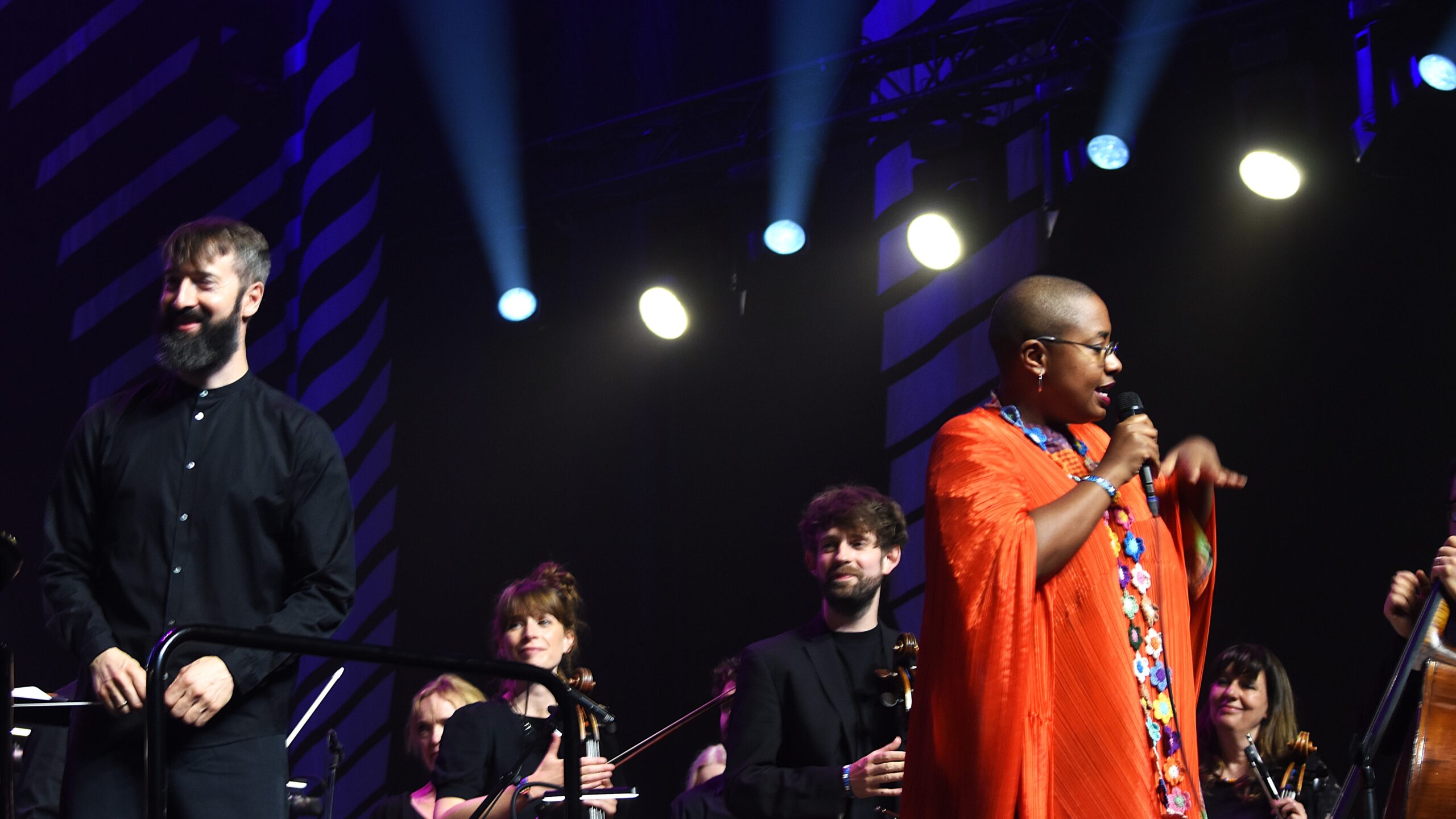
This fest always presents an exciting and delicate choice of music for orchestras, large to mid-sized, as many highly educated Dutch musicians play in such as the.Nationaal Jeugd Jazz Orkest O.L.V. Reinier Baas honoring late Dutch composer and pianist Misha Mengelberg, as did a renown Italian Artchipel Orchestra presenting Officine Mengelberg. Conductor/composer/arramgers were plentiful: Jules Buckley of the versatile and eclectic Metropole Orkest played his latest projects with Snarky Puppy (the crowd completely flipped) and with Cécile McLorin Salvant.
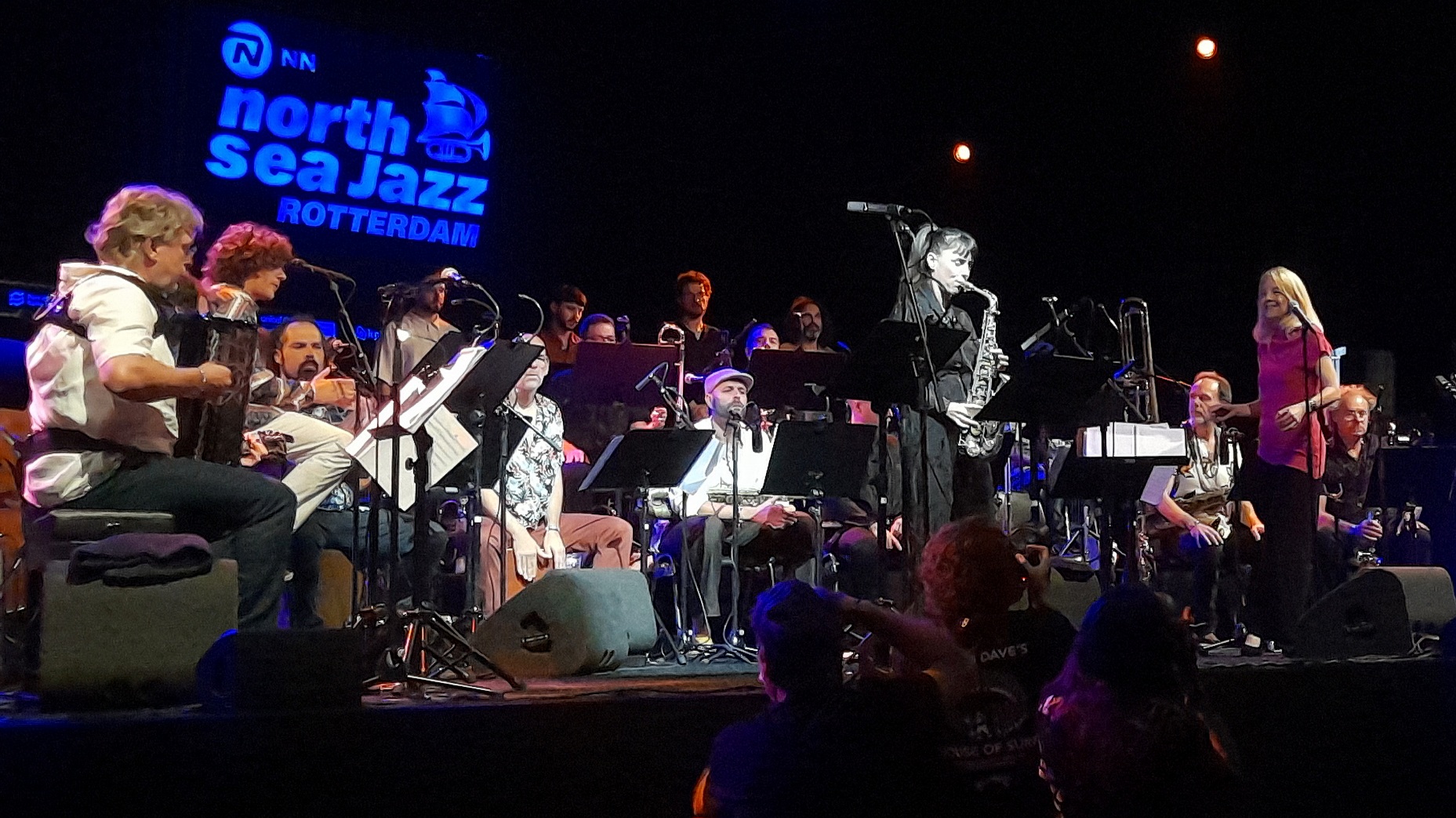
Clasijazz Big Band featuring Antonio Lizana comprised musicians from Spain bringing flamenco and bulerias to Maria Schneider, whose subtle, compact writing allowed the players to fully express themselves.
Fest Anniversary specials included an ode to the Sun Ra Arkestra, which played the 1976 event, and Pat Metheny‘s debut album Bight Size Life, originally played with Jaco Pastorius (b) and Bob Moses (d) but now Reimagined by by the Dutch conductor Tim Wybenga for the Brainteaser Orchestra, 13 musicians providing a deep bass foundation (bass clarinet, tenor and alto saxes, vibraphone, bass, cello, viola) and perfect constant rhythm, calling Metheny to play along and over it.
Artist-in-Residence Cécile McLorin Salvant evidently enjoyed her position, sovereignly demonstrated the wide range of her talent and interests in four completely diverse programs, each a memorable oeuvre d’arte. In quartet with Sullivan Fortner (p), Yasushi Nakamura (db) and Kyle Poole (d) she sang a selection from her albums. Her baroque program was based on Book of Ayres. Her newest project is with Metropole Orkest, With Every Breath I Take. Her most intimate outing was in duo with Fortner, fulfilling musical requests from her mom and from the audience.
Newcomers had opportunities to play and jam (there was an open call for them) on Codarts Talent Stage supported by the University of Rotterdam. New interesting voices for me were: Camila Meza, guitarist and vocalist, in trio with Gabriel Chakarji (k) and Eviatar Slivnik (d), and Alden Hellmuth saxophone with pianist Yvonne Rogers.
Artists joined in spontaneous conversations with their fans in the Talking Jazz area at Central Park Stage, being candid about their lives, begininngs, projects, current challenges, and thoughts on AI. All-ages audiences of at least 2000 danced and sung to popular music of Thundercat, Burna Boy, Jon Batiste, The Roots, Bilal, Robert Glasper and multitalented Questlove in a crowdy and hot Nile, Mass and Darling venues.
The sound souvenirs I have taken home are emotions stirred by Patricia Brennan‘s Septet, Tomeka Reid‘s dance!skip!hop!, Steve Coleman’s Five Elements, Fred Hersch‘s Trio, the mastery of Charles Lloyd Quartet finest introspective scapes, Julia Hulsmann and Christian McBride playing bass guitar with Questlove. You simply could not make a mistake. By entering any venue, even during your meals (different world cuisines, at fair prices), in the very heart of Ahoy or outdoors, you would be wrapped up in high quality music, some on big screens livestreaming what was happening in the venues.
The secret of NN NSJ’s success is in the original vision of impresario Acket (who died in 1992) inspired by the Newport Festival: Personal devotion and commitment to participants (as proved by the joy musicians expressed in being brought back here); all stages under the one Ahoy roof; solid financing (keeping three-day ticket prices at the same level for years, despite increasing costs) supported by NN Group (insurance/asset management company), Port of Rotterdam, Heineken, TTEP (energy company), and spotless MOJO Concerts (since 1992) production. Congratulations.
Montreux Jazz Festival – Montreux, Switzerland, July 17
by Rebecca Klobucher
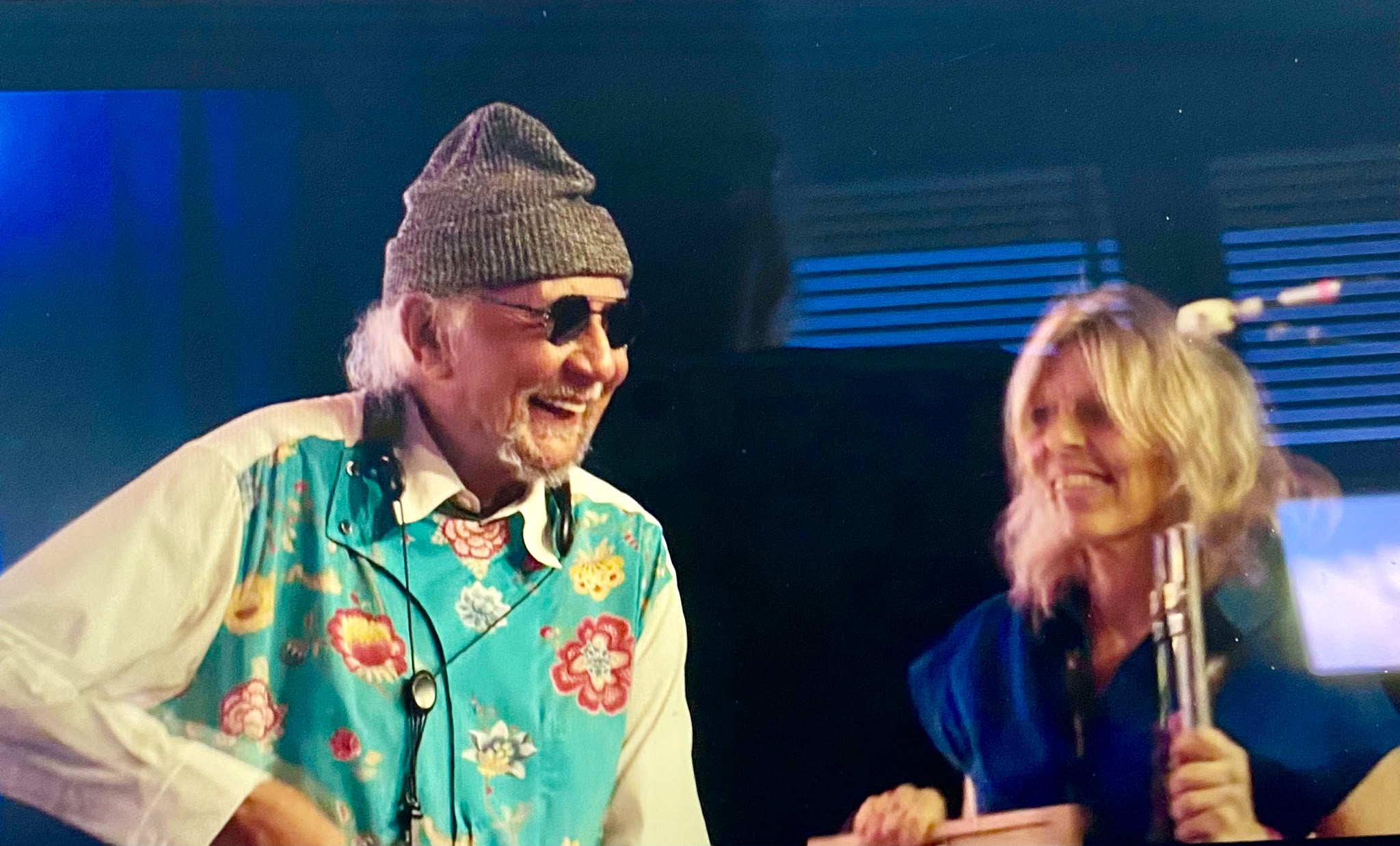
Mr. Charles Lloyd and players — Gerald Clayton, piano; Harish Raghavan, bass, and Kweku Sumbry, drums — walked on stage July 17, at the 60th edition of the Montreux Jazz Festival as a quiet presence, and then proceeded to channel powerful sounds of the ancients. The first two breaths he blew on his century-old tenor saxophone were enough for me to know that I was present for an historic concert.
Lloyd was the first headliner at Montreux in 1967, and it’s said that Claude Nobs built the Festival for him. His quartet at that time was the one immortalized on his breakthrough album Forest Flower. included bassist Ron McClure, drummer Jack DeJohnette and pianist Keith Jarrett. This time it was Clayton rolling his fingers across piano keys as Lloyd sat nearby, seemingly recalling ocean waves in his home place of California. He smiled, waited, and waited some more, and then arose to add his fresh wind to the scene.
Standing in the former Miles Davis Hall now called Montreux Jazz Lab, where record-high temperatures had scorched the city for weeks, didn’t matter much to this active-listening audience. No one dared step out for a moment and miss anything. Staying was rewarded: An unplanned encore, featuring Lloyd on the flute, added to this already transcendental experience.
How these sounds eradicate national borders and remind us of eternal things must only come from 79 years of experience; Lloyd started playing saxophone at the age of nine. Knowledge of the blues surely added to this chemistry happening in the Lab. During an MJF workshop with Radio Suisse recording engineer-producer Pierre Grandjean, Lloyd shared his stories of gigging behind Howlin’ Wolf and B.B. King, among others, during his teenage years in Memphis.
Still processing what I had witnessed, I went on stage to present the 2026 Jazz Journalists Association Award for Flute Player of the Year to this great man, and at one point my rehearsed words failed me.
I had to pause, and acknowledge the music and emotion. The sold-out audience joined me.
While walking off stage, Lloyd asked that I carry the Award, “and this.” He handed me the magic flute.
Tri-C JazzFest, Cleveland, OH — June 25, 2026
by Chris Hovan
Under new artistic director Orlando Watson, the 47th edition of Tri-C JazzFest opened with a program that reflected the festival’s broader recalibration. With a lineup emphasizing artists with strong Cleveland ties and frequent references throughout the weekend to the increasingly elastic notion of “jazz adjacent,” the festival appeared intent on broadening its audience while testing the boundaries of its identity. Whether that approach ultimately succeeds will become clearer in future editions.
As an opening-night statement, however, Sheila E. and the E-Train proved difficult to fault. The veteran percussionist brought the kind of polished, high-energy production that blurred the lines between jazz, funk, soul and pop while never sacrificing musicianship.
The set established its groove immediately with The Stylistics’ “People Make the World Go Round,” propelled by Curtis Bertron’s layered keyboard textures and Mychael Gabriel’s assertive guitar work. A seamlessly assembled medley linking Sly Stone’s “Everyday People,” The Pointer Sisters’ “Yes We Can Can” and Tower of Power’s “Oakland Stroke” underscored Escovedo’s Bay Area roots, the latter serving as an especially appropriate nod to her musical upbringing under her father, legendary bandleader Pete Escovedo.
Although her reputation rests on formidable percussion skills, Escovedo demonstrated equal command as a frontwoman, moving comfortably between drum set, timbales, and lead vocals while maintaining constant rapport with the audience. Her extended feature during “Yellow Submarine” was the evening’s technical centerpiece. Beginning with crisp double-stroke figures on closed hi-hats, she gradually expanded the rhythmic palette through shifting accents, dynamic contrasts and orchestrated movement around the kit before reducing the texture to hand percussion, creating a satisfying dramatic arc.
Escovedo also understood pacing. A reflective reading of Burt Bacharach’s “What the World Needs Now,” accompanied by brief remarks on compassion and unity, provided an effective emotional reset before the inevitable audience favorites, “A Love Bizarre” and “The Glamorous Life,” transformed the State Theater into a dance floor. Throughout both numbers, her timbale work remained crisp, forceful, and impeccably placed, complementing rather than overwhelming the groove. The evening succeeded because its showmanship rested on a solid musical foundation. For a festival navigating an evolving artistic identity, Sheila E. and the E-Train supplied an opening-night performance that balanced entertainment value with genuine musical substance.
The ensemble functioned less as a backing band than as a collaborative unit. Bassist Raymond McKinley injected a welcome dose of deep funk during a feature incorporating “Brick House” and “We Want the Funk,” while vocalist Lynn Mabry brought warmth and conviction to “Blackbird,” supported by Bertron’s understated accompaniment before Gabriel entered with tasteful commentary.
Read Chris Hovan’s review of Ron Carter’s Foursight Quartet at Tri-C Jazzfest on June 27, at AllAboutJazz.com.
Syracuse Jazz Festival – Syracuse, NY, July 10 -11
by Monk Rowe
I lucked out this summer, earning a performing spot at both Rochester and Syracuse jazz festivals. As a former educator (it never leaves you) the tried and true “compare and contrast” exercise was inevitable.
The Rochester fest, nine days this summer, was launched in 2002; the three-day Syracuse fest celebrated its 40th anniversary this year. Both featured top acts: the astute managers of “headliners” Trombone Shorty and singer/multi-instrumentalist Gunhilde Carling arranged for their artists to play both. Local bands competed for a festival gig in both cities.
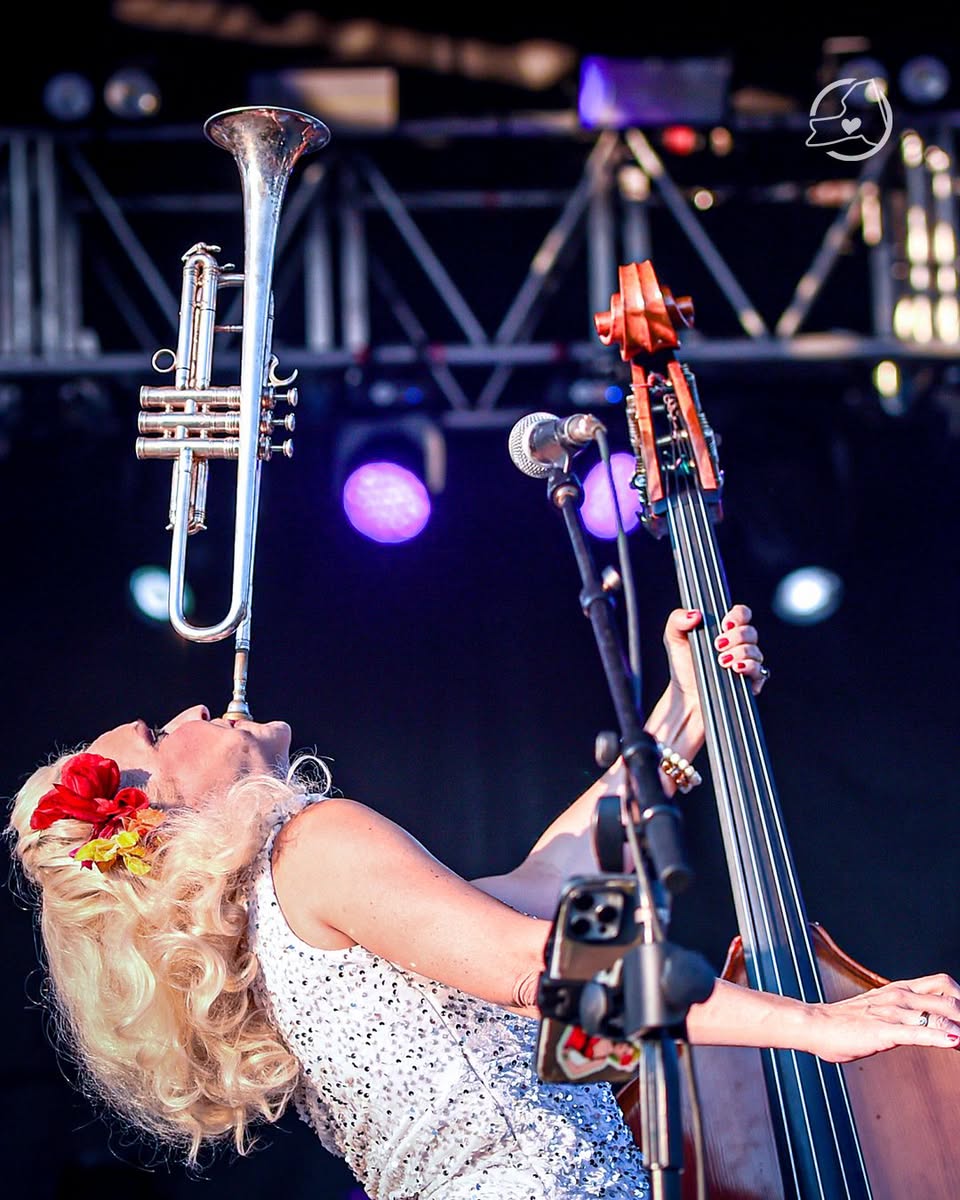
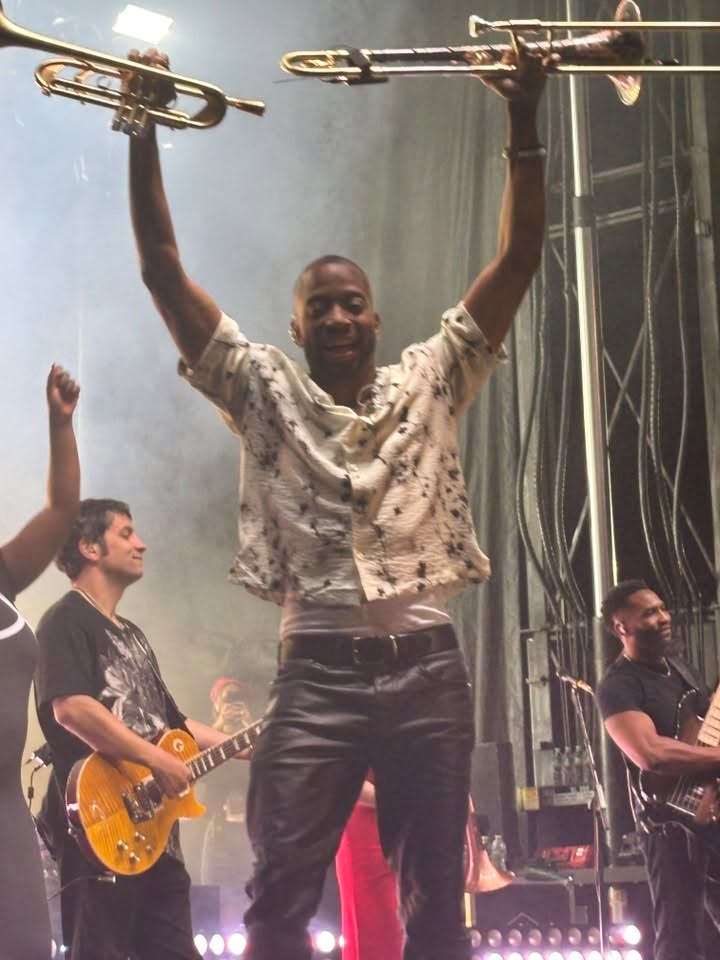
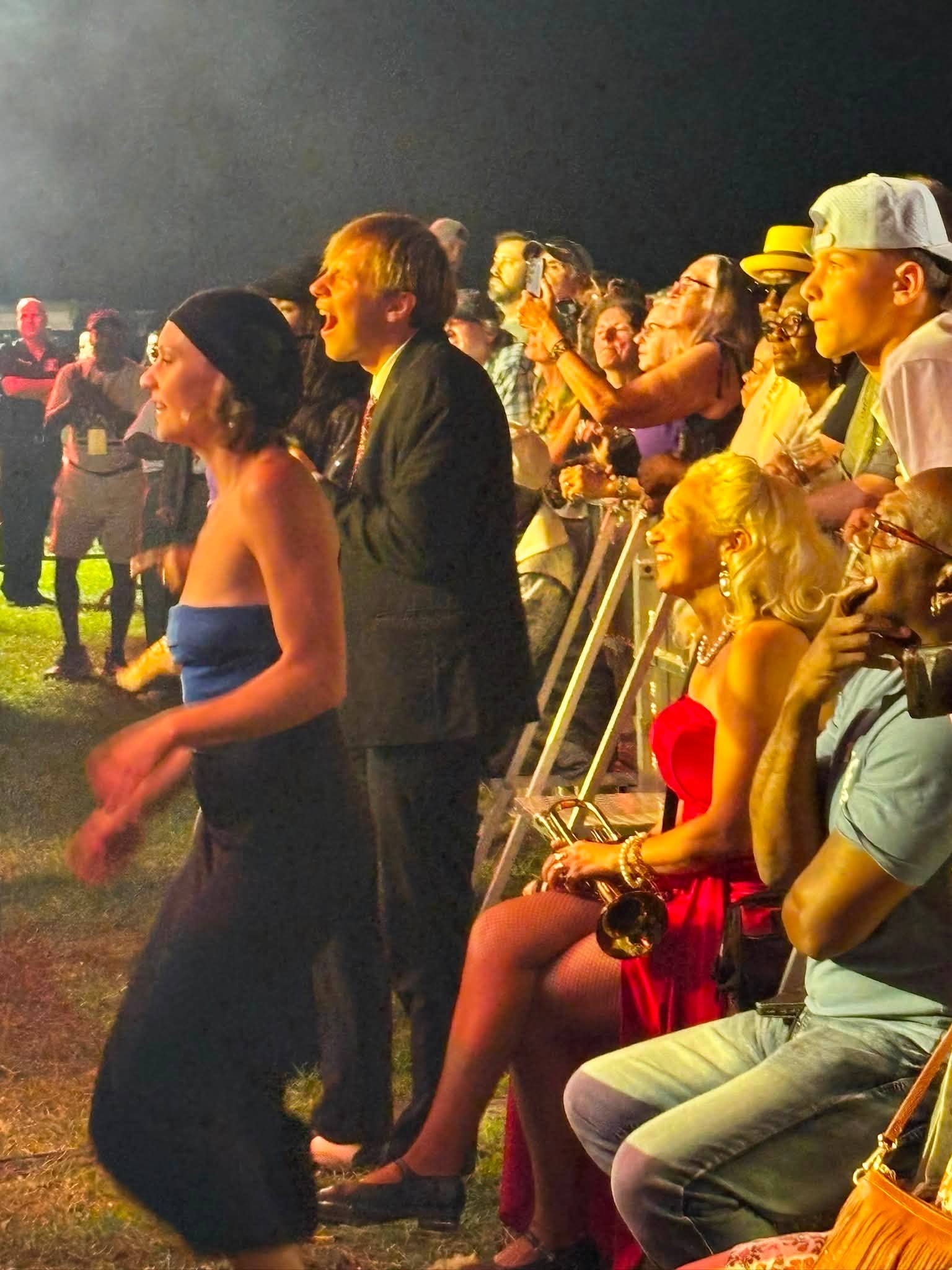
My quintet, The Five Families Ensemble, was chosen for one of the hour sets in the afternoon, priming the audience for the Syracuse main stage presentations. While Rochester jazz was presented in downtown venues including the Eastman School of Music, the main setting for the Syracuse fest was a gorgeous, sprawling apple orchard/winery south of the city. Syracuse University provided a second venue. The most significant contrast was the “all concerts are free” in Syracuse. Special kudos goes out to Frank Malfitano (2026 JJA Jazz Hero), who through persistence and sheer forcev of will, convinced area sponsors that an annual jazz celebration is a worthwhile investment.
Lastly, both festival organizers convinced the weather gods to bless these events with perfect days and nights. After the fact photos are proof of two wildly successful celebrations of America’s most significant art form.
Full disclosure. I did a hit and run in Syracuse. After a well received set I could have enjoyed hanging with my bandmates, sampling the winery offerings, and listening to Trombone Shorty and the rest of the headliners. But no, I had booked another date, an hour and a half away. So it was pack up and hit the road. As musicians say, “a gig is a gig.”
2026 Rochester (NY) International Jazz Festival – June 19 – 27
by Greg Bell, publisher, JazzRochester
This year’s (the 23rd) Rochester International Jazz Festival brought more than 211,000 attendees to downtown Rochester, NY to hear more than 300 performances by internationally acclaimed artists, emerging talent and talented local musicians across 19 venues, including historic theaters and churches, intimate clubs and outdoor stages. It also included more than 110 free concerts, nightly jam sessions at two downtown venues, and educational jazz workshops.
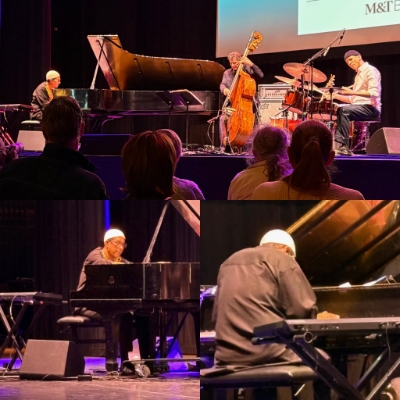
JazzRochester was there all nine days, drinking in the joy that is the festival and hearing an amazing spectrum of music, including: Danilo Pérez Trio; Joe Lovano & Special Guests, celebrating Coltrane’s Centennial; Alexa Tarantino Quartet; Bob James Trio; Harvey Mason’s Chameleon; Makoto Ozone & Tommy Smith; Arturo Sandoval; Dave Stryker Quartet with Troy Roberts; NYC Jazz All Stars featuring Eric Alexander & Jeremy Pelt; Vitor Gonçalves Brazilian Trio; Hiromi’s Sonicwonder; Will Calhoun Quartet from Living Colour; Delight Trio with Dawn Clement, Buster Williams & Matt Wilson; Cécile McLorin Salvant; Avishai Cohen Big Vicious; Camila Meza; Trane of Thought; The Coltrane Sutras; Orrin Evans Trash Gadget; Kyle Roussel Quintet; and Brittany Davis Trio.
As always, coverage at JazzRochester began well before the first high school jazz band took the “Jazz Street” stage on the 19th, with the full lineup announcement in March and “Pick Posts” for each of the nine days with short profiles of the artists I planned on hearing. During the festival itself, while focused on hearing the music and having a great time (rather than writing), I tried to capture images of the performances and share those and short “reviews” of the night on the JazzRochester social channels and amplify the voices of others who are writing about the RIJF. After I rested up, I posted a wrap-up with my final notes on the 2026 RIJF, some of the changes this year, those new voices I found, and highlights of the wonderful music I heard.
Rochester NY International Jazz Festival
by Monk Rowe, Director/Fillius Jazz Archive
The 2026 Rochester International Jazz Festival was mammoth, an annual feast with every jazz genre, served in concert halls, clubs and outdoor settings. Check out these stats: 9 days, 19 stages, 300 shows and 1750 artists. Headliners ranged from The Count Basie Orchestra to Arturo Sandoval to Catherine Russell, a savory (and sometimes pricey) musical smorgasbord perfectly complemented with hundreds of side dishes.
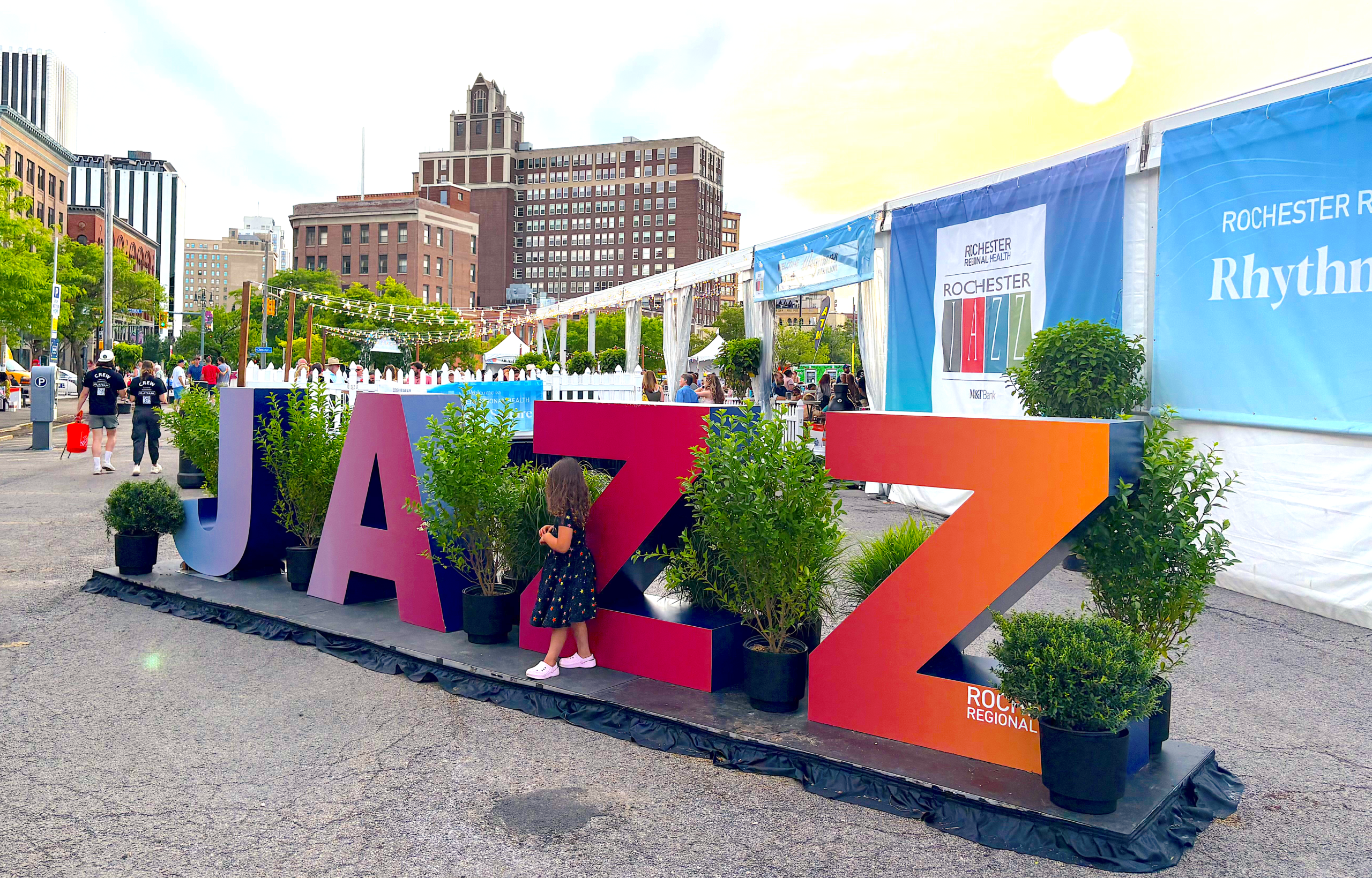
These “other headliners” included local combos, choirs, community big bands, and youth groups, all free of charge. Not enough? Late night jam sessions and workshops provided another opportunity for Rochester area musicians to strut their stuff and perhaps play next to one or more of their heroes. A healthy collaboration with 90.1 WGMC Jazz Radio contributed to the success of the event as did 8 ½ days of perfect weather.
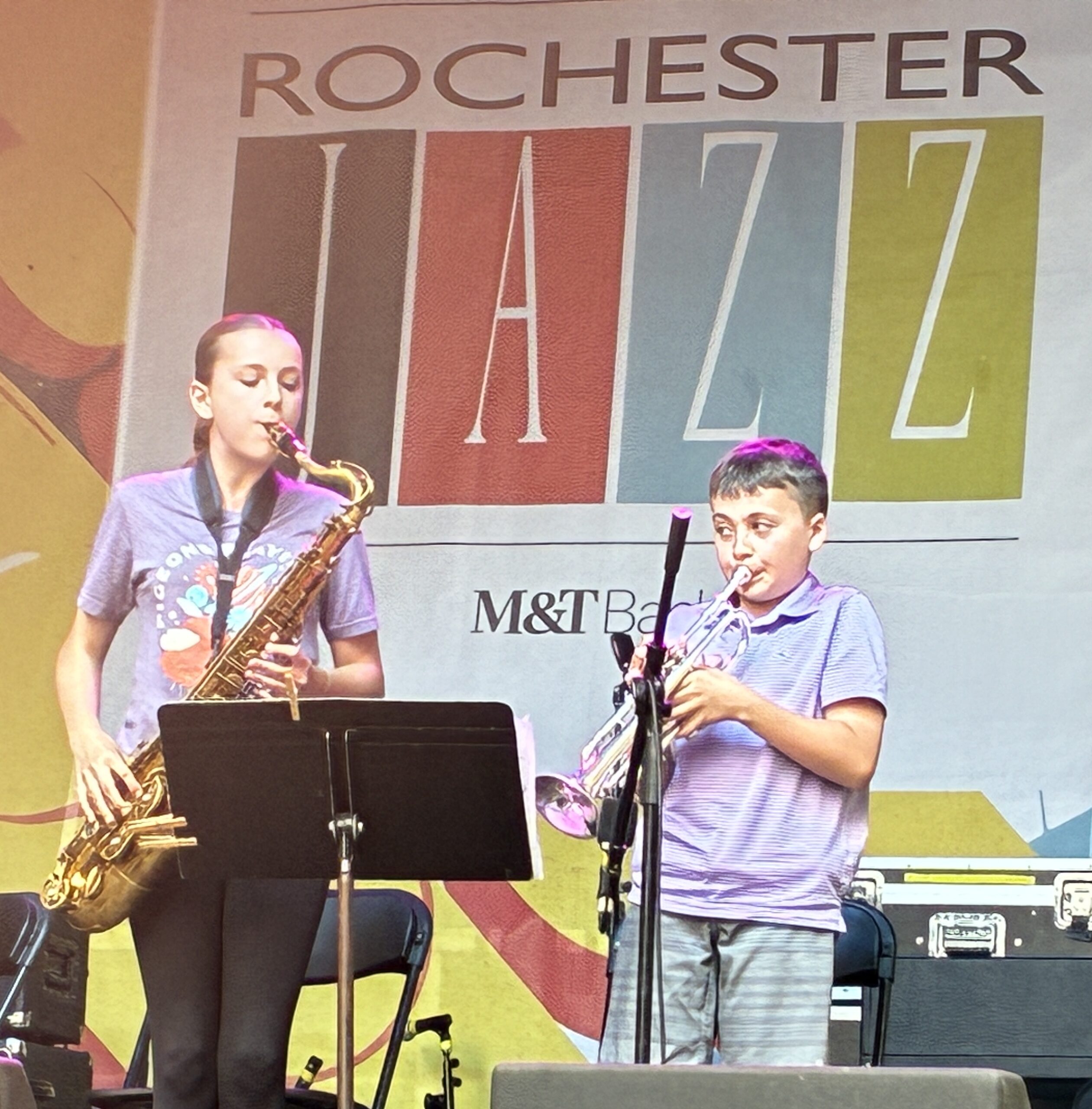
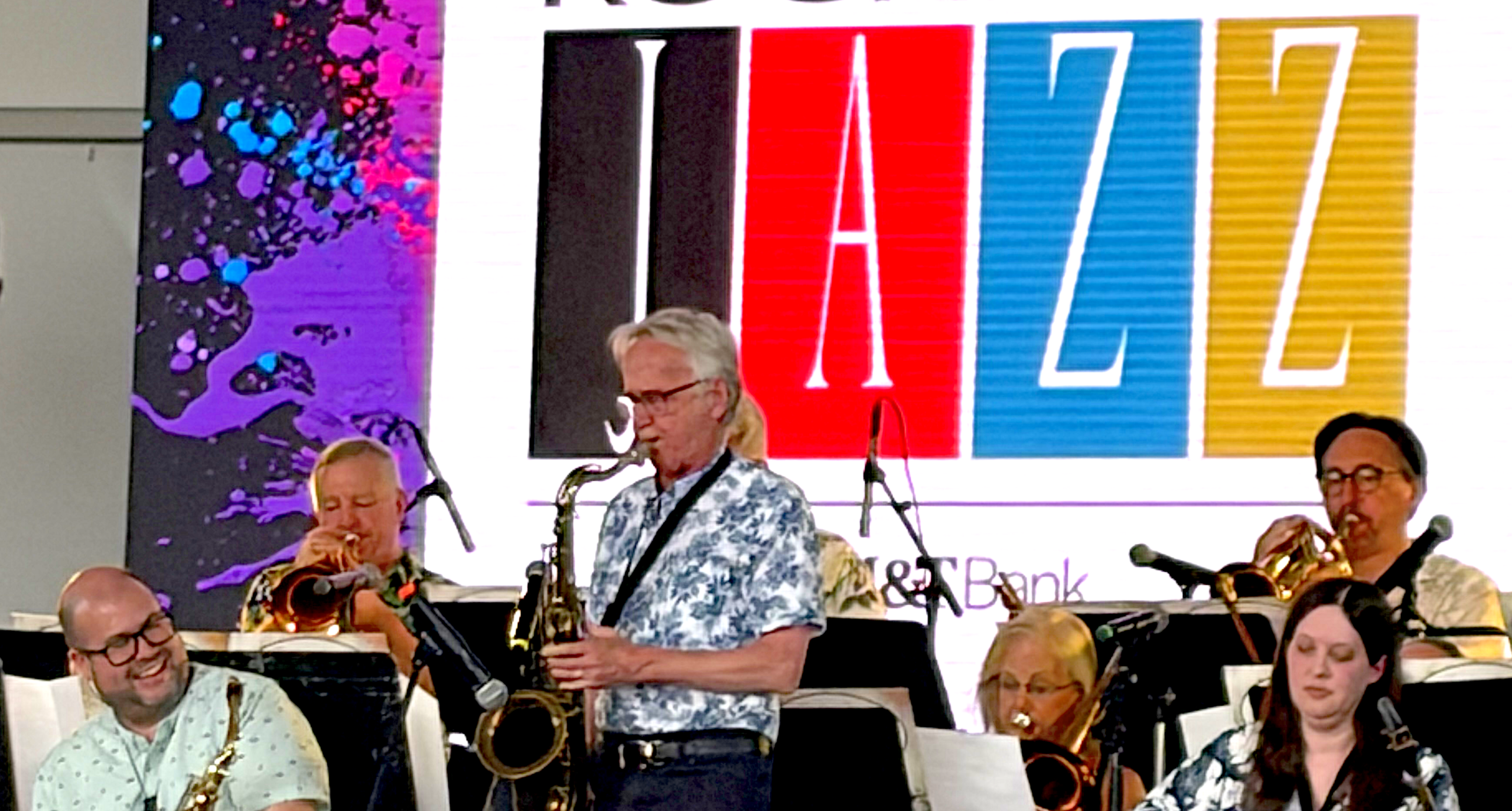
I got my licks in with the Penfield Big Band, and our 11- and 13-year-old grandkids performed as members of the Eastman Community School improvisation class. They blew their horns in front of a wildly appreciative audience and I recall turning to my wife and remarking, “Hey, they’re playing on a bigger stage than I did!”
It all occurs again next summer, June 18-26.
Chicago Blues Festival – June 6, Millennium Park, Chicago, IL
by Howard Mandel
Third day of all free-to-attend Chicago Blues Festival — a celebration of music this city considers its own — and I missed all afternoon programming to concentrate on harmonica man Billy Branch‘s headlining set, celebrating his 75th birthday with a full review of his current album The Blues Is My Biography. He fronted his regular guys — Giles Corey, guitars; Sumito Arioshi, keyboards; plus rhythm, horn section, backup-singers, youth choir singing his protest anthem “Begging For Change,” and guest stars (hot spot featuring guitarist Ronnie Baker Brooks) as well as his own extraordinarily lyrical harp solos– a serious statement, a solid achievement, my bet the album will age well, be considered a classic.
Before Billy went on Ruthie Foster led her band; not flashy but substantial, heartfelt and rangy, content-wise, blue in spirit even when pushing beyond the strict form. And a great surprise: From Toronto, Shakura Saida, a merrily lascivious soul-singer of good humor with crack support from steel guitarist Nikki D. Brown, electric guitarist Zach Avery, electric bassist Wendell Lucas and drummer David Brandon.
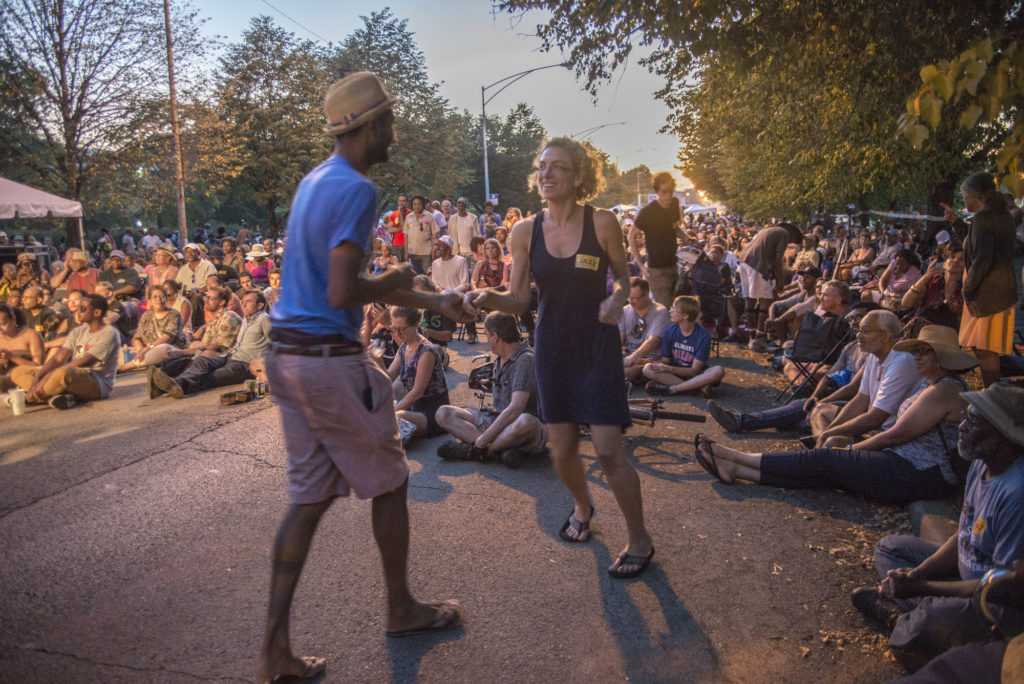
This was the 39th annual Blues Fest produced by the City’s Dept of Cultural Affairs and Special Events since 1986 (it was suspended for two years over covid). That office collaborated with the Herbie Hancock Institute of Jazz on Int’l Jazz Day, puts on the Chicago Jazz, House and Gospel fests, and in conjunction with the Jazz Institute of Chicago, upcoming July 15 – 16 in neighborhood-y Humbolt Park, a Latin Jazz Festival, to be climaxed by trumpeter Victor Garcia’s big band tribute to Tito Rodriguez. No charge. Family friendly. Dancing allowed.
Jazz Appreciation Month – Montenegro – April 1 – 30
by Virgil Mihaiu, photos by KIC “Budo Tomović”
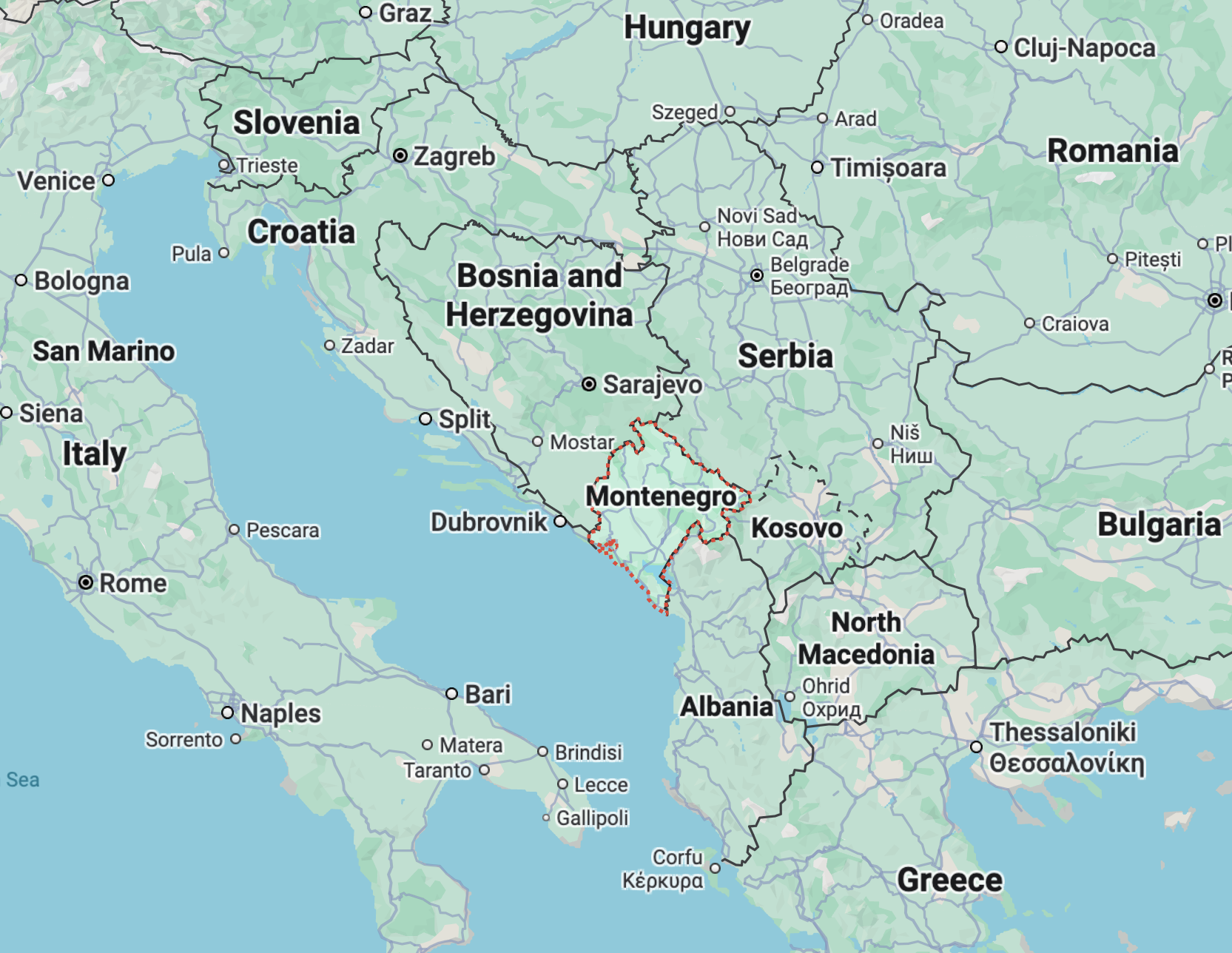
Throughout its contorted history, Montenegro has consolidated its status as a nation capable of ethnic and ethical grandeur in a very small geographical space.
Although it has a population of only about 650,000 inhabitants, after regaining statehood in 2006 the country has asserted itself as a dynamic component of the international community. Since 2009, the local jazz life has found an adequate organisational expression through the Jazz Art Montenegro Association (JAM), founded and led by Maja Popovic, a musicologist and pianist with studies in Paris and Belgrade.
Ms. Popovic has employed her administrative and artistic skills to implement in her homeland the generous universalist project Jazz Appreciation Month (by happy coincidence, also JAM!), which reached its 19th edition in 2026.
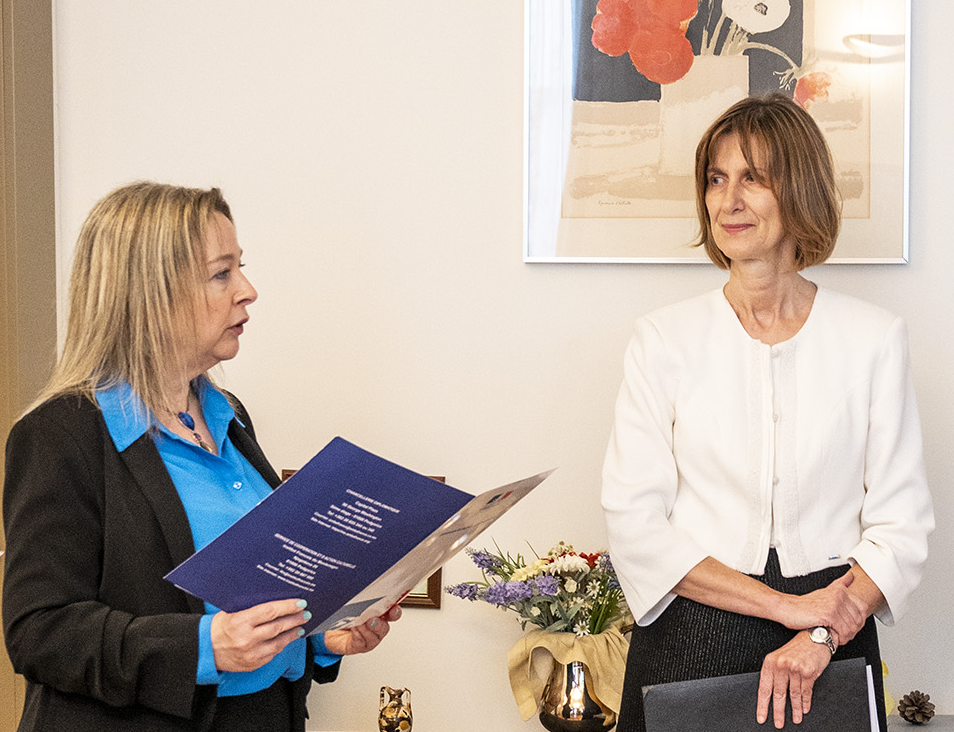
(In recognition of her merits, she was recently awarded the Chevalier of the Order of Arts and Letters, conferred by the French Ministry of Culture. During the ceremony to present the decoration, the French Ambassador to Montenegro, Ms. Anne Marie Maskay, praised the honoree’s ability to make jazz music a means of cooperation, mutual knowledge and dialogue between cultures).
If elsewhere “Jazz Appreciation Month” is reduced to the celebration of the “International Jazz Day” on April 30, indefatigable Maja Popovic, supported by JAM and the KIC Cultural Information Center in Podgorica (where she has worked for a quarter of a century), respects the title of the event ad litteram. In Montenegro the jazz celebration took place, according to custom, throughout the entire month of April, with concerts and related events held in the current capital, in the historical royal capital Cetinje and in the charming old town of Kotor, in the homonymous fjord.
The motto of the 2026 edition was The Mediterranean Meets Jazz. A redefinition from a contemporary perspective of the ancient concept of Mare nostrum (= Our Sea) can be detected here: the Mediterranean understood not as a border separating the peoples around it, but as a historical bridge, a space of mutual Euro-Afro-Mediterranean knowledge. The selection of invited musicians revealed current values of jazz created in this cultural-maritime perimeter.
In the first three days of April 2026, the spectators in Podgorica, Cetinje and Kotor got to know the trio of the young performer Ariel Bart. Born in Israel, she graduated from The New School University for Jazz
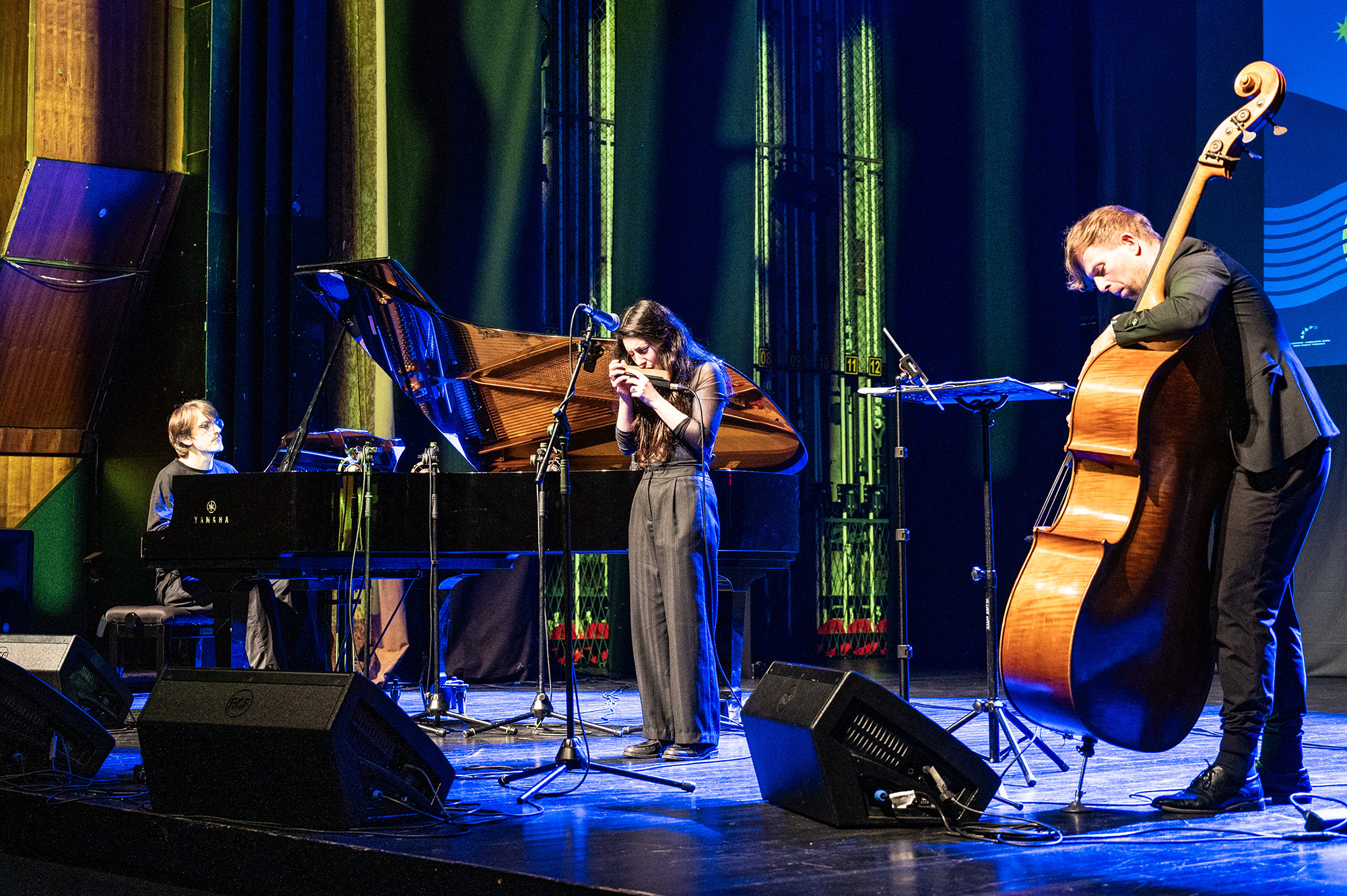
and Contemporary Music in New York in 2020, and has dedicated her interpretative-compositional talent to bringing the chromatic harmonica to the forefront of the jazz scene. She has played this instrument since she was seven years old, studied and performed in the company of musicians such as Andrew Cyrille, Reggie Workman, Shai Maestro, Anat Cohen and Aaron Parks, and been a soloist of the Jerusalem Orchestra East and West. In trio with pianist Igor Yakovenko distinguishing himself with impeccable classical technique, Bart emerged as a successor of such precursors as Toots Thielemans, Antonio Serrano and Gregoire Maret, who have proved the mouth organ an instrument worthy of jazz respect.
The trio of pianist Baki Duyarlar, double bassist Umut Sel and percussionist Mehmet Akatay represented the state of the art in Turkey, merging the serenity of classical Turkish music with the polymorphism of contemporary jazz, and with the Mediterranean spirit. It is no coincidence that the three musicians had a good collaboration with the aforementioned harmonica master Antonio Serrano, who comes from the flamenco-jazz area.
The members of the Tribevibers trio hail from three Mediterranean states: dynamic pianist Karim Blal, born in Rome and affirmatively in love with Paris, French double bassist Gabriel Pierre and drummer Slaven Ljujic, a Montenegrin. The three young artists act in consensus with their name, their music born from a synergy of shared creative vibrations.
From my point of view, the most striking personality is the drummer/percussionist/composer Ljujic. Born in Niksic (the second largest city in Montenegro), he is increasingly emerging as a reference figure of the small jazz community in his homeland.
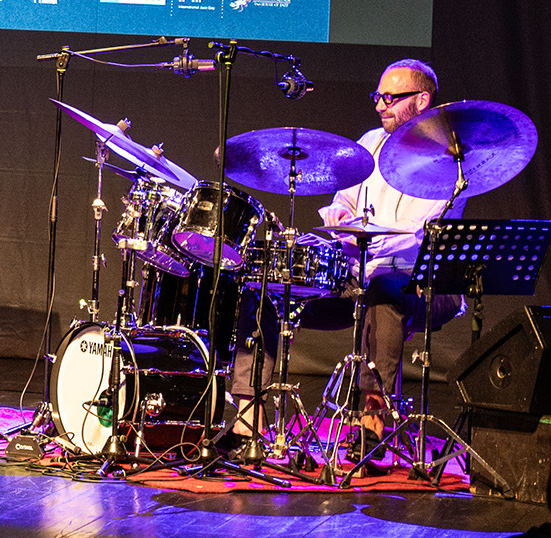
In an interview with journalist Marija Vasic (published in the prestigious daily newspaper Vijesti), the young jazzman explained his aesthetic conception in relation to the current situation of the genre: “currently, the sound of jazz has become more artificial, non-acoustic, increasingly electric. Synthesizers, prefabricated sounds are widely used, that is, in modern terms, ‘inflated music.’ Preferring the natural, acoustic ‘old school’ sound, we – the members of this trio – are oriented towards making music meant to carry with it an acoustic line and the natural sound of the instruments.” An attitude which happily also had an impact on the Tribevibers’ performance at JAM 2026.
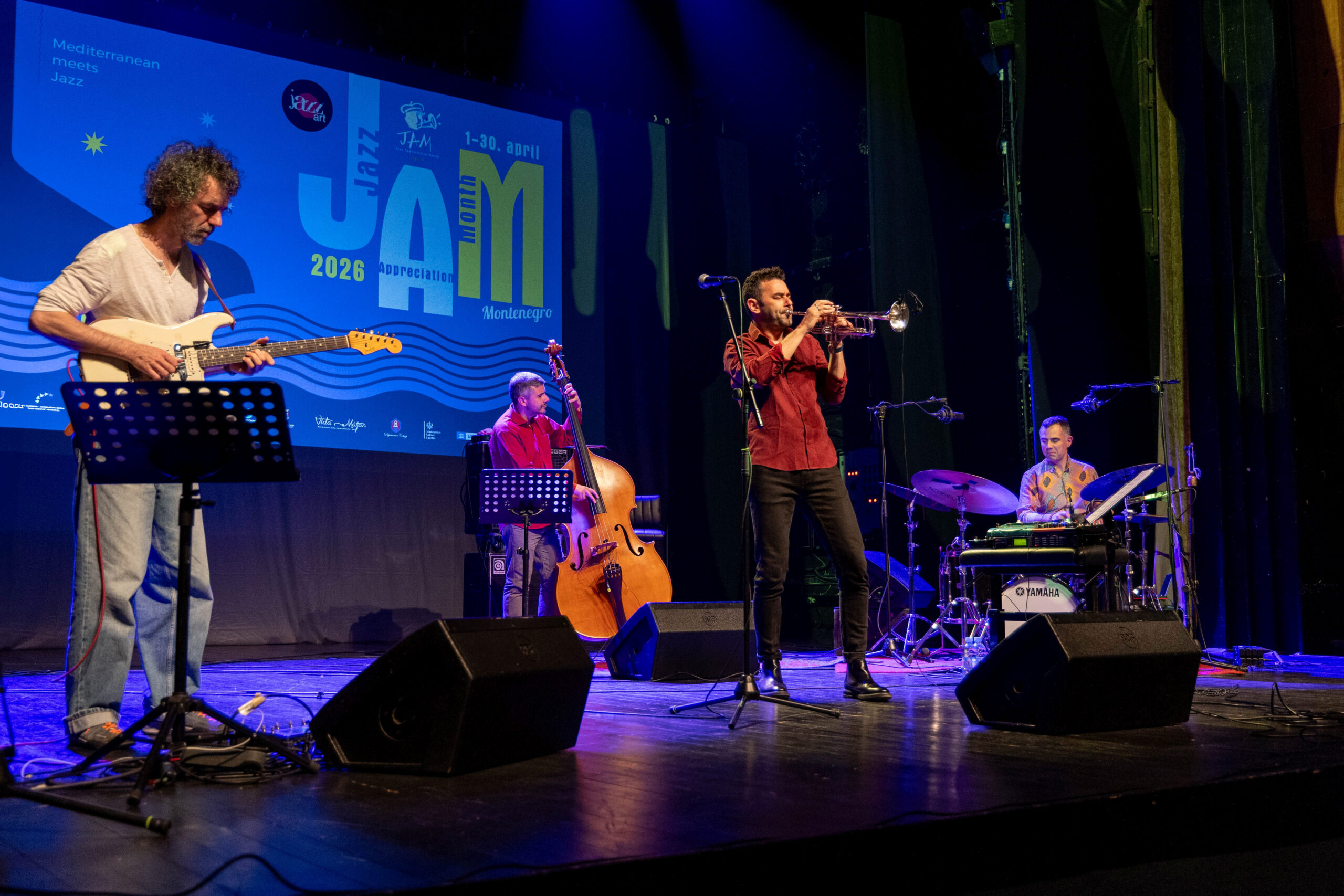
The Blazin’ Quartet is a super-group, with a predominantly Balkan character: the leader-drummer Srdjan Ivanovic was born in Sarajevo, the capital of Bosnia-Herzegovina, but when he was about 10 years old he was forced by the war to emigrate. His artistic biography included formative periods in Greece, Benelux, France. Within B.Q. he collaborates with three other well-known musicians, with diverse origins: the Bulgarian double bassist Mihail Ivanov is one of the most active sidemen in European jazz; the Italian guitarist Federico Casagrande stands out for his sober-introverted approach to the electric guitar, in contrast to the global expansiveness of this instrument; and the Greek trumpeter Andreas Polyzogopoulos shows certain qualities to be recognized as an emblematic figure of jazz back at home. Their ambitious album, Cosmogony, released during JAM, draws inspiration from the founding myths of Hellenistic antiquity, relying on the subliminal background of Balkan musical traditions. According to Ivanovic, the music was conceived in 2025, as an expanded musical form for the Blazin’ Quartet’s repertoire. “Therefore,” the musician says, “there was a need for a unifying theme, and at a time when the division between people is becoming increasingly evident, I could not find anything more universal and timeless than the history of the universe itself.”
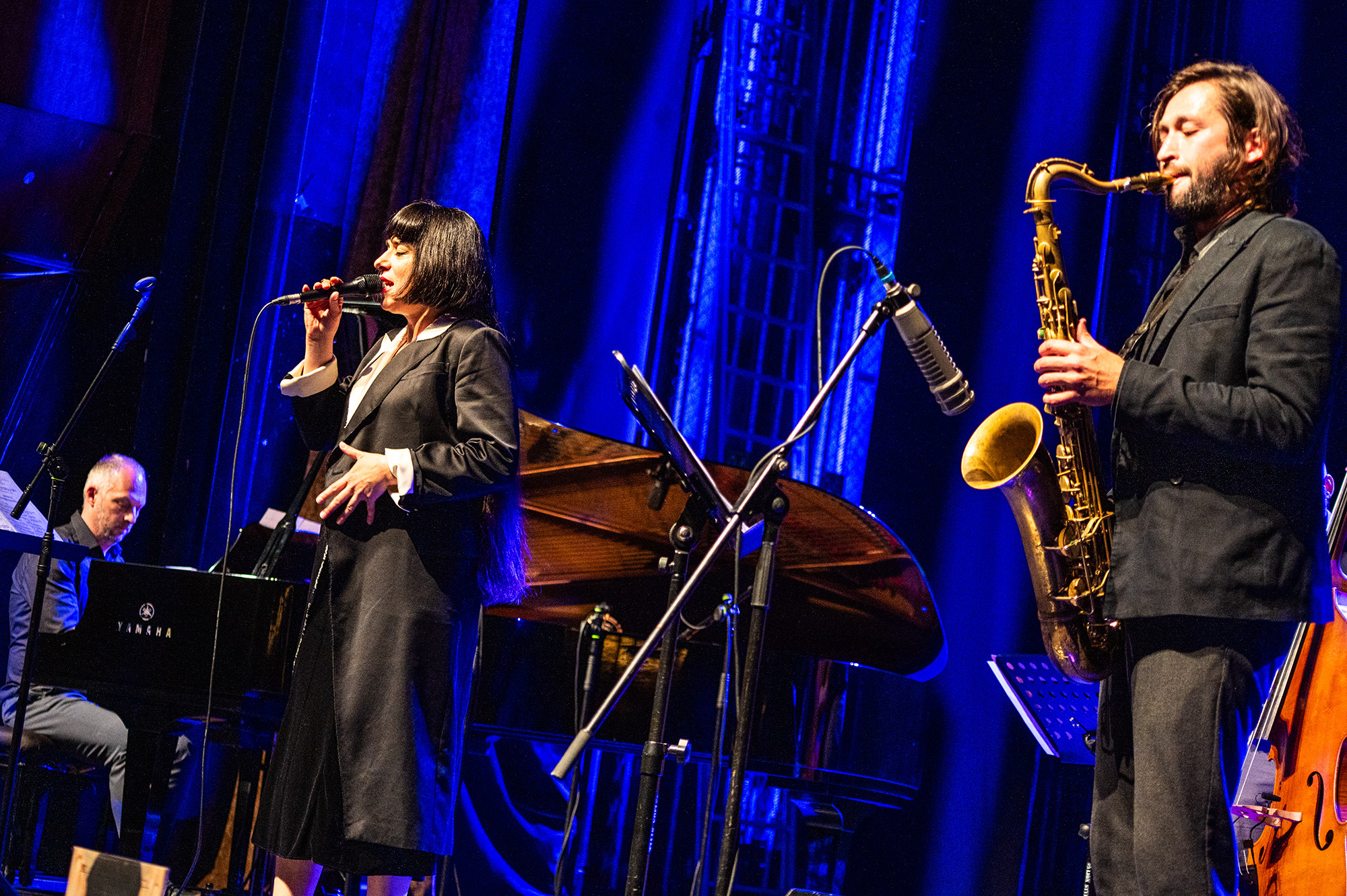
The powerful Croatian jazz school was represented by a prestigious quintet, made up of Maja Rivic/vocals, compositions, Mak Murtic/tenor sax, Hrvoje Galler/piano, Hrvoje Kralj/double bass and Borko Rupena/drums. The five musicians manifest themselves with predilection in a lyrical, interiorised, intellectualised regime, of a well-controlled intensity. The soloist, who prefers to arrogate to herself the status of a “vocal artist”, considers music as a “navigation through the spiritual and emotional ocean of the individual”. If when she sings in English she seems to assume a certain conventionalism, which stems from that idiom’s status as the lingua franca of our overpopulated Planet, on the other hand the texts intoned in Croatian, even at the risk of sounding incomprehensible to foreign listeners, display a jazzy expressiveness of considerable fragrance. To appreciate Maja Rivic’s multiple talents, it is worth watching the video Drugo sunce (Second Sun), directed by Marina Uzelac, where the protagonist dances to the sound of her own voice, subtly accompanied by the instrumentalists of the quintet.
In agreement with Maja Popovic’s concern to promote young talents, the last group programmed this year was El Sueño, led by the Swiss-Argentine vibraphonist Lucas Dorado. A musician who combines in his compositions the youthful enthusiasm with the inherent melancholy derived from the post-Astor Piazzolla variants of the tango nuevo style. This aesthetic approach (suggested by the very name of the quintet, a possible allusion to the proverbial phrase of Pedro Calderón de la Barca – La Vida es Sueño = “life is a dream”) is complemented by the inclusion of the bandoneon – convincingly played by the Argentinean Fabricio Colombo – into the band’s timbral palette.
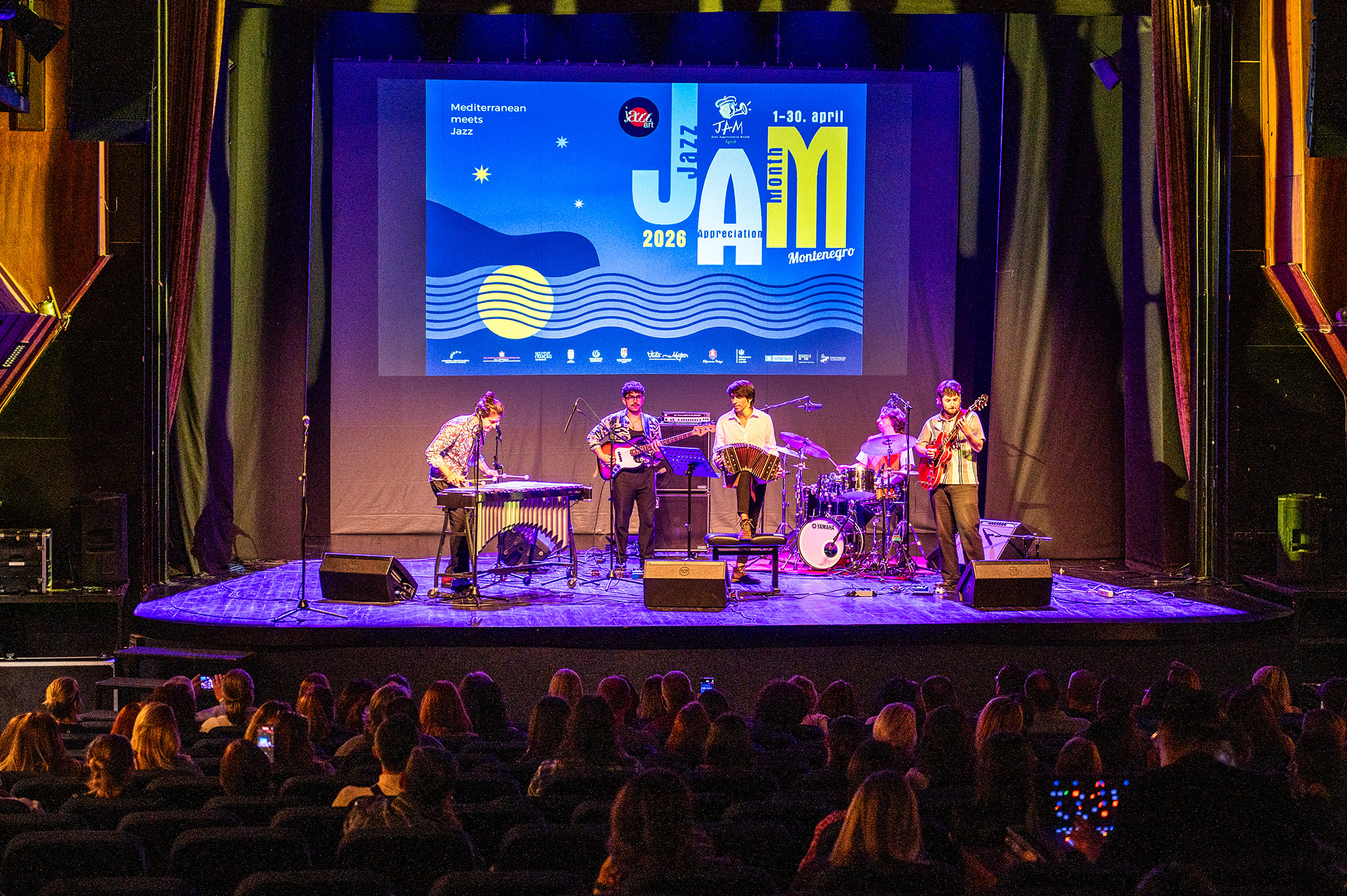
The cosmopolitan programme of the Montenegrin festival, with its welcome references to Latino sounds, raises hopes that musicians from the fascinating universe of Brazilian and Hispano-American jazz might as well be more often invited to the festival’s next editions.
5th ANNUAL EDMONDS JAZZ WALK – MAY 30, Edmonds, Washington
by Emily Steinhilber
Edmonds sits roughly fifteen miles north of Seattle along the shoreline of Puget Sound, close enough that the city remains visible in your maps app but not in your direct line of sight from Seattle. Not in my vision at least, we share the same side of the ocean shore so Edmonds is a neighbor to me . . . I suppose . . . but definitely visually far enough away to feel like you’ve slipped into a different rhythm entirely.
The ferry runs out to Edmonds regularly from Seattle, I think. Although I have never been, more on that soon.
Anyway, my father drove us there with the sort of determination normally associated with emergency responders. Nothing like a good quick change. But then the scenery of it all. One minute we were navigating Seattle traffic like the gig started in ten (it did ). But the next we were sort of guided and descending toward a waterfront downtown place. Maybe there were flower baskets hanging above the sidewalks but I’m not sure, the golden hour had taken hold of me and the people wrapped in its radiance.
I was dazzled by that. I am a California blonde afterall, but also it was that nobody appeared particularly interested in being in a hurry. And there were so many people out enjoying this little town. The whole majesty of mother earth at this time of day, with jazz all over the place. So organic and grounding.
As per usual. The grounding reality of industry set in with impeccable timing to balance the coastal greatness . . . I never actually managed to get my press bracelet until the end of the night. Or at least not before the festival had already started happening to me.
Welcome to Seat Map with Emily Steinhilber. We’ll call this installment: The Spillage Edition. Now, for this one, walk with me?
Seat Map is an ongoing listening project concerned with place, presence, and perception. It documents Conditions; live music as environment. Conditions—shaped by room acoustics, social dynamics, historical residue, and the physical position of the listener. Rather than reviewing performances in the traditional sense, this series approaches live music as a spatial and cultural artifact.
The installments to date feature venues throughout the Pacific Northwest and greater Seattle area. The premise for Seat Map is fairly simple, though I suspect its implications are less so; even the smallest, seemingly incidental details begin to shape the experience of jazz improvisation in real time. The posture here is deliberate and disciplined. Raised by a working jazz musician in the west burbs of Chicago; I learned early on that there’s a particular kind of intimacy that only happens in a jazz room.
I arrived in Edmonds intending to spend the afternoon working. Technically, I was there as a roadie. My father’s trio was performing as part of the Jazz Walk, and my responsibilities were simple enough: move gear, acquire coffee, collect my press credentials, and stay out of the way of musicians doing actual work. What happened next felt less like attending a jazz festival and more like discovering a town. When you’re “with the band” you let others have the good seats first. So I lingered outside the humid warm bubble of jazz and eventually decided the time was right for exploring the scene. Edmonds had already charmed me so far with a Starbucks run. I had never been there before, why not.
The downtown feels almost improbably pleasant. Independent shops sit beside cafés and boutiques. People linger on the outdoor patios letting their collective laughter and gathering fill the streets with an ambience of inviting community warmth. At any given moment, Roman Goron, Steve Treseler, Ben Thomas, Jake Bergevin, Pearl Django and a dozen others were scattered throughout downtown, turning galleries, restaurants, museums and storefronts into listening rooms. Flower baskets and prideful flags hang above sidewalks. The streets seem designed for wandering rather than simply getting somewhere.
Coming from Seattle, I found myself appreciating an urban planning detail so mundane it became funny. The sidewalks were flat. All of em! Flat! I spent the entire afternoon walking and didn’t trip once, which may be the strongest endorsement I can offer of any municipal infrastructure project.
The town unfolds in a remarkably intuitive way. Streets draw visitors steadily downhill toward the waterfront. Roundabouts keep traffic moving without dominating the landscape. Everywhere I looked, people were just enjoying themselves. The sidewalks were full of families, festival-goers carrying programs, couples strolling between venues, people eating and laughing and browsing storefronts simply because they had nowhere else they needed to be. The entire downtown felt happy to be there — me, too, Edmonds.
As the afternoon stretched toward evening, the weather seemed determined to cooperate. The sun warmed your shoulders while a cool breeze drifted in from Puget Sound. It was one of those rare Pacific Northwest evenings where the temperature feels perfectly negotiated between land and water. And everywhere, there was music. Some of it floated to me from open doors. Some of it seemed to arrive on the wind. I found familiar faces from Seattle’s jazz community, including Duende Libre and the inventive ensemble Umami, whose individual voices somehow fit together into a larger conversation. Each venue felt distinct, each band with its own personality.
From roughly a block and a half away, a saxophone cut through conversations, traffic, and the gentle hum of the festival. The sound stopped me in my tracks. It wasn’t just me. People walking by turned toward it too, I watched them drift slowly into the gallery using their ears to guide them. The source was saxophonist Josh Cook. Some musicians fill a room. Others somehow fill an entire . . . strip of land. Cook’s sound carried through downtown Edmonds with the kind of direct intention that somehow seemed to put pressure directly onto the sinking sun causing it to finally cry “Uncle!” And voila it was finally night.
Later that evening, after hours of wandering between venues, I found myself near the waterfront watching the ferry cross Puget Sound beneath a slowly fading sky. The relationship between Edmonds and the water feels inseparable. Nearly every street seems to point toward it.
The ferry isn’t simply transportation; it feels woven into the rhythm of the town itself. I stood there longer than I intended. Eventually hunger won. I ducked into a Mexican restaurant, ordered a quesadilla, chips, and a bowl of white queso that immediately transported me into a family obsession. The queso deserves its own paragraph.
In my family, good white queso is treated with the reverence normally reserved for historical artifacts. Despite growing up around Chicago, where excellent food is never difficult to find, this particular style of queso remains strangely elusive. I ordered a beer so large that my confidence significantly exceeded my actual capacity. The queso disappeared. The XL happy hour beer remained undefeated.
Jazz and a west coast sunset, aye que lindo. From my table, I watched festival-goers continue their evening beneath the glow of storefront windows and the most orange hour of light at sunset. Families wandered between venues. Couples strolled the sidewalks. Music drifted through open doors and onto the street. And it occurred to me that the most memorable part of the day hadn’t been any single performance. It had been the feeling of becoming a temporary local. For a few hours, jazz gave me permission to slow down. To notice things. To follow sounds instead of schedules.
The Edmonds Jazz Walk didn’t just showcase musicians. It showcased a community. The music was wonderful. The town was, too.
Several days later, I asked Danny Kolke how he measures the success of a jazz festival.
Kolke produces jazz walks throughout Washington and has spent years watching what happens when live music is distributed across an entire community rather than concentrated inside a single venue. At first he hesitated. Which surprised me. Because by then I realized he’d already spent most of our conversation answering the question. “It’s community. It’s culture. It’s growth.” A local discovering a business they’d never noticed. Musicians staying after their sets to hear other musicians. A first-time listener discovering live jazz.
Then he offered perhaps the simplest explanation for why jazz walks continue to resonate: “Jazz is the people’s music,” Kolke told me. “It’s meant to spill into the streets.” The music starts inside the room. Into the slow movement of people following a sound they can’t quite place until they turn the corner and find it. If it’s doing its job, it refuses to stay where it was put.
And on one remarkably beautiful evening at the Edmonds Jazz Walk, neither did I.