Self-publishing books attracts more writers every year for three main reasons: control, higher earnings,
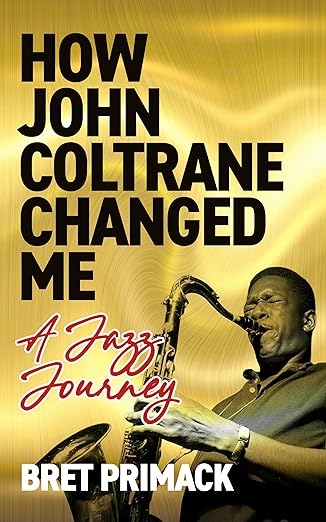
and speed. Traditional publishers decide titles, covers, and release schedules. Self-publishing lets you own every step — from draft to sales page — and keep up to 70 percent of royalties instead of 10–15 percent. From my experience publishing How John Coltrane Changed Me, these are some benefits and key lessons.
Advantages: Self-publishing, you avoid long delays. A traditional publisher can take up to two years to release a book. Self-publishing takes only weeks, once editing and formatting are done. Online stores distribute globally and never run out of stock. Your book becomes instantly available to readers everywhere.
Writers who already have audiences on Substack, YouTube, or social media often move to self-publishing to keep both control and income. If readers already follow your work, you don’t need a gatekeeper.
Challenges: Self-publishing requires patience, organization, and marketing skill. The hardest part is visibility. You must identify your audience, reach them, and hold their attention. Amazon provides useful tools, but the learning curve takes time. Formatting, metadata, pricing, and distribution are operations each requirng care and accuracy.
Converting your Word file into Kindle (epub) and print (PDF) formats demands technical precision. Hiring experienced freelancers saves time. I paid $275 total for design and formatting help from Fiverr for How Coltrane Changed My Life, and the time and stress saved were worth it.
The Don’ts
Don’t depend only on Amazon. Amazon dominates ebook and print-on-demand sales, but you should also publish on Apple Books, Kobo, Barnes & Noble, and Google Play. Broad distribution protects you from algorithm changes and expands your reach. Once you have your files ready, uploading to other platforms costs nothing.
Don’t use Amazon’s free ISBN. Amazon’s ISBN — your book’s thirteen-digit identifier — works only on Amazon. Buy your own from Bowker at myidentifiers.com. It costs more but gives you full control and portability across platforms.
Don’t skip professional editing. A skilled editor improves grammar, structure, and pacing. After reading your manuscript many times, you’ll miss errors. Hire at least a copy editor. If your budget allows, a developmental editor strengthens story flow and logic.
Don’t forget to proofread after formatting. Formatting often introduces new errors — lost italics, merged paragraphs, or odd symbols. Always proofread the final formatted files before publishing. Have someone unfamiliar with your subject proofread as well. A fresh eye catches what you won’t.
Don’t use a weak cover. A poor design kills sales. Readers judge in seconds. Hire a designer who knows book marketing and genre standards. A strong cover signals professionalism and sells the book before a single word is read. With so many readers shopping on phones, make sure your thumbnail really stands out.
The Dos
Do build your audience early. Start at least six months before launch. Use newsletters and social posts to share updates, excerpts, and behind-the-scenes stories. Early engagement boosts launch-week sales, which helps Amazon’s algorithm recommend your book.
Do price wisely. Study prices in your genre. For ebooks, $2.99–$4.99 attracts new readers and qualifies for Amazon’s 70 percent royalty. You can adjust later based on performance.
Do use beta readers. Five to ten honest readers can identify weak spots, confusing sections, and strong moments. Their feedback refines clarity and pacing before you pay for final editing.
Do understand metadata. Categories, keywords, and descriptions decide who finds your book. Analyze what successful titles in your genre use, then adapt. Your first two sentences in the description should hook the reader. Categories should be specific enough to stand out, yet broad enough to attract real traffic.
Do offer multiple formats. Release your book in ebook, paperback, and hardcover formats. Each appeals to different readers and increases credibility. Consider an audiobook through ACX or Findaway Voices—audio is a fast-growing market. Also consider translating your book to Spanish and Japanese, and other languages. Jazz is a global art form.
Do connect with author networks. Join Facebook or Reddit groups and the Alliance of Independent Authors (ALLi). These communities share tested strategies, current updates, and reliable service recommendations.
Do measure outcomes. Track what drives sales. Experiment with email marketing, ads, and discounts. Focus on what works and drop what doesn’t. Each genre reacts differently, so test continuously.
The Bottom Line: Self-publishing offers freedom and better earnings but demands full accountability. You are the editor, marketer, and distributor. Success depends on preparation, persistence, and constant learning. Thousands have succeeded before you. With patience and focus, you can too.
Personal Notes: Don’t waste energy chasing the Amazon algorithm. Yes, Amazon’s algorithm affects visibility, but even if you follow every online tip, there’s no guarantee it will work. The algorithm changes constantly, and most “insider” advice becomes outdated fast. That’s why there’s an entire cottage industry built around “how to beat the algorithm”—on Amazon, YouTube, and everywhere else.
Approach self-publishing without expectations. Write because you care deeply about your subject and for the joy of creating. If your goal is fast money or instant fame, this isn’t the right business for you. Genuine passion lasts longer than any algorithmic boost.
Use social media to its fullest. That’s where your audience lives, and reaching them is essential to your book’s success.
In my case, video is central to marketing. I’m producing a video campaign to draw indirect attention to my book. How Coltrane Changed My Life is a hybrid — not a traditional biography but a memoir about my life in jazz and John Coltrane’s spiritual impact on me. Yet my promotion focuses on Coltrane himself, not me.
The timing helps. 2026 marks the centennial of Coltrane’s birth. To honor it, I’m producing 100 short videos (30–45 seconds each) called The Coltrane Chronicles, repurposed for Facebook, YouTube, Instagram, and TikTok. After the first hundred days, I’ll recycle the content throughout the year. Each video highlights one aspect of Coltrane’s life or music and ends with a simple tagline: Coltrane changed my life. My book shows how he might change yours.
I’m lucky in this case, to be a writer and filmmaker. I know not everyone can do this.

So you must find your own way to make your marketing special.
My formula for online success hasn’t changed since I began working on the web in 1994, co-founding Jazz Central Station. Even as technology evolved. It’s still the same three principles:
- Create compelling content.
- Make it easy to access.
- Update it regularly.
Follow those rules, and you’ll build connection and trust with your audience over time.
If you have questions or need guidance, reach out: bretprimack@gmail.com.
Ed.: For further JJA posts on self-publishing, see Rick Mitchell’s article “If I can do it, anyone can,” and hear this episode of The Buzz on success stories with Mitchell, Debbie Burke and Steve Cerra.