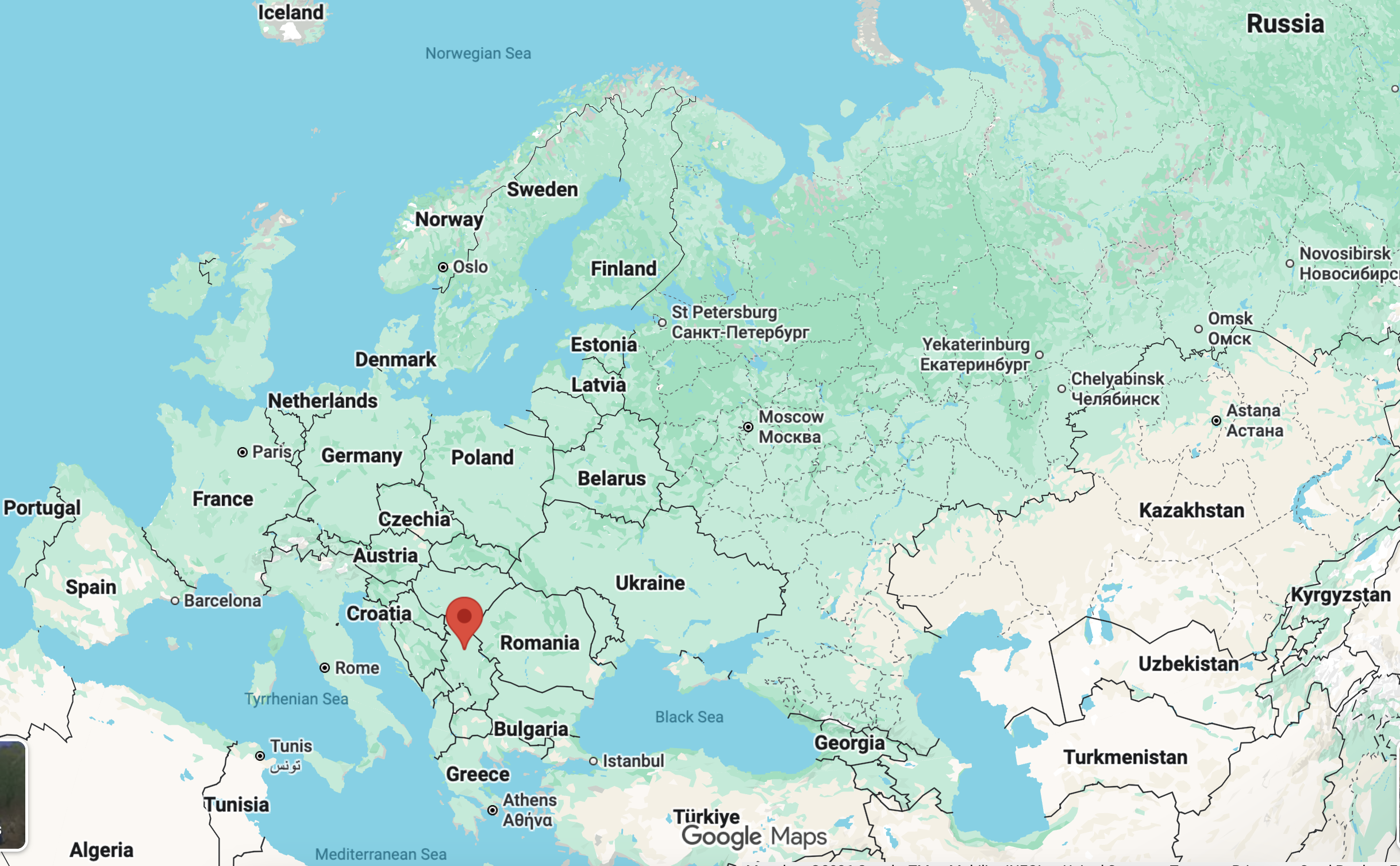
From Bergamo, Chicago, Lisbon, Spain, Poland, Switzerland, England– to Serbia
The history of the Belgrade Jazz Festival began 55 years ago. The first edition took place in the autumn of 1971, under the name “Newport in Belgrade.”The event was made possible thanks to the willingness of George Wein—founder of the renowned festival on the northeastern coast of the United States—to collaborate with a group of Yugoslav jazz enthusiasts associated with the Belgrade Youth Center. The iconic Dom Omladine (Youth Center) building— constructed in 1964 in the style of Yugoslav modernism—remains to this day the home of Serbia’s most significant festival of its kind, with the distinguished jazzologist Vojislav Pantić serving as its artistic director.
In the autumn of 2026, I benefited from the generous assistance of my friend from Timișoara, Dragoslav Nedić (known for his collaboration with the Gărâna Jazz Festival and JJA News), who drove me to the 42nd edition of this jazz celebration in the Serbian capital. Due to unforeseen obstacles, I arrived a day late, missing two compelling performances: a sophisticated nonet led by Vladimir Nikolov (a composer, arranger, and conductor born in Skopje in 1979),
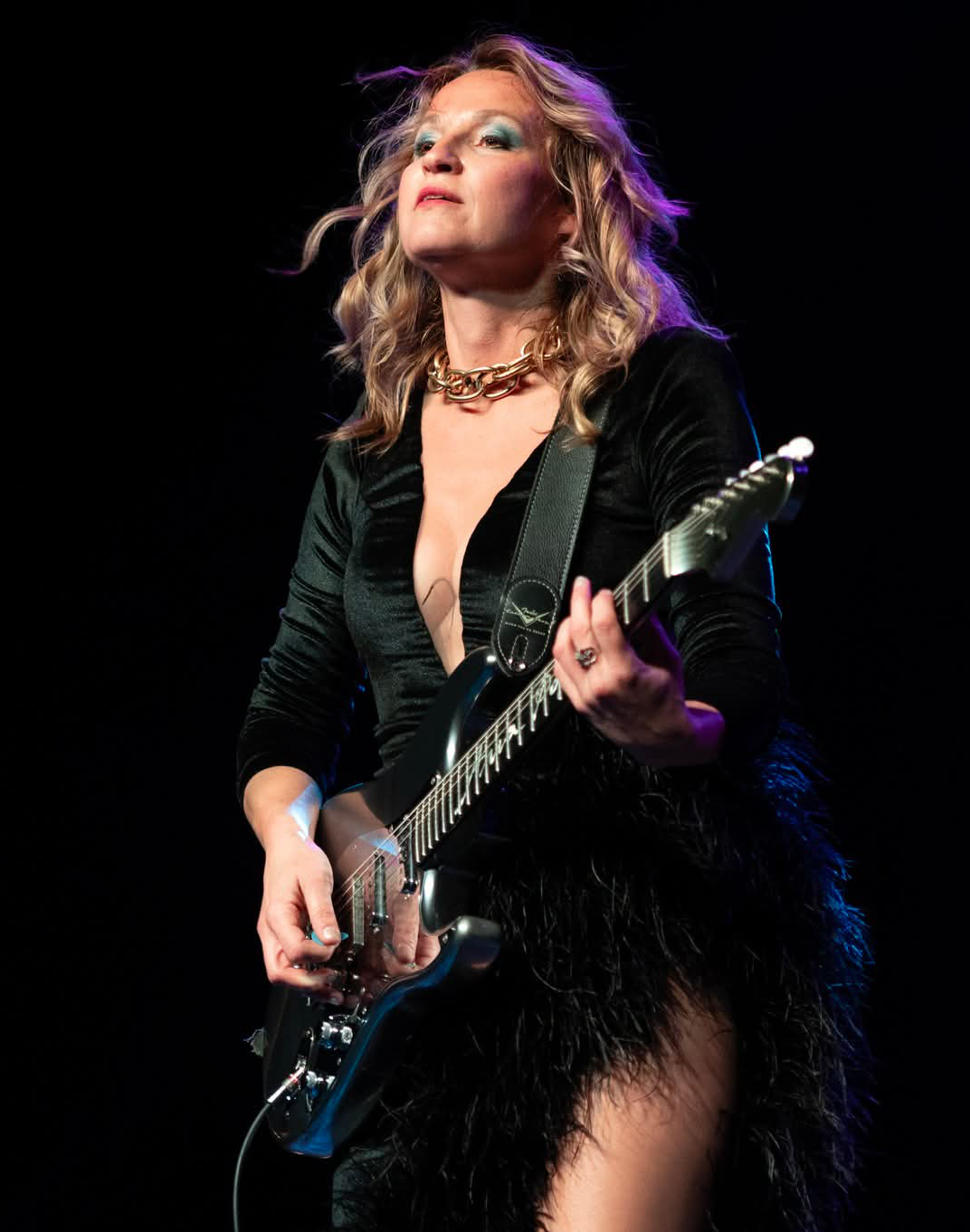
and an engaging septet fronted by guitarist and vocalist Ana Popović (born in Belgrade in 1976). Following her emigration to the United States, Popović became the most prominent star to emerge from Serbia into the world of the blues.
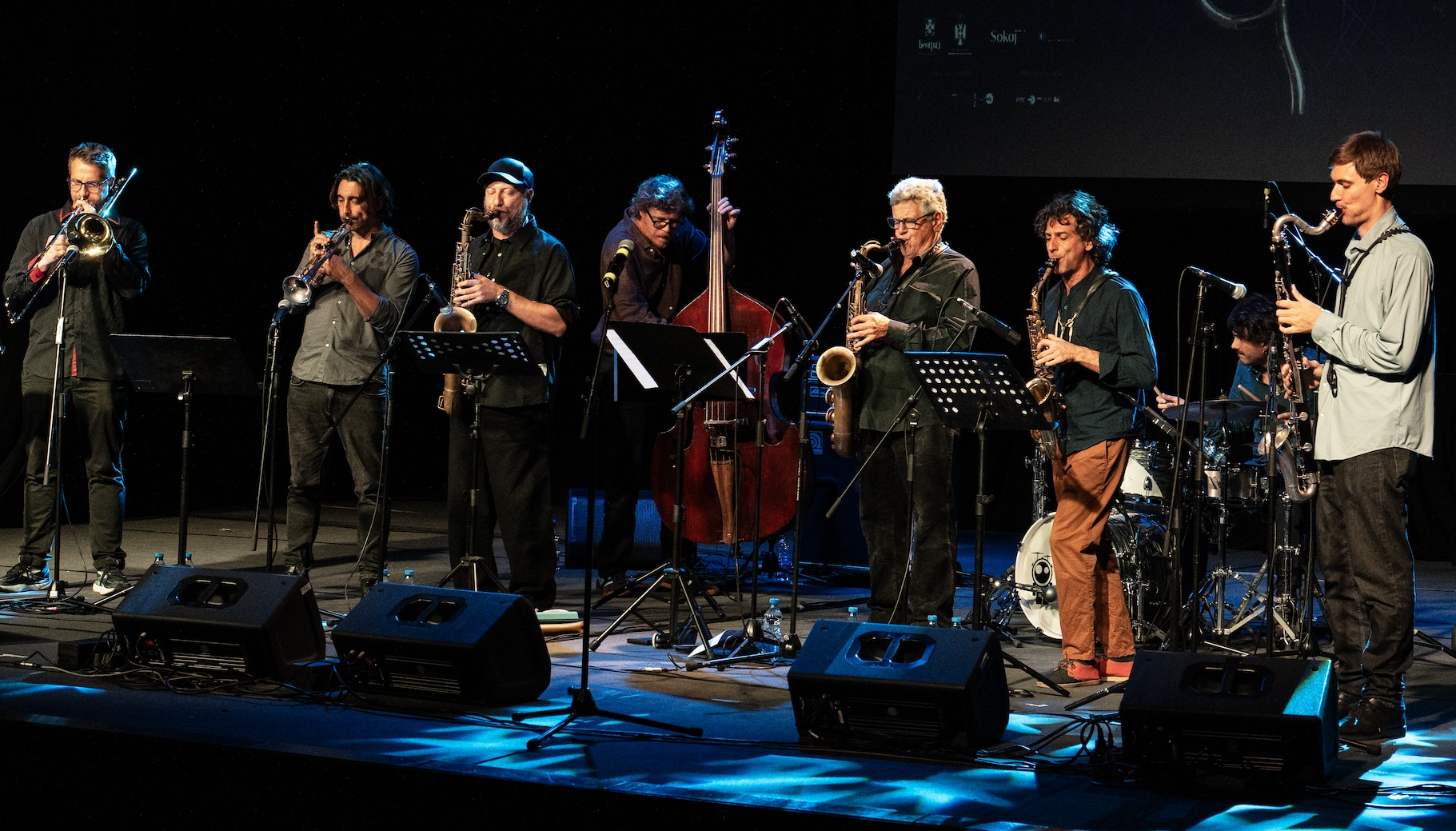
From my perspective, the 2026 Belgrade festival opened with a performance of genuine refinement, courtesy of the ensemble Tino Tracanna Panorchestra. Its repertoire is composed and arranged almost entirely by the aforementioned bandleader, in collaboration with Massimiliano Milesi.
Both saxophonists formed the core of this octet, joined by double bassist Giulio Corini and drummer Filippo Sala. They were subsequently joined by four other brilliant musicians: Andrea Andreoli (trombone), Federico Calcagno (bass clarinet), Paolo Malacarne (trumpet), and Gianluca Zanello (alto saxophone). The group is a “local product”—yet one of world-class caliber—of Italy’s Bergamo Jazz Festival.
That festival’s history began in March 1969 on the stage of the Teatro Gaetano Donizetti (built in 1780), named after the operatic genius born in that Lombard city. The consistently high caliber of musicians invited to Bergamo Jazz over the last half-century has naturally fostered the emergence and development of remarkable local talent in the field—a fact clearly demonstrated by the TTP octet’s performance. Throughout the show, one is struck by the artistry with which the eight musicians craft dense, smooth, and enveloping harmonic textures, effectively compensating for the absence (deliberate, perhaps?) of a piano or other chordal instruments.
Furthermore, TTP explicitly acknowledges its debt to major transatlantic precursors, such as Charles Mingus and Jimmy Giuffre. One composition by the latter, “Train and the River,” is reimagined here in a way that resonates with the vitality of Italian jazz: solos radiating colour and luminosity, set against substantial, subtly crafted riffs. The dialogue between the double bass and the drums mimics the rhythmic acceleration of a train, over which trombonist Andrea Andreoli delivers a high-speed solo—yet one where every note is precisely articulated on that slippery, non-tempered instrument. Given such exhilarating, presto-tempo passages, I was not surprised to learn that one of TTP’s trusted guest collaborators was the American Steven Bernstein, a master of the slide trumpet. The collective virtuosity with which the Tino Tracanna Orchestra constructs fresh musical forms—grounded in a profound musical education—strikes me as a subtle riposte to the aggressive, self-destructive crudeness that surrounds us.
The prolific Rob Mazurek—composer, cornetist/trumpeter, media artist—performed in Belgrade under the moniker Chicago Underground Duo, accompanied by the intuitive drummer Chad Taylor.
Thirty years ago, the two formed the core of the protean Chicago Underground Collective, an ensemble with a flexible lineup that could range from a duo to a full orchestra. (It is worth noting that, between 2000 and 2005, Mazurek lived in Brazil, where he assembled the seminal avant-garde group São Paulo Underground). The performance I witnessed was marked by strong expressionistic touches, with the two protagonists appearing as ambassadors of jazz’s libertarian spirit—specifically in its Chicago incarnation. For an observer from distant Central-Eastern Europe, this evokes a wide spectrum of references: from the “Chicago Style” of the Jazz Age to the AACM, Sun Ra, and beyond—not to mention the critical discourse found in publications like DownBeat or JJA News.
The program consisted of several suites rooted in the fluid, conceptual rapport between the two artists.
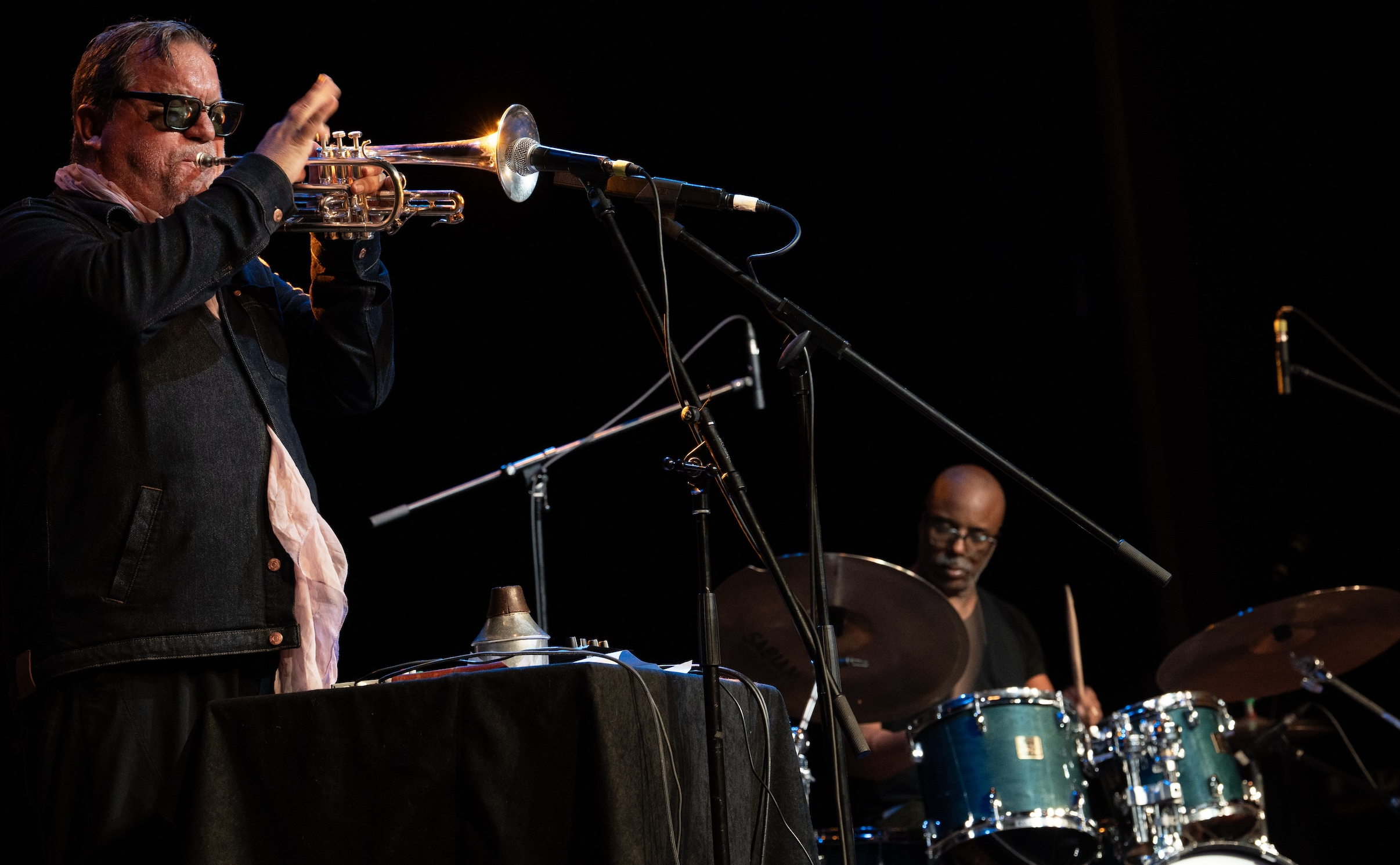
Mazurek explores the stratospheric register of the trumpet with great verve, enriching it through electronically generated soundscapes and the use of various objects as percussion—all of which complement the rhythmic cascades pouring from Taylor’s drum kit. The sonic flow follows unpredictable, meandering paths. Shifts in acoustic and emotional atmosphere occur spontaneously, much like in everyday life. The duo’s music transitions from incandescent moments to cooler passages, from agitation to calm, from fortissimo to piano—all punctuated by the horn’s sudden, piercing flash of high notes. There are streaks of sound, complemented by incomprehensible imprecations—much like incantations stripped of all meaning. Such pseudo-recitatives bring to mind the muttered poems Cecil Taylor would interject amidst his expansive solo piano excursions. Toward the end, clearly defined melodic fragments emerge—lyrical flourishes coaxed from a trumpet pressed against a microphone—and even a quasi-samba rhythm slips in; perhaps an unlikely echo of hopeful, Brazilian-inspired smiles?
The organisers of the Belgrade festival—led by Vojislav Pantic, Jovan Maljokovic, Dragan Ambrozic, and Milica Sevarlic—also devote commendable attention to local musicians, showcasing them both on the main stage and in the building’s “Sala Amerikana” (an informal loft-like venue that hosts late-night concerts and the final jam session). This year, the honor of a recital in the Main Hall went to a quartet led by trumpeter Ivan Radivojevic, featuring saxophonist Rastko Obradovic as a guest. This “assault” by the “young lions” of Serbian jazz was warmly acknowledged in a speech by Mr. Maljokovic, an established saxophonist and bandleader. He recalled the glorious days when his own generation of musicians first made their mark in this prestigious setting.
The positive impression left by the aforementioned group was subsequently confirmed and further developed by the excellent performance of Dorde Kujundzic’s quartet. Born in 1993, this young intellectual—who studied clarinet in Belgrade, Lugano, and Lucerne, where he defended a thesis titled “The Melodic Library of Babel,” inspired by Jorge Luis Borges—approaches the baritone saxophone with both courage and competence, making it his instrument of choice.
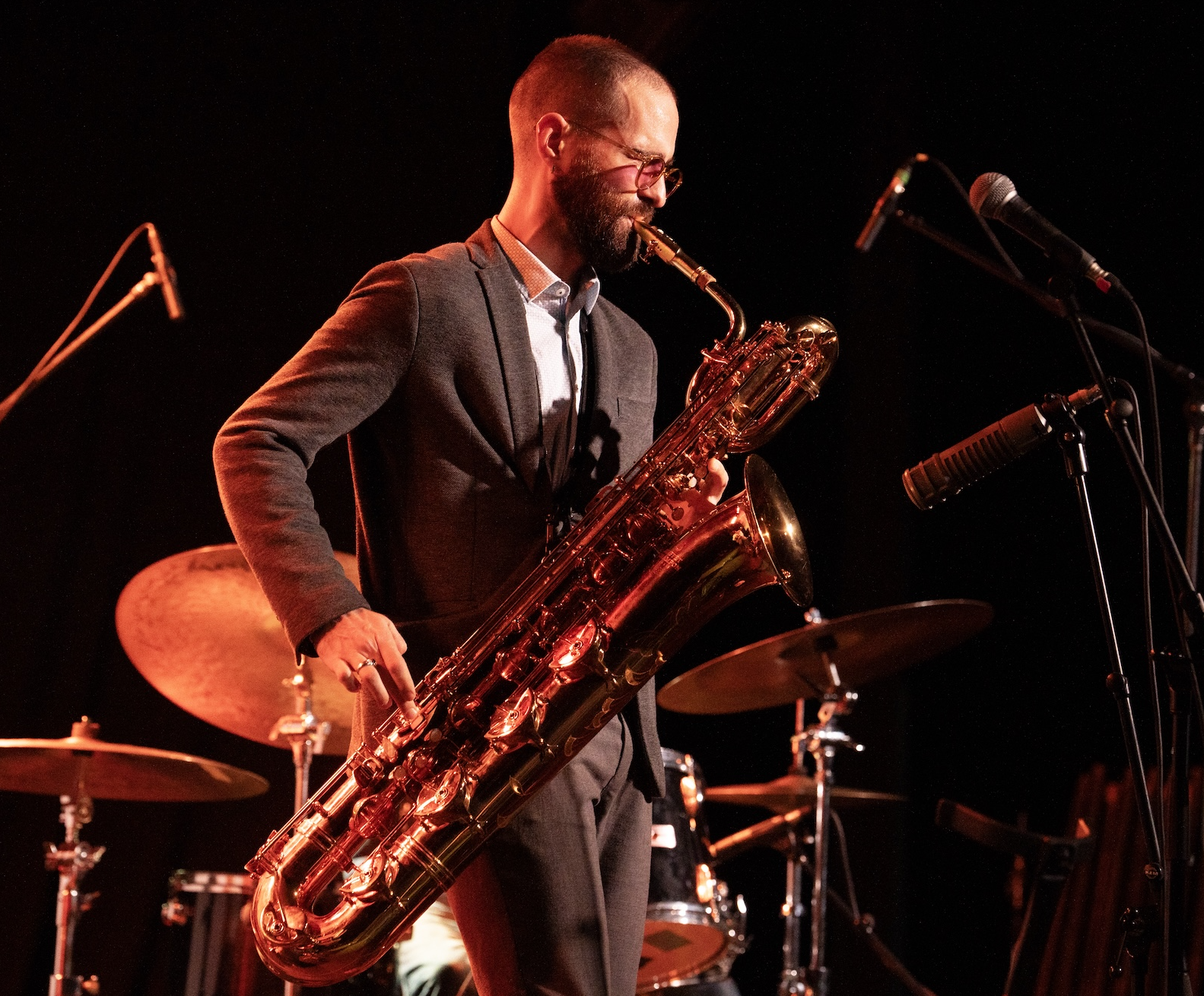
Kujundzic demonstrates remarkable technical precision in handling this challenging musical tool. His rich, comforting tone is shaped into striking sonic configurations, captivating the audience with energetic solos that are simultaneously balanced and expansive. Furthermore, he chooses to engage with the implicit challenge posed by the “archetypal baritone player” Gerry Mulligan, by opting for a quartet format in which the piano is replaced by a guitar—played with a dry, crisp touch in the style of Jim Hall by Dusan Petrovic.
Also at the Amerikana, there were other revelations: the young Polish pianist Michal Modrzynski, leading his own trio, works to expand the creative possibilities of this quasi-classical format, imbuing it with suppleness, strength, and substance. It was a pleasure to observe how Modrzynski’s approach naturally continues the vision of jazz as a “high art,” following in the lineage of Polish pianist-composers of the stature of Kurylewicz, Komeda, Kulpowicz, and Możdżer.
For his part, the Swiss artist Andreas Schaerer stunned the audience with his uninhibited approach to his own “vocal instrument”—whose qualities might as well justify labeling him a Central European counterpart to Bobby McFerrin. In fact, between 2009 and 2010, he collaborated directly with the American mega-star on the improvised opera Bobble, performed in Basel and Moscow.
Schaerer embraces the unconventional, blending vocal lines in a countertenor register with startling vocal percussion effects, extensive scat singing, parodic digressions, Sprechgesang, and more. In Belgrade, the extravagant vocalist was joined by the dazzling pianist Daniel García. Born in Salamanca in 1983, García studied at the Castilla y León Conservatory in his hometown and at the Berklee College of Music in Boston, under the mentorship of Panamanian musician Danilo Pérez. One of his guiding principles is an aphorism by the Swiss psychologist Carl Jung: “He who looks outside, dreams; he who looks inside, awakes.”
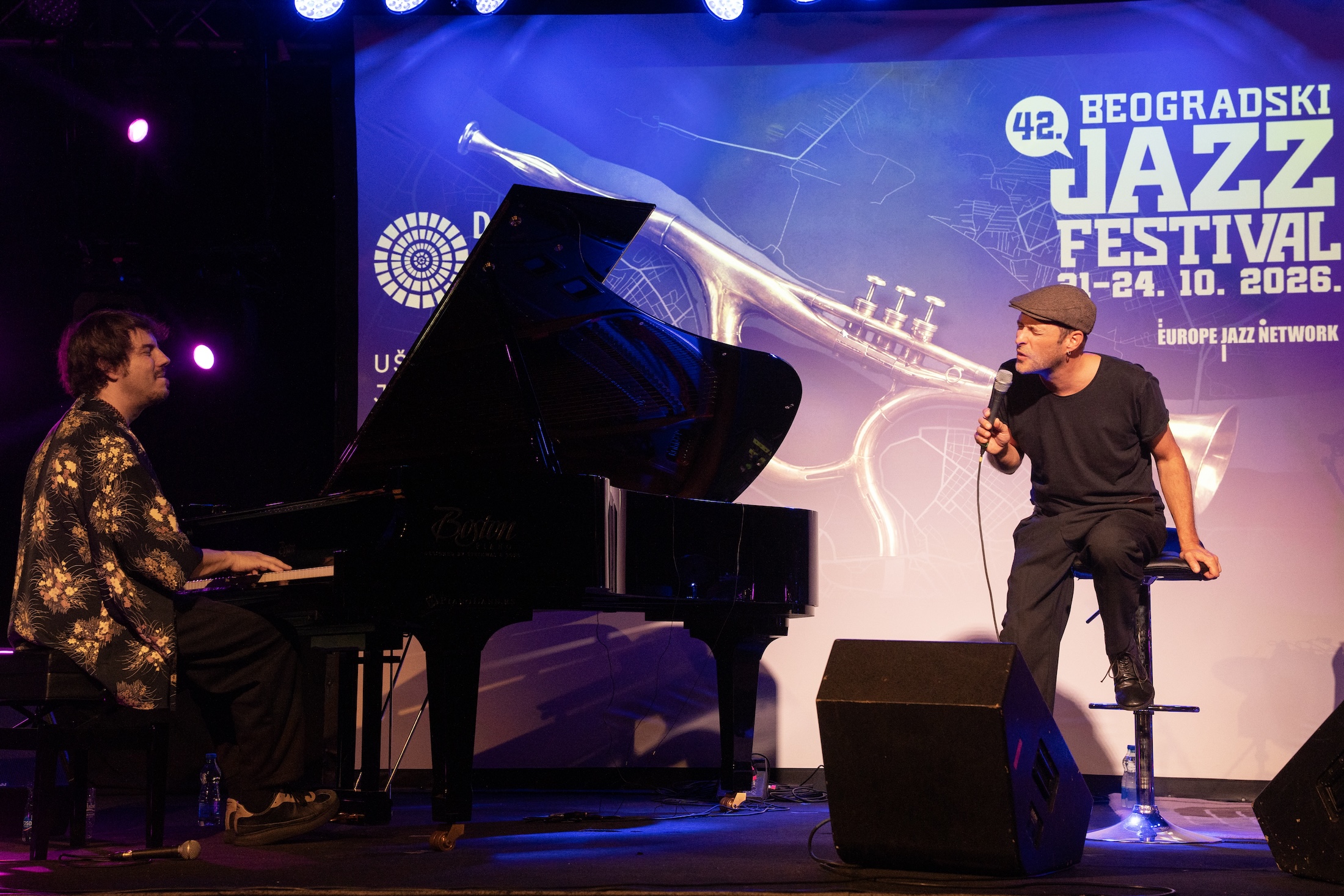
García’s track record includes collaborations with prominent Hispanic jazz musicians—such as Javier Colina, Antonio Serrano, and Perico Sambeat—as well as several albums released under the world-renowned label ACT. The duo with Schaerer, which remained consistently anchored to the harmonic landscape created by the pianist, also featured a striking linguistic experiment: the Spanish lyrics of a traditional song were performed with echoes sung in Schwyzerdütsch (the Swiss variant of the German language). Regrettably, although the performance by the Hispano-Swiss duo invited appreciation for its elements of “instrumental theatre” I could not fully enjoy it, owing to an unbearable light show—with beams directed, quite indiscriminately, straight into the eyes of the audience. This is a disruptive element—unfortunately, one increasingly common on music stages—from which jazz and erudite music had previously, quite fittingly, remained largely shielded.
In the case of the American band The Messthetics, the interference with the audience’s experience stemmed from an excessive volume—a choice embraced by the performers as an integral part of their post-punk approach. The ensemble also featured the renowned saxophonist James Brandon Lewis. Regarding his artistic persona, I stand by the view I expressed in my review of the previous Belgrade Festival (published a year ago in JJA News): J.B.L.’s vital energy stems from his ability to master a unique, highly complex form of creative eclecticism—one that captivates rather than alienates the audience. At that time, I also described his approach as “uncompromising.” This time, however, it seems the brilliant improviser succumbed to an external, arguably commercial, influence—specifically, a fusion of jazz with the excessively loud offshoots of rock—which effectively drowned out his own musical charisma.
The Marquis Hill Blacktet Revisited quartet performed music that unfolded across expansive sonic spaces, originating from small thematic nuclei—often distilled into mere triplets—introduced by the trumpeter-leader and revisited as ostinato patterns from various textural perspectives.
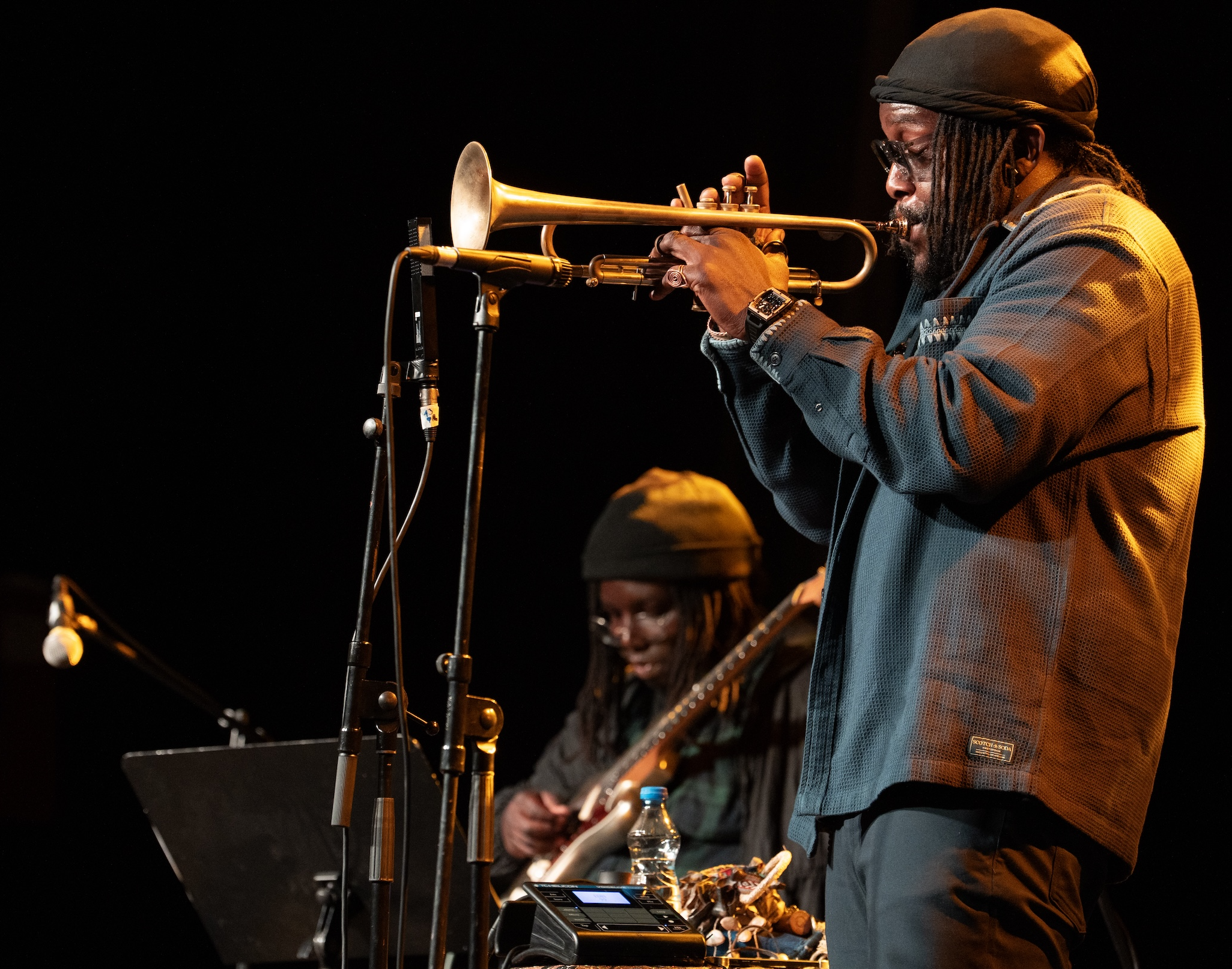
This sonic tide encompassed interactions with diverse percussion instruments, rainsticks, fleeting melodic flashes, and moments of both coalescence and disintegration—all bearing allusions to the aesthetics of the Art Ensemble of Chicago (Hill himself hails from that bastion of heterodox jazz). The bandleader draws upon an eclectic lineage, encompassing trumpet stylists such as Miles, Clifford, or Freddie Hubbard. This approach was further enriched by inspired solo contributions from his younger collaborators: guitarist Emmanuel Michael, bassist Junius Paul, and drummer Jonathan Pinson. Yet, perhaps due to a certain dilution of form, the sum of their collective effort ultimately felt less compelling than the individual capabilities of the four musicians. These talents truly shone only toward the end of the performance—most notably in a magnificent blues that served as a crowning finale, dominated by the muted, veiled timbre of Marquis Hill’s trumpet.
I must confess that, for purely subjective reasons, the main highlight of the 2026 edition of the Belgrade Festival—for me, at least—was the recital given by the João Paulo Esteves da Silva Quartet. There are two primary reasons for this: I had first met the acclaimed Lisbon-based pianist while conducting on-site research for my book Jazz Connections in Portugal (published in 2001 under the aegis of the Centre for Transylvanian Studies in Cluj, Romania). I invited him to join the panel of experts who spoke at the book’s launch at the Hot Clube de Jazz—the epicentre of the jazz scene in Portugal’s capital. Later, in 2008, João Paulo and I teamed up on a performance titled Improvisações para Lipatti, which combined my own poetic texts (spoken by me in both Portuguese and Romanian) with improvisational variations created in real time by the pianist.
I was drawn to this collaboration by his substantial musical background—which included studies at the Santa Cecilia Conservatory in Rome and the National Conservatory in Paris, followed by solo recitals at New York’s Carnegie Hall and a distinguished jazz career in his home country, where he was regarded as a potential Iberian counterpart to Keith Jarrett. Furthermore, knowing how deeply João Paulo admired the Romanian pianist Dinu Lipatti (1917–1950), I obtained several scores of compositions by this irreplaceable musician—who passed away at the age of 33—from the library of the National Academy of Music in Cluj. Our performance—held in the concert hall of the Franco-Portuguese Institute, which shared a building with the Romanian Cultural Institute in Lisbon—was a resounding success.
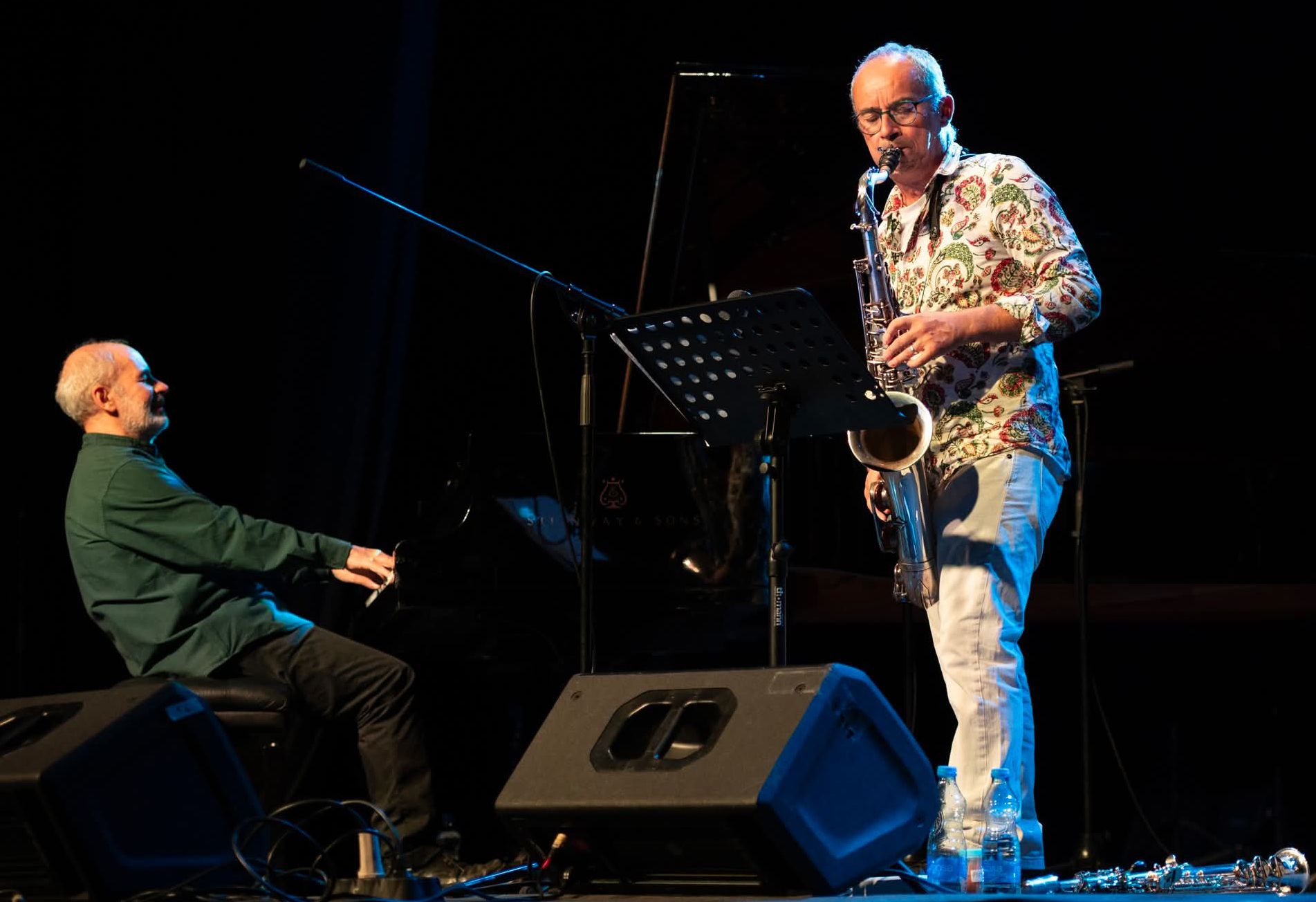
After nearly two decades, I was pleased to observe that the João Paulo Esteves da Silva Quartet has become a true “luxury product” for the export of jazz with Portuguese roots—a group now joined by British saxophonist Julian Argüelles (who possesses a natural affinity for the Iberian sphere). Initially highly regarded for his crystalline phrasing and profound harmonic sensibility, João Paulo now presents a diverse repertoire capable of enchanting an eclectic yet discerning audience. The pianist’s inherently poetic disposition—he is also a published poet—has become woven into the very fabric of his music, transcending earlier influences, from Lipatti to Jarrett. The complexity of his “instant composition” for solo piano—which J.P.E.S. spontaneously dubbed “Serbian Prelude”—marvellously encapsulated his individual potential. Meanwhile, the versatile drummer José Salgueiro, in synergy with saxophonist Argüelles and double bassist Rodrigo Correia, provided a supple, elegant sonic framework that was entirely in tune with the musical ideas brought into play by the quartet’s leader.
I would also like to highlight the valuable contribution of the Camões Institute and Portugal’s Embassy in Serbia—represented by the affable cultural attaché Martim Almeida—in selecting and supporting such musicians. The Italian Cultural Institute, Spain’s Cervantes Institute, Poland’s Zbigniew Seifert Foundation, and USA’s Mid Atlantic Arts organization also deserve praise for their excellent cooperation with the organizers of the wonderful Belgrade Jazz Festival.